Dennis Scholl transforms collected objects into art in his first solo show in the U.S.
Written By Michelle F. Solomon March 12, 2025 at 4:49 PM
As a collector, arts executive and philanthropist, Dennis Scholl gave his support to practicing artists. Now, he’s has his own artistic practice, shown above, working in his Miami Beach studio. His first U.S. solo exhibition opens on Saturday, March 15 at the Piero Atchugarry Gallery in Miami through Saturday, May. 17. (Photo by Michael R. Lopez)
On the desk in Dennis Scholl’s Miami Beach art studio is one of the collector-turned-artist’s most treasured items. It’s a collection of presidential bottle caps from when Scholl was a boy living in Linden, N.J.
When he was five years old, he began collecting the bottle caps. Every time the milkman came to the house to drop off a two-quart glass bottle of milk, Scholl would keep the cap and put it on the wall. It took him six months to collect them all – Millard Fillmore was particularly elusive.
“I just couldn’t get Millard Filmore. Damn Millard Fillmore,” he says of the 13th president.
A triptych of President John F. Kennedy’s assassination created with newspapers. “This is the one that is my collective memory,” says artist Dennis Scholl. (Photo by Michael R. Lopez)
Scholl says it was the “sense of completion” he felt when he finally got the coveted last piece of the cap collection. It marked the beginning of a collecting journey that would evolve into an artistic practice.
Now Scholl’s first U.S. solo exhibition, “The Melody Haunts My Reverie,” is opening Saturday, March 15 through Saturday, May 17, at the Piero Atchugarry Gallery in Miami.
Almost a half century of admiring other people’s art as a collector, patron, and community arts leader – he was president and CEO of Miami-based arts incubator Oolite Arts and before that vice president for arts at the John S. and James L. Knight Foundation – the former attorney, CPA, and leader in the redevelopment of South Beach and Wynwood, decided it was time to become an artist himself.
But he says he had to do something that made sense to him.
“If I’m going to have an art practice, it has to be authentic. And so, what would be authentic for me? Well, I’ve been collecting for a long time. So, for me, it’s important to be doing something that I learned – taking my skill set as a collector, which I’ve been doing for 47 years and that’s how the practice evolved.”
In 1865, Charles Dickens released a “serial” paperback. The original 19 limited editions make up “Untitled (“Charles Dickens),” 2023. (Photo by Michael R. Lopez)
What made sense for Scholl was assemblage, putting everyday items together to create something new. His show’s curator Larry Ossei-Mensah explains Scholl’s work as a gathering of ephemeral materials, archival fragments, and objects of cultural significance to “create evocative compositions that merge personal experience with broader cultural histories.”
Nostalgia and collective memory
Scholl describes the solo exhibition as a “meditation on the collective memories we all share.” Ossei-Mensah says the artistic practice is deeply rooted in recollection.
“It is his ability to identify these things that create an entry point, regardless of whether that is a moment of your generation. His ability to pinpoint (the items) and then assemble them and recontextualize them and then invite the viewer to reflect on the idea of ‘What do these things mean?’ What do these moments mean?’ You don’t look at Dennis’s work and not feel something, whether it’s a feeling of nostalgia or collective memory.”
Scholl’s own memories bubble up as he stands in front of three large works that are a focal point of “The Melody Haunts My Reverie.” Completed in 2023, the triptych is made up of newspapers from a pivotal moment in American history. From the Kansas City Star to the New York Times circa 1963, the now yellowed newspapers, their front pages with bold headlines, are arranged in a dodecagon, a 12-sided figure that is a recurring motif in the artist’s work.” The first is “Untitled (Assassination),” the second is “Untitled (Oswald),” the third, “Untitled (Mourning).”
It took three years to acquire the pieces that are part of the John F. Kennedy assassination collection. “This is the one that is my collective memory,” says Scholl. “This is the one I think about all the time – that the Kennedy assassination was the last time I felt innocent.”
It took three years to acquire the pieces that make up the John F. Kennedy assassination collection. (Photo by Michael R. Lopez)
He wants his viewer to be taken on the same journey from a work that may speak to their memory, which he refers to as gateways to lost moments.
“If I can find the right objects and infuse those objects with the power that they have, I can take you somewhere that you didn’t expect to go.” In each of the works, there is also something else that adds to the narrative. In the middle of the first Kennedy piece is a teletype from a news wire service that announces the breaking news, a collection of Jack Kerouac books has the author’s original obituary photo, and a 1972 Olympic torch is included in a work about the Munich massacre during the 1972 terrorist attack on Israeli Olympic team members.
“Untitled (’72 Munich Olympics)”, 2023, acquired objects and graphite, features ephemera from the games, an original Olympic torch, and a copy of the front page of the New York Daily News. (Photo by Michael R. Lopez)
While it’s the final result that the viewer sees, it’s also the process of getting there that is just as integral as the work itself.
“When I decide I’m going to make a new work, I don’t go searching for something.” He looks at around 30,000 objects a month on auction sites. “I might identify maybe 10 things a month that I think could make good pieces but then I have to bid on them. And you don’t get them most of the time. But when I get one or two, that becomes the work. What makes it all happen is that it’s kind of the thrill of the chase.”
The title of the exhibition is a lyric from American composer Hoagy Carmichael’s 1927 “Stardust.” It’s one of the songs on Scholl’s Top 20 jazz playlist shared on Spotify and the soundtrack to “The Memory Haunts My Reverie,” which he says he plays while working, and while creating the current exhibition – Charlie Parker’s “April in Paris,” Miles Davis’s “It Never Entered My Mind,” Billie Holiday, Nina Simone and Edith Piaf.
“Making art is what I’m going to do the rest of my life,” says Dennis Scholl, shown surrounded by his work at his Miami Beach studio. (Photo by Michael R. Lopez)
“We talk a lot about jazz,” says Ossei-Mensah, “and improvisation and how there is a rhythm, a choreography in the show, which allows for it all to work collectively but will also draw the viewer into the pieces individually.
Hometown homecoming
There’s excitement around this first U.S. solo exhibition and especially that it is in Miami, where he has become a native son having moved here with his family at the age of 6.
“I’ve done most of my shows in Europe and I did that because I wanted to be somewhere where frankly, no one knew what I had done before or who I was so I felt like I was getting a fair read of the work,” says the artist. “And it was very well received.”
Scholl has exhibited in Serbia and Croatia, in London and Berlin with upcoming shows in Scotland, Poland and Uruguay. “It’s so interesting to me that people abroad have really dialed into this very American aesthetic and embraced it. ” There are also more U.S. shows planned at Columbia University in New York and at the Art Center of Hollywood.
As a youngster driving with his family from New Jersey to Florida to visit his grandparents, there was always a stop at Thom Gaskins Cypress Knee Museum along U.S. 27. Arranged in Scholl’s “architecture” of a dodecagon is the installation “Untitled (“Cypress Knees),” 2023, acquired objects. (Photo by Michael R. Lopez)
The owner of the Piero Atchugarry Gallery says it is nothing short of an honor to be hosting Scholl’s first solo exhibition in the United States.
“When I visited his studio in 2023, I was immediately taken by the work,” says Atchugarry. “As an emerging artist, Dennis presents a mature body of work and his approach to art making – rooted in his experience as a collector and centered on collective memory – is truly unique . . . This exhibition is not only a significant milestone for Dennis but also for the Miami art community.”
When asked about artists who may influence his practice, Scholl mentions Félix González-Torres, a conceptual artist born in Cuba who died in Miami. González-Torres’s use of everyday objects was meant to invite physical as well as intellectual engagement from his viewer.
“Untitled (Kerouac Library)”, 2023, with the author’s obituary photo. (Photo by Michael R. Lopez)
“I would say that for me, not because he’s doing the same thing, but because he’s mining emotional content and taking you to a place. He’s someone I think about a lot when I’m making work,” says Scholl.
Ossei-Mensah says the recall of González-Torres in Scholl’s work is probably the most relevant. “If you’re thinking about just taking these mundane items and the repetition and the arrangement and the potential accessibility to these things, that resonates.”
(WATCH: ARTSPEAK Video Archive: Dennis Scholl: “How did you educate yourself about art?”)
Scholl says he’s devoting full time to his art practice and producing and directing film documentaries – he’s made almost 90 films in 15 years and won numerous regional Emmy awards. “I’ll continue to make films as I have for the past 15 years. I’ll be involved in arts patronage, and I have a big art collection to give away at some point. I’ll make art as I have for about a decade now. Making art is what I’m going to do for the rest of my life.”
WHAT: Dennis Scholl solo exhibition “The Melody Haunts My Reverie,” curated by Larry Ossei-Mensah
WHERE: Piero Atchugarry Gallery, 5520 NE 4th Ave., Miami
WHEN: Opening reception, 7 to 9 p.m. Saturday, March 15. Hours: 11 a.m. to 5 p.m. Tuesday -Saturday. Through May 17, 2025.
ArtburstMiami.com is a nonprofit media source for the arts featuring fresh and original stories by writers dedicated to theater, dance, visual arts, film, music and more. Don’t miss a story at www.artburstmiami.com.
No posts found
Haitian Art from the Heartland to Miami’s Little Haiti
Written By Jonel Juste February 20, 2025 at 7:35 PM
“Untitled” by Richard Nesly is one of 16 featured works in the public art exhibition “Global Borderless Caribbean XVI: Haiti in the Heartland” at the Little Haiti Cultural Complex. (Photo courtesy of Waterloo Center for the Arts)
Haitian art has journeyed from Iowa to the walls of Miami’s Little Haiti.
Titled “Global Borderless Caribbean XVI: Haiti in the Heartland,” the public art exhibition, is a collaboration of the Little Haiti Cultural Complex, Haitian Cultural Arts Alliance, the Waterloo Center for the Arts in Waterloo, Iowa, and the “Haitian Arts: A Digital Crossroads” (HADC) project.
It also received support from Haitian artist Edouard Duval-Carrié, photographer Carl Juste, and curator Marie Vickles.
The exhibition at the Little Haiti Cultural Complex through Saturday, April 19, features reproductions rather than original artworks. “We didn’t display the original artworks because they would be exposed to the elements,” explains Fayola Nicaisse, one of the curators and the chairperson for the Miami-based Haitian Cultural Arts Alliance. “Instead, we used high-resolution images, which were enlarged for the exhibit. We printed these images, ensuring the collection could be shared without risking damage to the original pieces.”
“Saut-D’eau” by Gerard Valcin (Photo courtesy of the Waterloo Center for the Arts)
This is the first time the digitized artwork has been presented in this format. They originally came from a significant Haitian art collection at the Waterloo Center for the Arts.
“The Waterloo Center for the Arts Haitian Art collection started in 1977 by a generous donation by Waterloo residents Dr. and Mrs. F. Harold Reuling,” says Chawne Paige, executive director of the arts center. “This collection has since grown to over 2,000 works and is the largest public collection of Haitian art in the United States, if not the world, outside of Haiti itself.”
For the Miami exhibit, 16 digitized artworks pulled from the collection have been selected and showcased on the walls of the Little Haiti Cultural Complex. Paige reflects on the significance of the pieces being shown in an open space,
“Having murals commissioned or displaying art in public spaces removes the potential barriers to seeing the artwork that would require entrance into the galleries of a museum or in our cases that travel expense to come to the Midwest to see these works.”
From left, Fayola Nicaisse, one of the curators of the exhibition and chairperson of the Haitian Cultural Arts Alliance (Photo courtesy of Ebène), Chawne Paige, executive director of the Waterloo Center for the Arts in Iowa, which houses a significant collection of more than 2000 Haitian artworks (Photo by Chawne Paige), and Dr. Petrouchka Moïse who played a big part in digitizing the Haitian artworks. (Photo courtesy of Petrouchka Moïse)
The selection process for the exhibition was a collaborative effort between the different organizers. It involved reviewing thousands of pieces from the Waterloo Center’s collection and selecting those that best represented Haitian heritage.
“Our aim was to highlight the lush diversity of aesthetics, art forms, and mediums found in Haitian Art all the while being intentional about the representation of artists across the genders. Master artists alongside artists in the Haitian diaspora and their respective protégé make up WCA’s collection,” says Paige.
Nicaisse, who spearheaded the outdoor exhibit project, shared that she wanted to showcase a different genre of Haitian art.
“When people think of Caribbean art, they often picture scenic landscapes or beach paintings, but rarely fine art.”
Nicaisse’s vision was to create a space where Haitian art could take center stage, particularly in Little Haiti, a neighborhood that serves as a cultural hub for the Haitian diaspora. “When you visit Little Havana, you experience Cuban culture, its food, music, and traditions. The same should apply to Little Haiti,” she contends.
“Les Villes Imaginaires” (Imaginary Cities) by Préfête Duffaut (Photo courtesy of Waterloo Center for the Arts)
The exhibition’s title, “Haiti in the Heartland,” reflects the connection between Haiti and Iowa, where the Waterloo Center for the Arts houses its extensive collection. “The title was chosen by Dr. Petrouchka Moïse, who played a large part in digitizing the artworks,” says Nicaisse.
Moïse, assistant professor at Grinnell College in Grinnell, Iowa, is co-lead of the HADC project with Dr. Fredo Rivera, assistant professor of Art History at Grinnell College. During the pandemic, Moïse close to 2,000 art objects from the Waterloo Center were digitized. “Throughout the project we have partnered with several cultural leaders, institutes and scholars to crowdsource the information needed.
Moïse talks about the importance of the HADC project. “(It) will be a benefit to Haitian artists and the global community by giving access to the works of other great Haitian artists that don the walls of institutions and centers across the Diaspora. Viewers will have the ability of learning of the various artforms and techniques that make up Haitian visual culture.”
As a cultural institution holding Haitian art and heritage in the American Midwest, the Waterloo Center had an obligation, according to Paige.
“Any institution that has holdings of cultural objects that are not reflective of its constituent communities has a responsibility to share these cultural items with the public,” he says. “For the Waterloo Center for the Arts, it is an opportunity to broaden the world view of Midwesterners, while also instilling an appreciation of diversity and the global community.”
“Peacock in Tree” by Rigaud Benoit (Photo courtesy of the Waterloo Center for the Arts)
The exhibition at the Little Haiti Cultural Complex also serves as a platform for educating the public about Haitian culture and history. For Nicaisse and Paige, the exhibition’s broader goal is not only to showcase art but to combat the misrepresentations and stereotypes that often surround Haiti.
Nicaisse recalled how, when she first arrived in the United States, there was a stigma attached to being Haitian. “I was even advised not to disclose my heritage,” she says. “That experience fueled my determination to educate others about who we are.”
Paige spoke of the erasure of Haiti’s accomplishments, especially in the context of American history. “The oppression and erasure of Haiti’s accomplishments long before freedoms were provided to Blacks in America is a nuance of American History that truly needs to be unpacked, yet alone be reflected on by the public,” he explains. “The American History I was taught as a Black man is very problematic, skewed, simplified and omits large swaths of the narrative of the millions of Africans brought to the Americas.”
“Untitled” by Paul Lalibert (Photo courtesy of the Waterloo Center for the Arts)
By bringing these artwork replicas to Little Haiti, the organizers hope to inspire a deeper appreciation for Haiti’s contributions to the global cultural landscape.
“Haiti has an incredibly rich culture. While the nation has faced hardships, every downfall presents an opportunity for renewal. This exhibition is part of a broader effort to educate people about our heritage,” says Nicaisse.
WHAT: “Global Borderless Caribbean XVI: Haiti in the Heartland”
WHERE: Little Haiti Cultural Complex, 212 NE 59th Terrace, Miami
ArtburstMiami.com is a nonprofit media source for the arts featuring fresh and original stories by writers dedicated to theater, dance, visual arts, film, music and more. Don’t miss a story at www.artburstmiami.com.
No posts found
Influential UM Art Professor’s Exhibit At the Lowe Is A Beaded Wonder
Written By Michelle F. Solomon February 10, 2025 at 5:35 PM
“Untitled (Crazy Quilt),” glass beads and thread on canvas, is one of the largest works at 64X116″, in “Gerald Winter: A Life in Beads” now on exhibit at the University of Miami’s Lowe Art Museum. (Photo by Francesco Casale, Courtesy the Estate of Gerald Winter)
Artist and teacher Gerald “Jerry” Winter had an eye for detail – in his art and in his teaching. A professor of art on the faculty at the University of Miami, his influence in the arts community of Miami is vast and deeply felt.
While he worked in many artistic media throughout his career — including painting, sculpture, and serigraphs, the discovery of a treasure trove of his beadwork led to an exhibition now at the University of Miami’s Lowe Art Museum. Intricate attention to the smallest of elements come together to create compositions rich in visual storytelling.
Portrait of Gerald Winter in his South Miami studio. (Photo by Julia Muench)
“Gerald Winter: A Life in Beads” is at the University of Miami’s Lowe Art Museum through Saturday, Feb. 15. The Lowe Art Museum is the first art museum to publicly display what Jill Deupi, J.D., Ph.D., Beaux Arts director and chief curator at the museum describes as a “very personal body of complex imagery executed entirely in beads.”
It had been the beadwork that was the focus of his practice spending long hours at a loom in his South Miami studio a few blocks from his home before he passed away at the age of 86 in 2023.
There are 16 pieces on display at the Lowe — works that recall outsider art, Native and Indigenous art, and references to art history periods and movements.
One strikingly intricate work features 13 different vignettes, which is Winter’s interpretation in beads of a 16th-century Franco-Flemish Gothic millefleurs tapestry. The original tapestry that Winter most likely based the piece is in the permanent collection at the Hearst Castle in San Simeon, Calif., and is displayed in The Billard Room.
“You can tell he is really well versed in both Eastern, Western and Indigenous art history; you see a lot of those references in the work,” says Melissa Diaz, the curator of “A Life In Beads,” and assistant director, collection and exhibition services, at the Lowe Art Museum. “You can see that he is trained because the compositions are very sophisticated and you see those influences coming in,” says Diaz.
“Untitled (Modeled After the Bayeaux Tapestry),” glass beads and thread on canvas with wood spool, approximately 86 panels at 240 square inches each (dimensions approximate), 144 feet long. (Photo by Francesco Casale, Courtesy the Estate of Gerald Winter)
One of the largest works is “Crazy Quilt,” 64″ X 116″, which appears to be textile patchwork, but at a closer look is made of thousands of beads.
“He had many works that looked at textiles or fashion or clothing,” says Diaz, who says that the show is arranged by themes – meditations on historical artworks, inspirations from his love of travel, and abstract compositions. His process would be to work from scale drawings and then translate the drawings to the loom bead by bead.
The masterpiece of “Life in Beads” is a 144-foot beadwork “roll,” completed in 2009. Modeled after the 1066 Bayeux Tapestry at the Bayeux Museum in France, there are 86 panels at 240 square inches each, with part of the long beadwork tapestry unraveled onto a table at the Lowe. They come from a large wooden spool, which Winter painted on both sides. One of the 86 panels is a self-portrait of the artist.
“Every element is handcrafted. We didn’t have the space to display it in its entirety,” says Diaz about how and why the work is positioned on the table. “But it is my hope, and I have shared this with his family, that the next display should be of the full 144 feet completely unspooled because it’s just an amazing project,” says Diaz.
One of Winter’s two daughters, Laura Escardo (Julia Muench, his other daughter, is an artist based in New Jersey), recalls entering the artist’s studio after her father’s death and discovering at least 50 pieces that she had never seen before.
“We would talk and he’d show me whatever the newest thing he was doing,” says Escardo, but she wasn’t aware of the vast collection created and collected in his studio. “Most of what is now hanging in the Lowe has never been seen before.” Both sisters were integral in getting the work together for the show at the university.
Michael Spring, a former art student of Gerald “Jerry” Winter, and director emeritus of the Miami-Dade County Department of Cultural Affairs, speaks at the opening of “Gerald Winter: A Life in Beads” at the Lowe Art Museum at the University of Miami. The work “Crazy Quilt” is next to him. (Photo by Francesco Casale)
Michael Spring, director emeritus of the Miami-Dade County Department of Cultural Affairs, who was the director for more than three decades before he retired in 2023, was an art student of Winter’s at the University of Miami. For years he had been hoping for an exhibition of his professor’s work.
Spring says he would often speak to Carol Damian, chair of the Miami-Dade County Art in Public Places Trust and former museum director and curator, and Barbara Young, former head of arts services for the Miami-Dade Public Library System, where Winter’s last public exhibition was shown. “I would talk to them about the idea,” he recalls. However, the professor didn’t have an interest in showing his work.
“I was being respectful of that,” says Spring. “If he didn’t want to exhibit that was his business. But I would ask because I knew Carol was a friend of the family and that Barbara had given Jerry his last show. Carol would tell me, ‘I was talking to him the other day and he’s not really interested,’ ” recalls Spring.
Escardo, who lives in West Miami, says it was on everyone’s ” bucket list” to have a solo show for the artist.
Spring says it was Winter whose impact on him as a student would follow him throughout his career in the arts. “I was kind of struggling with what I was going to do with my life. It’s fairly normal when you are an undergraduate, right?” says Spring.
“Four Panels, The Body: The Legs, The Pelvis, The Ribs, The Face,” 2002-2023, each panel 35X33″. (Photo by Francesco Casale, Courtesy the Estate of Gerald Winter)
“I took Jerry’s painting class,” he recalls. Spring received a bachelor of arts degree from the University of Miami and then went on to earn a master of arts degree in painting from New York University. After encountering Winter, he says, a career in the arts really made sense to him. “After having seen the intellect and the curiosity that Jerry had about the world and life. And I thought, ‘If that is what you can pursue in the arts, then it was clear to me that that would be the path that I would take. He was such an inspirational teacher and his sense of inquisitiveness, not just about art but the world, and that was infectious and affected the rest of my life.”
After learning of Winter’s death, he called Damian and Young. “I said, ‘I wonder what the family’s doing about his work? There must be a ton of it that’s been generated over the decades.’ ” After contacting his daughters, the three went to South Miami to the house Winter shared with his wife, Deborah, and to his studio. “We were just knocked out by the amount of work and the brilliance, at which point we said to Laura and Julie, we’re happy to help you try to get an exhibition for him. And the people at the Lowe were all in and they immediately figured it all out.”
Deupi of the University of Miami says it has been a “privileged opportunity for her and her team to work closely with the artist’s family as well as many of his students and friends” on what she calls “this important project.”
Detail of “Animalia Theater,” glass beads and thread on canvas, 68 X40″. (Photo by Francesco Casale, Courtesy the Estate of Gerald Winter)
Another memory from Spring’s days at UM was seeing a faculty show at the Lowe that featured his mentor’s work. “Now this is sort of a homecoming for Jerry with the work coming back to where he originally showed. And that seemed like poetry to me,” says Spring.
While she was the head of arts services for the Miami-Dade Public Library System, Young hosted Winter’s last show. “For some reason, he said, ‘yes’ when I asked him to do that last show with me at the library in 2005. There were six large, beaded pieces. It was nice because anyone who came in could see it. It was accessible to all,” she says.
Young says after that she would mention on and off, as the years went by, that he should have another show. “He would sort of say, ‘yes, and then he would say, ‘No, I don’t think so.’ And I thought it would be great for Michael (Spring) to visit him and maybe that would encourage him,” says Young, who lives in the same neighborhood and always delighted in dropping off pumpkin bread to Winter and his wife. “It was such a pleasure to go over there. He had tons of files and I’m sure there were lots of prints and drawings. There must be plenty of treasures he left,” she says.
As a friend and colleague, Damian recalls parties at the Winter home. “There was so much work on the walls, but his wife Debbie would sneak me into a room where he had a lot of the beadwork and even a loom there. So, I knew he was doing this kind of work way, way back, but he never wanted to do anything with it.”
Damian, who is a professor of art history in the Department of Art and Art History at Florida International University and the former director and chief curator at the Patricia and Phillip Frost Art Museum at FIU, is a specialist in Latin American and Caribbean Art. She is also the chairperson of the Miami-Dade County Art in Public Places Trust. She received her Ph.D. and master’s degree from University of Miami, and was an instructor of art history there for more than a decade.
“Conimbriga Variations,” 1979, glass beads and thread on canvas, 43X43″. (Photo by Francesco Casale, Courtesy the Estate of Gerald Winter)
“I was on the faculty when Jerry was there. So many of his students will say that they remember that he was so interested in art history and wanted to make sure his students were, so that to me is very telling when it comes to the beadwork in the exhibition. When you see those works they are all about art history. You will recognize with each work something,” says Damian. “It might be a classical piece of architecture, or it might be a mandala, for instance.”
She says she and Spring and Young were “flabbergasted” and “speechless” when they met with Laura and Julie and saw everything that had been unearthed. “I had seen the loom over the years and a small bit of what he was doing but I thought it was maybe a hobby. I never knew of the extent of what he produced. And when you see the works in person, they are so obsessively meticulous – millions and millions of beads.”
For Diaz, Winter’s works fit into a larger context of beadwork and tapestry. “Throughout history, this type of work has been a way of storytelling, of visual narrating. Even before people were literate, they would use these kinds of beadwork tapestries to tell their stories, to share mythologies, and to share narratives,” she says. “They really fall within that realm.”
There is a sense of awe the artist has created with its level of detail and the intricacy through the handiwork, the thousands of beads and the time commitment in creating each piece. And, Diaz says, there’s something more that draws viewers in.
“His work encourages you to keep looking.” She promises “you will see something new and experience something new each time.”
WHAT: “Gerald Winter: A Life In Beads”
WHERE: Lowe Art Museum at the University of Miami, 1301 Stanford Drive, Miami
WHEN: 10 a.m. to 4 p.m., Wednesday through Saturday, through Feb. 15.
ArtburstMiami.com is a nonprofit media source for the arts featuring fresh and original stories by writers dedicated to theater, dance, visual arts, film, music, and more. Don’t miss a story at www.artburstmiami.com.
No posts found
At Faena Art, Magnus Sodamin is Miami’s Tropical Impressionist
Written By Douglas Markowitz February 8, 2025 at 6:51 PM
“Magnus Sodamin: Before Sunrise” at Faena Art Project Room in Miami Beach is on display through Wednesday, April 30. (Photo courtesy of Faena Art)
No matter where you are in South Florida, it’s never too far away from the Everglades. Yet it takes someone like painter Magnus Sodamin to capture the famous ecosystem at its peak of beauty.
“Before Sunrise,” an exhibition of the artist’s work at the Faena Art Project Room, showcases the Everglades in glorious detail. In a series of large-scale landscapes, Sodamin beautifully depicts the famously spectacular sunrises and sunsets that regularly set the South Florida skies afire with color.
Magnus Sodamin, “Symphony of the Sun (Florida Bay),” 2024. Oil on hemp, 69 x 89 in. (Photo courtesy of Faena Art)
Landscapes are paired with equally vivid portraits of various local flora and fauna. Spoonbills and ibises point their bills romantically toward the crescent moon. Conch shells rest on richly textured ground. Dragonflies dance above the reeds against a burning sky.
“I think that this kind of this body of work kind of relates to my relationship with Florida Bay and the Everglades,” says Sodamin. “I’ve spent over a decade exploring that whole wilderness, and I’ve grown a personal connection to it.”
Magnus Sodamin, “Sun Shower (American Crocodile),” 2024. Oil on hemp, 69 x 89 in. (Photo courtesy of Faena Art)
There’s a clear art-historical precedent to these luminous paintings, one that even Sodamin is quick to admit. They’re impressionist paintings, reminiscent of Monet, Van Gogh, and their contemporaries, as well as predecessors like J.M.W. Turner. Much like the British artist, Sodamin similarly explores light in his work.
“I do find my language, the way I use the brush, to be kind of in an impressionistic vein. I feel like there’s a lot of movement and layering within my work. There’s density to it. There’s these abstract qualities. When you’re up close you can kind of get lost in just the mark making and the paint, but once you’re far away it comes together in this landscape that has depth.”
Much like the original impressionists, Sodamin spends much time outdoors, frequently venturing into the Everglades and Florida Bay to fish, camp, and paint. Sometimes he’ll go out on the water for 12 hours, losing track of time and allowing himself to enter a meditative state. Even during the sweltering summer months, when humidity can approach 100 percent and temperatures occasionally enter the triple digits, he heads outdoors. That’s when he made most of the work that comprises the show.
Magnus Sodamin, “Ibis,” 2024. Oil on linen, 46 x 36 in. (Photo courtesy of Faena Art)
“You’re sweating out of every pore of your body, (and) to make it through that, I think, shows how much I love to be in that moment. And then the reward is all these things you experience, these sunsets and sunrises, the harmony you find in nature.”
Though he does work in the studio and from photos, much of his practice involves the same kind of plein air painting that the impressionists made a major element of their style. Other than the Everglades, he’s also painted in other famous locations; a paddling trip down the Grand Canyon in 2024 yielded 14 paintings over 21 days.
I think plein air teaches you more than you could ever learn in your studio,” he says. “There’s this kind of all or nothing approach where you just have to capture that moment before it’s gone.”
Artist Magnus Sodamin arrived to Miami in 1998 from New York and often ventures into the Everglades to paint en plein air. (Photo courtesy of Faena Art)
Originally from New York, Sodamin is a longtime Miami transplant. He arrived in the city in 1998 and studied at the New World School of the Arts. Though he’s lived and worked in other regions, including his mother’s native Norway, the landscape of the Everglades keeps drawing him back.
“For me, it’s important to show people that this is what exists here. It’s not that far away. These are environments that have been around for thousands of years, the animals in my paintings have been in this landscape for a long time too, and we’re kind of new here.”
WHAT: “Magnus Sodamin: Before Sunrise”
WHERE: Faena Art Project Room, 3420 Collins Ave., Miami Beach
WHEN: 3 p.m. to 8 p.m. Thursday through Sunday. Through Wednesday, April 30
ArtburstMiami.com is a nonprofit media source for the arts featuring fresh and original stories by writers dedicated to theater, dance, visual arts, film, music and more. Don’t miss a story at www.artburstmiami.com.
No posts found
Miami Artists’ Book Fair Tropic Bound Speaks Volumes In Its 2nd Edition
Written By Douglas Markowitz January 31, 2025 at 3:54 PM
Austin, Texas-based publisher Herringbone Bindery will be one of the exhibitors at Tropic Bound 2025. This year’s artists’ book fair is Thursday, Feb. 6 through Sunday, Feb. 9 in the Miami Design District. (Photo courtesy of Tropic Bound)
Two years ago, a very different kind of art fair debuted in Miami. Tropic Bound, founded by a trio of women in the city’s art scene, is dedicated to a growing niche in the wider art market: Artists’ books, essentially artworks in book form.
“Artists’ books are a really unique and intimate form of artwork, very different from the art fairs that we love here in Miami,” says Sarah Michelle Rupert, one of the event’s founders and directors, and founding co-director of SPF: Small Press Fair Fort Lauderdale with Ingrid Schindall, one of three founders of Tropic Bound.
Visitors check out the artist’s books at Tropic Bound 2023. The fair will return to Miami Feb. 8 through Feb. 9. (Photo by Monica McGivern)
“Artists’ books are intimate. They are mostly for one-on-one conversations. They’re meant to be held in your hand and cradled and be with one person at a time. Usually, what people will find at an artists’ book fair are contemporary works of art that take the shape of books or are related to book form, and that can look very different depending on the artist who’s making it.”
After launching the fair in 2023, the organizers are preparing for a bigger and better second edition. “Our applicants ballooned,” after the first edition, says Rupert.
For this edition, they’ve expanded taking up two different spaces in the Miami Design District for Tropic Bound, which runs from Thursday, Feb. 6 through Sunday, Feb. 9.
The Addendum at Palm Court is a new addition, which features artist talks, and a symposium on Thursday, Feb. 6, featuring Stephanie Stillo, chief of rare book and special collections at the United States Library of Congress. On Saturday, Feb. 8 and Sunday, Feb. 9, Tropic Bound will host publisher talks on the rooftop event space. There will also for tours of local printers and other area institutions.
Ninety exhibitors across two sections will show at the fair, supporting over 500 artists from more than a dozen countries — Germany, Spain, Ireland Turkey, Iran, and Singapore. Others are coming from neighboring Latin American countries such as Argentina, Mexico, and Colombia. And plenty of local Miami printers, book artists, and literary organizations will be at the fair, including Books & Books, [NAME] Publications, Women Photographers International Archive (WOPHA), Bookleggers, EXILE Projects, and the poetry festival O, Miami.
A book by Mexico City-based publisher Anémona Editores, one of the exhibitors at Tropic Bound 2025. (Photo courtesy of Tropic Bound)
“I think the team has done a phenomenal job at curating and cultivating creators,” says Melanie Santiago Cummings, executive director of O, Miami. “My experience at the last Tropic Bound was as an attendee, and it was so impressive and really inspiring to see the wide range of representation. And it really appeals to us as O, Miami because we’re constantly trying to empower all points of view, all voices, all residents in our community.”
O, Miami will have a table at the festival’s new Addendum section, designed to highlight independent publishers of photo books, magazines, and more conventional artbooks. They’re bringing recent publications such as “Ventanitas,” a tribute to Miami’s coffee culture, and a children’s book, “The ABCs of Miami,” illustrated by local artist Melissa Gutierrez, aka Westofchester.
The majority of exhibitors, however, will offer more handmade and bespoke artists’ books that can take a myriad of forms. Mob of Two, a publisher based in the small town of Sebastopol, Calif., north of San Francisco, often experiments with materials in their work. One book they plan to debut at Tropic Bound, featuring images by photographer Eric Castro of gang members getting their tattoos removed, is made of duct tape.
Tropic Bound’s founders, from left: Ingrid Schindall, Cristina Favretto, and Sarah Michelle Rupert. (Photo by Johnny Zhang)
“It’s really great to see in person, because it feels really unique, almost kind of rubbery,” says Sarah Press, co-founder of Mob of Two along with Tiana Krahn, whose company publishes small edition artists’ book collaborations. “He kind of just figured out how to make a book out of duct tape in his garage one day a few years ago, and we thought it was so cool that we helped him make an edition of it.”
Press and Krahn attended the first Tropic Bound separately under their own personal publication imprints, respectively Deeply Game and Spell & Bind Press. Neither had ever been to Miami before, but they found the fair to be a positive experience.
“I didn’t know what to expect, I thought it was going to be like fake boobs and gangsters,” says Krahn half-jokingly. “But the people were just so warm and joyful-seeming, and it just felt really lighthearted. And the people at the fair were a much younger crowd than what we’re used to seeing.”
That accessibility – and tangibility – is something the organizers want to emphasize. “When you go to a museum or even an art fair, you’re usually not encouraged to touch the painting, to grab the photograph, even,” says Cristina Favretto, another co-founder and co-director who also works as Head of Special Collections in the University of Miami Library system. “With artist books…they’re meant to be read and looked at and touched, so it’s intimate, in that sense. They’re also works of art – sometimes they’re unique, sometimes they’re in small editions, so there might be five in the whole world, but they’re much more affordable as well. So, they’re truly gaining a lot of traction in the collecting world.”
Go ahead, touch the art. Tropic Bound vendors allow customers to handle their merchandise – just ask first. (Photo by Monica McGivern)
For Schindall, the form also offers an antidote to a world dominated by the ephemerality of high tech.
“The book is really the first piece of mass informational technology, it basically made the Renaissance possible. It made education possible. It made reading possible for anyone in existence,” says Schindall. “You can read something that was written down 2,000 years ago, but you can’t read a 40-year-old floppy disc. (Books are) a type of media that’s been tried and true throughout history. It’s tactile, it lives in your hands. It makes a personal connection with you.”
WHAT: Tropic Bound 2025
WHERE: Main Fair: Miami Design District Paradise Plaza, 151 NE 41st St., 3rd Floor, Miami; Addendum: Miami Design District Palm Court, 140 NE 39 Street, 3rd Floor, Miami
WHEN: Main Fair: noon to 6 p.m., Friday and Saturday, noon to 4 p.m., Sunday; Addendum: 3 to 8 p.m., Thursday; 10 a.m. to 1 p.m., Saturday and Sunday.
COST: Free to attend the fair; symposium and welcome party tickets cost $15-$20 via eventbrite.com; shuttle tour tickets cost $60 each via eventbrite.com.
ArtburstMiami.com is a nonprofit media source for the arts featuring fresh and original stories by writers dedicated to theater, dance, visual arts, film, music and more. Don’t miss a story atwww.artburstmiami.com.
No posts found
‘Celia Cruz: Work’ At MDC’s Museum of Art And Design Recognizes Singer’s Labors of Love
Written By Miguel Sirgado January 29, 2025 at 4:39 PM
The Museum of Art and Design at Miami Dade College presents “Celia Cruz: Works,” an exhibition showcasing personal items, memorabilia, and documentation of the singer’s extraordinary life and career, at MDC’s Hialeah Campus Art Gallery. Open to the public through Saturday, Feb. 15, the exhibition features local memorabilia, too. (Photo by World Red Eye/courtesy of MOAD)
If there’s any doubt of the cultural impact Celia Cruz has had over the past century, consider the following: In 1994, Cruz received the National Medal of Arts from President Bill Clinton, the highest artistic honor in the United States—a testament to her unparalleled influence. Throughout her illustrious career, she earned a star on the Hollywood Walk of Fame and honorary doctorates from Yale University and the University of Miami. Most recently, Cruz was immortalized on the U.S. Mint’s 2024 American Women Quarters™, becoming the first Afro-Latina featured in the series, which celebrates trailblazing women who have shaped the nation’s history and inspired future generations.
Celebrated not only for her immense artistic talent and moral stature, Cruz stands as a powerful symbol of the immigrant experience, representing a story of unrelenting success and resilience. Exiled from Cuba in 1960, the “Queen of Salsa” tirelessly carried the vibrant essence of Cuban culture to the world’s grandest stages, a poignant tribute to the homeland she forever held in her heart.
Visitors to MDC’s Hialeah Art Gallery look at an array of posters celebrating Celia Cruz’s concerts, collaborations, and a documentary film about her life. (Photo by World Red Eye/courtesy of MOAD)
Amy Galpin, the executive director and chief curator of the Museum of Art and Design (MOAD) at Miami Dade College, says that the museum, usually based in downtown Miami’s Freedom Tower building is currently closed for repair, but that the stars lined up for the Cruz exhibition.
“. . .Everything aligned perfectly when the Hialeah Gallery became available for us to create a project there. With the timing of this exhibition, it felt like fate: January 2025 marks 100 years of the Freedom Tower, 100 years since Celia Cruz’s birth, and 100 years of the city of Hialeah,” says Galpin.
An Honor In Hialeah
For Omer Pardillo Cid, executor of the Celia Cruz Estate and director of the Celia Cruz Foundation, the idea of linking the three centennials was truly inspiring. It offered a unique opportunity to honor a Cuban icon in the heart of Hialeah, a city that is home to a large community of Cuban exiles and the site of countless performances by the performer.
“When I saw the space at the MDC Hialeah Campus, I loved it,” shares Pardillo. “I was captivated by the building and its educational mission. It also brought to mind something Celia used to say to me all the time: ‘Who doesn’t have an aunt in Hialeah?’”
The entertainment world welcomed Cruz with reverence typically reserved for royalty. Despite numerous challenges, she faced them with determination, always with a smile and sharing her joy. She never allowed adversity to break her spirit—not even when the Cuban government denied her entry to the island in 1961. That affront prevented her from saying goodbye to her mother, who passed away that same year.
Among the pieces on the show, the exhibition features a ceremonial key presented to Celia Cruz by the mayor of Hialeah in 1981. (Photo by World Red Eye/courtesy of MOAD)
Galpin explains that she tries to explore a unique perspective or lens for each of her projects, and this time she was drawn to the idea of work and labor—not just in the context of Cruz, but also for all pop stars, singers, and legendary icons of music, dance, and art.
“We often admire their stage personas and the glamour they project, but behind the scenes, there is immense effort: planning, rehearsals, and countless hours of hard work. Reading Cruz’s autobiography, ‘My Life’, I was struck by how tirelessly she toured, her devotion to her fans, and the sheer number of albums she recorded. This labor of love felt like an interesting angle to explore in the exhibition,” says Galpin.
Among the show’s pieces, the exhibition features three iconic dresses, shoes, wigs, and such unique memorabilia as a ceremonial key presented to Celia Cruz by the mayor of Hialeah in 1981. “This key serves as a symbolic centerpiece, tying the exhibit together. Also included is a maquette of an unbuilt sculpture by William Carmona honoring Celia, as well as an array of posters celebrating her concerts, collaborations, and a documentary film about her life. Each piece reflects her extraordinary legacy,” says Galpin.
The dresses on display are particularly special. One striking black dress was worn by Cruz at Lincoln Center in New York City in 1996. Another standout is a stunning red poncho-style dress, designed by Julio Chávez, which she donned for the VH1 Divas tribute honoring Aretha Franklin in 2001.
The exhibition shows Celia Cruz’s connection to Miami and MOAD’s home, the Freedom Tower. Her wake was held there at her request. She also performed ‘Por si acaso no regreso’ on the steps of the Freedom Tower in 2001. (Photo by World Red Eye/courtesy of MOAD)
“The show is a collaboration with the Celia Cruz Foundation. They treasured hundreds of dresses and other items and ephemera. We worked with the space we have and we thought about how we can highlight different facets of Celia’s life. What will grab the visitor’s attention? What do we want students to take away from this project? And so, we asked the foundation for something specifically tied to Hialeah. For example, she received a number of public proclamations from the city,” explains Galpin.
Appealing To An Audience
Galpin says that they hoped to accomplish two things: To make the story local and to connect with MDC Hialeah students.
“That’s our primary audience here. On the day of the opening, we welcomed hundreds of students, and there’s nothing more meaningful than to touch the lives of our students,” says the curator.
Memory is at the heart of the exhibition. Cruz evokes powerful memories for so many— of family gatherings, parents, grandparents, and shared cultural traditions. Her music transcends culture, nationality, and even time, resonating across generations.
“Let’s be honest, achieving that kind of timeless relevance is no small feat. Only a handful of musicians and performers manage to leave such an enduring impact,” says Galpin.
In the MOAD exhibition is a maquette of an unbuilt sculpture by William Carmona honoring Celia Cruz. (Photo by World Red Eye/courtesy of MOAD)
Galpin shares that while recently visiting the Dominican Republic, she witnessed a young deejay mixing Cruz’s music with contemporary dance tracks. “It was a striking reminder of how relevant she remains, even today.
Per Galpin’s account, a significant reason for this exhibition is Celia’s connection to the Freedom Tower. “Her wake, held there at her request, drew 75,000 Miamians—a testament to her immense influence. She also performed ‘Por si acaso no regreso’ on the steps of the Freedom Tower in 2001. That performance is particularly poignant, as the song encapsulates the themes of Cuba, memory, and longing. Remarkably, it was the only and the last time she ever performed that song live for an audience, making it a moment forever tied to both her legacy and the Freedom Tower,” says Galpin.
Also highlighted in the exhibition is the way Celia Cruz embodies the immigrant experience in a highly visible way. “Her story exemplifies the exceptionalism and indomitable spirit of immigrants, showcasing how perseverance and talent can overcome adversity,” says Galpin.
As the 100th anniversary of the Freedom Tower approaches, MOAD has been documenting stories of migration to create an archive that celebrates the immigrant experience. This includes not only migrants but also those born in Miami who connect deeply with these narratives.
Highlighted in the exhibition is the performer’s legacy representing resilience and determination, standing as a transcendent figure who had everything in her homeland but was forced into exile, starting anew from nothing. (Photo by World Red Eye/courtesy of MOAD)
“Through this work, we’ve heard countless stories from people of Ecuadorian, Peruvian, and other backgrounds who remember Cruz’s wake at the Freedom Tower—a moment that underscored her profound impact on the immigrant community. Celia’s ability to use joy as a form of resilience and survival is a testament to her strength. Her music embodies joy as both resistance and a lifeline, resonating deeply with immigrants and their shared experiences of overcoming hardship,” says Galpin.
Reaching Across Generations
The exhibit also features a 20-minute documentary originally made for the Smithsonian, showcasing excerpts from songs like “La Vida es un Carnaval,” “Quimbara,” and others. Additionally, a four-stop audio guide was created to enhance the visitor experience. The guide includes snippets of iconic songs such as “Por si acaso no regreso” and “Cuando salí de Cuba.”
“On the opening day, I realized that most of the young people present were probably not even born when Celia passed away. It was incredible to see their reactions—like when they commented in amazement about her wearing multiple wigs or looked at her dresses and said, ‘This is so retro!’ For example, one remark stood out about a red fringed dress, with a young woman exclaiming, ‘I would totally wear that!'” shares Pardillo Cid.
Among the pieces on the show, the exhibition features three iconic dresses, two wigs, and a pair of her iconic custom-made shoes. (Photo by World Red Eye/courtesy of MOAD)
Pardillo Cid says that the exhibition is a testament to how Cruz’s legacy endures not only through her music but also through her visual and cultural impact.
I’m thrilled that new generations can discover and admire a figure who truly transcended her time,” he says.
WHAT: “Celia Cruz: Work”
WHEN: 11 a.m. to 5 p.m. Wednesday through Saturday. Through Saturday, Feb. 15.
WHERE: MDC’s Hialeah Campus Art Gallery, 1780 West 49th St., Hialeah
ArtburstMiami.com is a nonprofit media source for the arts featuring fresh and original stories by writers dedicated to theater, dance, visual arts, film, music and more. Don’t miss a story atwww.artburstmiami.com.
No posts found
Rarely Seen Works Shine in Purvis Young Exhibition at Pan American Art Projects
Written By Miguel Sirgado January 24, 2025 at 6:19 PM
Purvis Young’s “My Respect to Pollock,” (undated), mixed media on wood. Pan American Art Projects presents “Purvis Young: A Visionary of Miami’s Cultural Identity,” an exhibition celebrating the profound legacy of Young, whose work left an enduring mark on Miami’s art history. (Photo courtesy of Pan American Art Projects)
It has been said and often that Purvis Young is to Overtown what Jean-Michel Basquiat and Keith Haring were to Lower Manhattan. Young’s work draws deeply from the elements around him—in his surroundings, through street graffiti, and at his studio in a mostly African-American neighborhood of Miami—organically blending painting, drawing, and collage materials.
“For many years, people have called me all sorts of things to describe me as an outcast artist, a Black artist, a ghetto artist, the Picasso of the ghetto,” Young said in an interview for a publication for the Art Museum of DeLand, which in 2020 organized a retrospective. “I just want to be called an artist. The only thing I’ve done all my life is paint,” said the visionary, self-taught American artist of Bahamian descent.
Since his death at the age of 67 in April 2010, Young’s work remains relevant. His tremendous ability to create an intense “visual narrative” defines the context and history of his community, its struggles, its resistance and its spirit of resilience.
“Freedom Horse (undated), mixed media on wood. (Photo courtesy of Pan American Art Projects)
Pan American Art Projects gallery is showing “Purvis Young: A Vision of Miami’s Cultural Identity,” an exhibition that pays tribute to the extraordinary legacy of Young. Curator Claudia Taboada’s selection includes rarely seen works, which will be on view opening Saturday, Feb. 1 through Saturday, March 22, at the gallery’s Little River location.
“The idea for this exhibition came from a desire to pay tribute to Purvis Young, who not only transformed Miami’s art scene, but also captured the spirit and cultural identity of the city through his work,” says Taboada, curator of the show and director of Pan American Art Projects. “Luckily we were able to bring together a selection of pieces that had only been shown once before: some in Art Miami’s ‘Wall of Peace’ in 2007, or the ‘Paintings from the Street’ retrospective exhibition at the Boca Raton Museum in 2006,” she says.
In addition to celebrating his work, the curator believes that the show essentially invites the public to reflect on the social and cultural dynamics that inspired him—and how these themes remain relevant in a global context—which undoubtedly makes the work transcend its temporality.
“What I admire most about Purvis Young is his ability to turn everyday and found materials into powerful visual content that reflected a profound critique of his reality. Aware that his voice represented his community, he took it upon himself to question racial segregation and the marginalization of women through his work,” says Taboada.
One of the most significant accomplishments of the artist’s legacy was his role in transforming the perception of street art, redefining its value and elevating it—even in contrast to what some in his time regarded as primitivist art. “The art world no longer isolates self-taught creators like Young with labels like ‘outsider’ or ‘naif.’ Today, Young’s spontaneous gestural reveries, painted on found surfaces, are discussed in the same terms and with the same respect for their intellectual content as the works of other artists, in the same terms and with the same respect for their neo-expressionist intellectual content,” says Adrienne Von Lates, a curator, scholar, and art advisor with Master’s and Ph.D. degrees in Art History from Columbia University; Von Lates has also served as curator and director of education at MOCA North Miami and the Bass Museum of Art. She is also an adjunct faculty member at the College of Communication, Architecture, and The Arts at FIU.
“Good Bread Alley”(1978), mixed media on wood, by Purvis Young (1943–2010). (Photo courtesy of Pan American Art Projects)
The exhibition at Pan American Art Projects, which features some twenty works from the collection of Martin Siskind—a close friend of the artist and custodian of a significant archive of his work—highlights Young’s inexhaustible creativity and unique ability to work with multiple expressive media simultaneously.
The artist used techniques such as painting, assemblage, and works made from paper and recycled materials. “These pieces reflect his unique approach of taking advantage of whatever was available to him to create art, from doors and reclaimed wood to everyday objects such as lace, grilles, political banners, magazines and books, among others,” explains Taboada.
According to the curator, the organization of the space and the dialogue between the pieces was based on first recreating elements of Young’s creative environment. His Overtown studio (adorned with posters of his exhibitions), his ladder and lamp for painting, are all accompanied by audiovisual materials. “The works were grouped by main themes (spirituality, social protest, everyday life) to highlight the connections between them and create a coherent narrative,” says Taboada. “This arrangement allows the pieces to dialogue with each other, showing how the local issues that Purvis addressed connect to universal concerns. The exhibition is centered around the work “Guardian Angel.”
“It is surrounded by the allegory of the Virgen de la Caridad del Cobre, his Overtown neighborhood, the recurring figure of the pregnant woman and the horses that represent freedom,” explains the curator.
The exhibition not only highlights the significance of Young’s work but also serves as a testament to the unwavering dedication of Siskind, who supported his friend for over 20 years. “Martin kept Young’s creative fire going by making sure he had a pacemaker, a corneal transplant, dialysis and diabetes treatments, and a new kidney,” explains Von Lates.
“Homage to Mona Lisa,” (undated), mixed media on wood, by Purvis Young (1943–2010). (Photo courtesy of Pan American Art Projects)
The scholar says that from his early years exhibiting hundreds of small paintings in Goodbread Alley, Young’s ambition was to share his work with as many people as possible.
“His images were crying out to be savored by a large audience, not locked up in a warehouse,” says Von Lates.
Most of the works in the exhibition have not been seen by the public since Young made them and entrusted them to Siskind, whose home has become a shrine to the artist, according to Von Lates.
“Visitors to this exhibition will be beguiled by images that look as fresh as the day they were painted. They remain forever ‘Young,’ ” she concludes.
Young’s show is accompanied by a collaborative exhibition titled “Voices from the Edge,” which explores unfiltered creativity and the intersection between mental health and art. The parallel exhibit features works by Candice Avery, Jorge Alberto Cadí, Isaac Crespo, Sebastián Ferreira, Jorge A. Hernández, Ramón Llosa, Echo McCallister, Milton Schwartz, Carlos Stella and Misleidys Castillo, all artists whose creations have been shaped by their battles with mental illness.
WHAT: “Purvis Young: A Visionary of Miami’s Cultural Identity”
WHEN: Opens Saturday, Feb. 1 through Saturday, March 22. Hours: 11 a.m. to 5 p.m., Tuesday through Saturday.
WHERE: Pan American Art Projects, 274 NE 67th St., Miami
RELATED EVENT: Running concurrently, the show titled “Voices from the Edge: Collective Exhibition of Outsider Art” in collaboration with Juan Martin’s NAEMI (National Art Exhibitions by the Mentally Ill), will spotlight important works by artists across its collection. This collateral presentation explores unfiltered creativity and the intersection of mental health and art.
ArtburstMiami.com is a nonprofit media source for the arts featuring fresh and original stories by writers dedicated to theater, dance, visual arts, film, music and more. Don’t miss a story atwww.artburstmiami.com.
No posts found
What Is Seen and Unseen, 2 Exhibitions at Locust Projects Deserve Attention
Written By Michelle F. Solomon January 8, 2025 at 4:00 PM
Alba Triana’s multisensory kinetic installation captures the power of the unseen through art and science in the Project Room at Locust Projects through Thursday, Jan. 23. The artist will be part of a panel discussion on the closing night of the exhibition. (Photo by Pedro Wazzan/Locust Projects)
What sounds like clocks, chimes, and bells fills the Project Room at Locust Projects but there’s so much more than meets the eye and the ear in Alba Triana’s site-specific installation.
On four walls are a series of magnetic spheres and copper coils wound around the back of small metal plates and attached to the wall by aluminum rods — 86 coils to be exact along with 43 pendulums. The spheres swing, tapping against the metal and coils. Snug against the wall at the floor are various electronic boxes where random analog numbers show a probabilistic code, according to the Miami-based Colombian-born sound and intermedia artist. “Do you see when the LEDs turn off?” she asks.
Alba Triana has always been fascinated by mathematics, which she incorporates into her kinetic sound installation, which is also informed by her professional career as a music composer. (Photo courtesy of the artist)
The “off” signals that the copper coils, receiving voltage from circuits, have emitted an electromagnetic field, she explains. The probabilistic code is used to control the on and off times of the voltage, based on the frequency of the pendulation.
It is a treat to do a deep dive into Triana’s process of “Dialogue with the Primordial Sea” with the sound artist as she walks around the large space. The exhibition is on view through Thursday, Jan. 23 and was commissioned by Locust Projects as part of the Knight Digital Commission series. The intricacy of her creation is a source of endless conversation. There’s a “wow” factor about the work being a treat for the ears and the eyes.
While that is true, she is quick to explain “I’m not so committed to a comparison to the eyes or the ears. I’m committed to whatever manifestation the work has. If it is auditory, it will be auditory or if it’s auditory and visual then . . .I try to follow the pieces instead of me imposing an idea,” adding that she creates the conditions that allow the art to self-generate and evolve.
“In this particular installation, I’m exploring the relationship between that ethereal, vibrational substance that governs and constitutes everything and our tangible surroundings, the main material in this installation, we cannot perceive – it is electromagnetic and gravity. And, yet, while we cannot perceive it, we know that it is there because it interacts with the sphere and the sphere is attracted to it.”
“Dialogue with the Primordial Sea” at Locust Projects through Thursday, Jan. 23 features a series of magnetic spheres that alternately levitate or pendulate as they interact with invisible magnetic fields (Photo by Pedro Wazzan/courtesy of Locust Projects)
When the voltage stops, the magnetic field disappears, and the pendulum is propelled by gravity.
“Yes, it is a sound installation. It’s a choreographic piece, it’s a performance. It can be understood as many things. I want this not to be defined by what type of artwork it is because I’m trying to manifest the universe as a unified whole in which everything is interrelated.”
Still, there’s no denying the musicality of the creation and it is not coincidence. Triana’s paternal grandfather was one of the founders of the symphonic orchestra in Colombia and she studied at a conservatory from an early age –violin and piano. She also attended an experimental elementary school “where I was always involved in different forms of art.”
She received a bachelor’s degree at Javeriana University in Colombia, then at the California Institute of Arts (CalArts) a double emphasis master’s degree, and pursued Ph.D. studies at University of California San Diego. After working as college professor and consultant for the Colombian Ministry of Culture, she dedicated herself to a career in composition working as a composer creating music for symphonic instruments and electronic music. “Not pop music but more experimental,” she says.
She admits to wanting to be a mathematician and always was fascinated by math. The law of physics definitely applies to “Primordial of the Sea.”
The artist has an interest in exploring the natural world at a finite level, focusing on the interactions among atoms and the hidden reality of the universe.
A handwritten poem in English and Spanish is on one of the walls of Alba Triana’s installation. (Photo by Pedro Wazzan/courtesy of Locust Projects)
Citing another influence in her life, she speaks of her maternal grandfather, Camilio, a poet. A large handwritten poem is on one of the walls, part of the installation – in English and in Spanish.
“I write privately and I never share my work. I do it for me. It is the way in which I organize my ideas. It is easier for me to write poetry than logical prose. So, with this very short poem, I decided to include it – it adds something to what the work is expressing.”
“Under the deepest sea, the point vertical axis of all dimensions tangle in full motion no end no bottom the line point path the circle point cycle.”
There are two black wooden blocks in the middle of the Project Room, an invitation for viewers to sit with the work for a while. And this is where the depth of “Dialogue with the Primordial Sea” sinks in. Where the soul of the composer that is at the heart of the sound installation rings clear. Despite its randomness, there is an organization to it all.
Like a composition, there are pauses and then, as Triana explains, “cascades of attacks. I wanted everything in the piece to have an identity, but it is never the same. It’s like the natural world, right?”
A video projection of Arturo Arrechea skipping stones at Tropical Park is part of the multi-media installation “Bare Tool” (“Herramienta desnuda”) at Locust Projects through Thursday, Jan. 23. (Photo by Pedro Wazzan/courtesy of Locust Projects)
She likens the way the work evolves constantly to a flower, an orchid in this particular example. “If it’s going to bloom, you know what it will look like, but the specific characteristics are random. You don’t know if a leaf will be bigger, if a petal will be smaller. This is how this is designed. I want it to be a manifestation of the natural world, but at a very miniscule, granular level.”
Next door to the Project Room, in Locust Projects’ Main Gallery, is Cuban-born Alexandre Arrechea’s “Bare Tool” (“Herramienta desnuda”), another of the arts incubator’s Knight Digital Commissions.
A video projection shows a teenager by the side of a lake tossing a stone creating ripples. The teenager is Arturo, the artist’s son, at Miami’s Tropical Park. The ripple effect sparked a memory in Arrechea of a time when he was in Japan during a pivotal moment in his career — he had catapulted to international acclaim as one of the founding members of the Cuban collective Los Carpinteros (The Carpenters) from 1991 to 2003.
While standing by a frozen lake in Japan, Arrechea tossed a stone the same way his son would do decades later. In that one gesture, the frozen lake shattered.
Alexandre Arrechea says he sees his work as social sculpture. “Art is not just a mirror to society but a tool for awakening it.” (Portrait at Locust Projects by Pedro Wazzan/courtesy of Locust Projects)
“And then he told me he thought about his role as an artist and the tools that he takes into his hand,” says Lorie Mertes, executive director of Locust Projects. “And the act of making – or gestures – and what are those implications?”
Arrechea sees his work as social sculpture. “Art is not just a mirror to society but a tool for awakening it,” he says.
In his site-specific installation at Locust Projects, the work is meant to be activated by those who interact with it. CNC plywood kinetic sculptures are suspended from the ceiling by steel cables while others are moveable interactive floor pieces with table bases.
The artist, based in Miami and Madrid, envisioned the installation in three acts: “The Tool,” “The Action,” and “The Implications.”
A component of the installation was having the Main Gallery be accessible as a social gathering space. Locust Projects hosted its annual benefit dinner titled “Ripple Effect,” in November and events during Miami Art Week in December. Arrechea incorporated some of the works to be utilized as long tables where the benefit dinner guests were seated.
“The idea for creating this work as a space for reunion, for meeting, is part of the nature of Locust Projects and the nature of what I wanted with this particular installation,” says Arrechea.
Alexandre Arrechea’s sketch of “Bare Tool” (“Herramienta desnuda”), what he envisioned for Locust Projects. (Sketch courtesy of the artist)
The hanging sculptures are meant to be activated interacting with what is happening in the room. “People walking might bump into one of these cables and start making the pieces move and collide with each other,” says Arrechea, and that is the purpose.
This is art that should be touched. “I want people to have an experience with what I’ve developed,” he says.
The artist invites visitors to touch the cables to make the hanging sculptures move as part of the activation of the installation.
This is art that should be touched. The hanging sculptures are meant to be activated interacting with what is happening in the room in the site-specific installation “Bare Tool” (“Herramienta desnuda”). (Photo by Pedro Wazzan/courtesy of Locust Projects)
“He’s very interested in how architecture embodies identity but also how it moves people around space; he’s always looking to challenge that and create new systems of engagement,” says Mertes.
WHAT: Alba Triana: “Dialogue with the Primordial Sea” and Alexandre Arrechea: “Bare Tool” (“Herramienta desnuda”)
WHERE: Locust Projects, 297 NE 67 St., Miami
WHEN: Extended hours in January: 11 a.m. to 5 p.m., Tuesday through Saturday. Both exhibitions on display through Thursday, Jan. 23.
COST: Free
RELATED EVENT: Closing night event, 6 to 8 p.m., Thursday, Jan. 23. Panel discussion: Artists Alba Triana, Rodolfo Peraza, and Leo Castaneda, moderated by Andrew McLees, Art + Digital Innovation Manager, Locust Projects, the conversation explores how artists use technology to reveal intangible phenomena through sound and magnetic fields, digital memory and archives, immersive virtual environments, and more.
ArtburstMiami.com is a nonprofit media source for the arts featuring fresh and original stories by writers dedicated to theater, dance, visual arts, film, music, and more. Don’t miss a story at www.artburstmiami.com.
No posts found
Traveling Nova Music Festival Exhibition Hauntingly Hopeful
Written By Jocheved Cohen January 3, 2025 at 4:04 PM
After starting in New York and then heading to Los Angeles, “The Nova Music Festival Exhibition: October 7th 06:29 AM – The Moment Music Stood Still,” is on display through Saturday, Feb. 15 in North Miami. (Photo courtesy of The Nova Music Festival Exhibition: October 7th 06:29 AM – The Moment Music Stood Still)
On a usual day at 6:29 a.m., most of us are sleeping or just waking. On Oct 7, 2023, at 6:29 a.m. Israeli time, most of the 3,882 attendees at the Nova Music Festival in Re’im welcomed the dawn with music and dance. Then the Hamas terrorist assault began. When it was over, more than 400 concertgoers were dead, 44 were kidnapped, and many more were injured and traumatized.
The Nova attack was just one part of the assault on Israel from Gaza. Yet Nova stands out because of the juxtaposition of happy revelers, mostly young, and dedicated to peace and harmony, with the deadly rampage.
Words fall short when portraying the shock, trauma, and cognitive dissonance survivors experienced; the pain and grief felt for the dead and fears for the hostages. There are consequences from bullet wounds and other injuries that will last a lifetime. Yet where words fail, images, objects, and sensual immersion can convey a perception of what happened and how the Nova festival community has come together for healing and hope.
The installation is about hope and healing and draws from different traditions. (Photo courtesy of The Nova Music Festival Exhibition: October 7th 06:29 AM – The Moment Music Stood Still)
That is what organizers of “The Nova Music Festival Exhibition: October 7th 06:29 AM – The Moment Music Stood Still,” want visitors to experience. The installation in North Miami runs through Saturday, Feb. 15.
Divided into three parts, the exhibition begins with a video room showing the festival. The next section recreates the festival landscape, with immersive video and audio elements. The third experience is the healing room, where visitors learn about the Tribe of Nova Foundation, dedicated to helping survivors and bereaved family members.
The three rooms create interlocking physical narratives: pre-attack; the attack and the landscape; and the healing room.
On hand are organizers of the exhibit, along with massacre survivors who are willing to tell their stories. While the videos of terrorists in real time and the chaos are frightening and moving, the narratives and images are not overwhelmingly violent; the ultimate message is of hope and resilience.
“I always say the most unimaginable thing happened to us,” says Ofir Amir, a founder of the festival, exhibit organizer and a survivor who was near the main stage when the invasion began and says he saw the incoming rockets. The onsite police immediately told everyone to flee. “We had no idea what was coming next,” says Amir. He and a few others reached a car. Still, he was shot in both legs, and watched a friend die by his side. He used his cell phone to call his pregnant wife to assure her that he was fine. He hid for three hours in an orange grove, murder happening all around, before being rescued. It wasn’t too long before he, other festival founders and survivors began thinking about how they could react.
Burned out cars from the Nova site are part of the exhibit. (photo courtesy of The Nova Music Festival Exhibition: October 7th 06:29 AM – The Moment Music Stood Still)
“But it is not only a story about darkness, but about light,” he says. The first Nova memorial took place in Tel Aviv. Created and directed by Reut Feingold, it lasted for 10 weeks and drew thousands. The organizers then joined with partners Scooter Braun, Josh Kadden and Joe Teplow to bring the exhibit to the United States, first to New York this spring, where they say they welcomed more than 100,000 visitors, and most recently to Los Angeles.
In the exhibit’s first section, visitors sit on benches in a room where the ceiling is draped with a fabric tent from the festival. A seven-minute video shows the revelers and along with comments from fairgoers. Foliage off to the side is meant to echo the trees that were at the actual site. There’s also the Mushroom Stage timetable, showing when artists performing would be on stage. The timetable shows that Sonik Scizzor was scheduled to play when the attacks began.
The next room is the heart of the exhibit. Visitors walk through the re-created landscape, where actual tents, clothing, blankets, backpacks and items seen at any campsite – personal care products; the occasional stuffed animal – are arranged. The music from the festival plays (The last deejay to play the main stage was Yarin Ilovich) and, at short intervals, videos created by concert-goers (all of whom survived) play on screens as do attacks by the terrorists. The immersion gives a shadowy echo of what Nova festivalgoers experienced.
Terrorists’ bullet holes can be seen in the portable toilets that were hiding places for some festivalgoers. (Photo courtesy of The Nova Music Festival Exhibition: October 7th 06:29 AM – The Moment Music Stood Still)
Adding to the verisimilitude are several burned-out cars from the festival, which were brought from the site by the organizers, as were a group of portable toilets, showing the actual bullet holes. Several people survived by huddling low in the structures. Nearby the cars in the exhibition is the bar, complete with the bottles and drinks that sold at the festival.
Farther into the room is a round dais, the installation lighted from below, dedicated to three healing traditions, the mystical Jewish Kabbalah, the Mexican curanderos, or sacred healers, and the Intentional Art Code, from which the dais’s keyhole design originates, indicating that, as explained in the placard, “even in the face of the most painful circumstances, when reason eludes us, we hold the answer and the personal and collective ability to transform, grow and heal.”
Finally, on a far wall are an array of photos of those who died and those still missing.
The last room of the exhibit is the healing room, where visitors can decompress. The space has a water element in its center and placards around the perimeter educate visitors about The Tribe of Nova Foundation, which provides services to survivors and families of the fallen.
Large words in neon, “We Will Dance Again,” offer the final message of the exhibition.
The message of life is encapsulated in the neon words, “We Will Dance Again.” (Photo courtesy of The Nova Music Festival Exhibition: October 7th 06:29 AM – The Moment Music Stood Still”)
During a visit set up for the press in North Miami, several survivors were on hand to talk about their experiences. Shani Ivgi was helping out at the entrance with a friend when they heard the rockets. She ran for her car and could drive to the nearby city of Ofakim. The friend did not survive. Ivgi is coordinating and guiding other survivors who rotate in and out of Miami to bear witness – organizers believe more than three weeks at the exhibit could be overwhelming. Yet being part of the endeavor is healing as well, says Ivgi.
“In the beginning, I isolated myself,” she says. The 31-year-old architect and designer is now deeply involved in bringing the Nova story to the rest of the world. “I prefer to go back to community. Helping people is helping myself double.”
Says fellow survivor and organizer Amir, “You enter the light again. It shows hope, strength and resilience.”
WHAT: “The Nova Music Festival Exhibition: October 7th 06:29 am – The Moment Music Stood Still”
WHERE: Greenwich Studios, 12100 NE 16th Ave., North Miami
WHEN: 11 a.m. to 8 p.m., Tuesday through Sunday, last exhibition entry at 7:40 p.m; 11 a.m. to 6 p.m. Friday, last exhibition entry at 4:40 p.m.; closed on Mondays except Dec. 30, 11 a.m. to 8 p.m., last exhibition entry at 7:40 p.m., runs through Feb. 15
COST: $8, $18, $36, $72, $180 with a maximum purchase of eight tickets.
INFORMATION: www.novaexhibition.com. All bags are subject to search; see website for items that are not allowed on site. The exhibit is recommended for those 16 and older due to the graphic nature of the content.
ArtburstMiami.com is a nonprofit media source for the arts featuring fresh and original stories by writers dedicated to theater, dance, visual arts, film, music and more. Don’t miss a story at www.artburstmiami.com.
No posts found
Miami Is The Perfect Place To Create a Caribbean Alphabet, Designer Says
Written By Douglas Markowitz December 20, 2024 at 4:12 PM
The artist Arthur Francietta conducts research on ancient petroglyphs to develop a Haitian Creole alphabet during a residency at the Bakehouse Art Complex. (Photo by Gregory Jacquelin/courtesy of Arthur Francietta)
What if the Caribbean had its own written language? It’s an idea explored by a Martinique artist while in Miami, the region’s unofficial capital.
Originally from the French overseas territory, artist and graphic designer Arthur Francietta’s work focusing on hypothetical written language systems earned him a Caribbean Cultural Institute Artist Fellowship from the Pérez Art Museum Miami. On Sunday, Dec. 15 he finished a two-month stint at Bakehouse Art Complex in Wynwood. It was there that he spent time working on a new writing system for Haitian Creole, one based on something other than the Latin script adopted from the country’s French colonizers.
For Francietta, Miami is the perfect place to develop the project.
Originally from Martinique, Arthur Francietta won a Caribbean Cultural Institute Fellowship from PAMM. (Photo courtesy of Arthur Francietta)
“This is a really cool experience for me as a French Caribbean,” he says. “Miami is like the center of the Caribbean. If I could, I’d travel to each island in the Caribbean and spend a year there, but maybe the first step is to be here and meet a lot of the diaspora and community, and try to understand how they preserve the aspects of their culture outside the islands.”
To make his new Creole alphabet, Francietta has been conducting investigations on ancient petroglyphs left behind by the indigenous Taino people, as well as Haitian vèvè cosmograms and other symbols. His research also included visits to the Cuban Heritage Collection at the University of Miami and explorations into Afro-Caribbean religious practices such as Palo Monte.
“The goal is to use all of the graphic systems, the prehistoric and the new ones, and inject them inside the Latin alphabet, because we use the Latin alphabet for Spanish, English, and Creole. The beginning of the project here is to focus on the Creole writing system, but before that, it’s to understand all the shapes that come from the vèvè, and the Cuban and Amerindian prehistoric shapes.”
One of Arthur Francietta’s calligraphy tests at the Bakehouse. The artist uses black ink on paper to draw symbols that will be used for his Haitian Creole alphabet. (Photo courtesy of Arthur Francietta)
Although he uses modern computer software to draw the completed letters, part of the process involves what he calls “Divination” – using his knowledge of typography and ancient shapes to devise new letters and glyphs. The artist demonstrated this process in the studio, using a paint brush and ink to draw symbols on a prepared piece of paper. Embroidery, either with a sewing machine or by needlepoint while traveling, is another technique he uses to draw letters.
“The idea is to focus on my memory and then try to draw new shapes inspired by these petroglyphs,” he says.
Posters on the wall in his studio show cryptic symbols, drawn by the artist in black ink and white paint, experiments in letter-making for a new alphabet for the French-based language. Rather than mere improvisations, they’re the result of a thought process conducted by the artist. One cross-shaped symbol on the wall, for instance, is based on the Kongo cosmogram, a religious symbol introduced to the Americas by enslaved Africans.
Arthur Francietta’s process includes “divination.” “The idea is to focus on my memory and then try to draw new shapes.” (Photo courtesy of Arthur Francietta)
Francietta first developed an interest in typography while studying art in Fort-de-France, the Martiniquan capital, where a professor introduced him to the field and taught him how to draw fonts. He then journeyed to
Paris to study at the École Estienne to learn calligraphy and further his typography studies, later joining the National Typography Research Workshop. There he worked on the Missing Scripts Project, collaborating with fellow academics in Germany and at UC Berkeley in the U.S. to preserve the world’s writing systems. He researched Medefaidrin, a constructed language developed in Nigeria in the 1930s.
Along with scholarly research, Francietta’s other artistic projects have included murals and commissions for companies like Jaguar and Citroën. He says that he’ll continue developing the Creole typeface after the residency has wrapped; the project’s second phase will continue next year when he takes a second residency in California, sponsored by the French Embassy’s Villa Albertine Institute. He also has plans to travel to Taiwan for a similar project in 2025.
Francietta’s past projects have included commissions for brands such as Jaguar. Photo by Alan Marty/courtesy of Arthur Francietta)
So far, Francietta has compiled a report on his work in Miami, and he plans to eventually exhibit the project as a book, documenting the finished product as well as the process used to reach it. The process of building a new language isn’t an overnight one, in other words. While it may be some time before we see the fruits of his labor, Francietta’s work will hopefully provide Caribbean people in Miami and elsewhere the opportunity to think about different ways of living and seeing themselves. If language can change, what else can?
Once complete, Arthur Francietta’s project will have developed a new writing system for Haitian Creole. (Photo courtesy of Arthur Francietta)
“The idea is to just think about if, as Caribbean people, we have the chance to create an alphabet just for our language. It’s an Afro-futuristic way of thinking,” he says. “As a designer I just want to create a kind of fake writing as the first step to show people that we can just focus on the history of the Caribbean. And then, maybe with the community, if we can think about a new alphabet for Creole, we can think together and work together to bring some new way of thinking about the future.”
ArtburstMiami.com is a nonprofit media source for the arts featuring fresh and original stories by writers dedicated to theater, dance, visual arts, film, music and more. Don’t miss a story at www.artburstmiami.com.
No posts found
Unpacking ‘Invisible Luggage’ at The Hampton House
Written By Douglas Markowitz December 20, 2024 at 3:39 PM
Installation view of “Invisible Luggage” at the Historic HamptonHouse Museum of Culture & Art on view through Saturday, Feb. 15. (Photo by Oriol Tarridas/Courtesy of Historic HamptonHouse)
Last year, the buzziest destination during Miami Art Week wasn’t on the beach or in Wynwood. It was at a historically significant former motel in Brownsville little-known outside of the local community.
The Historic Hampton House on NW 27th Avenue, just north of the Airport Expressway is one of the last standing Green Book hotels, listed in the famous travel guide as a refuge for Black travelers in the Jim Crow south. Opened in 1961 as a luxury motor hotel by Harry and Florence Markowitz, a white Jewish couple, the two-story MiMo-style Hampton House became a magnet for celebrities, politicians, and significant figures of color looking for upscale lodgings. It was a destination in the years prior to desegregation, when famous and influential African Americans came to Miami for business or pleasure only to be turned away from “Whites Only” hotels elsewhere.
The room where Martin Luther King Jr. stayed, complete with an escape door in case of dangerous situations, is preserved on the lower floor. So is the room given to Muhammad Ali, who won his first heavyweight title in Miami in 1964. The evening he spent at the Hampton House with Malcolm X, Jim Brown, and Sam Cooke is immortalized in Regina King’s 2020 film “One Night in Miami.”
Artworks centered around travel and place are a feature of “Invisible Luggage” at the Historic Hampton House Museum of Culture & Art on view through Saturday, Feb. 15. (Photo by Oriol Tarridas/Courtesy of Historic Hampton House)
Now, 60 years later, a new generation is aiming to put the Hampton House back on the map by making it a destination for art. They opened their first art show, “Gimme Shelter,” during Miami Art Week in 2023, as well as a show from Brazilian street artist KOBRA.
Featuring sections curated by Miami’s top galleries and anchored by Palm Beach collector Beth Rubin DeWoody’s holdings, “Gimme Shelter” attracted plenty of movers and shakers from Miami’s art scene and beyond to the museum. Local artists such as Reginald O’Neal and Jared McGriff exhibited next to art world stars such as Rashid Johnson, Terry Atkins, Charles Gaines, and influential funk musician George Clinton.
Curb Gardner II, creative director at the Hampton House, says embracing art is a way for the museum and community gathering space to move with the times.
“It’s a shift of the institution,” he says. “We’re a space to bridge racial, cultural, ethnic, social, and religious divides, and we have to tell that story.”
That mission continues with “Invisible Luggage.” Convening a new set of artists under a new theme, the show’s title derives from a conversation between Gardner and an artist at Rudin DeWoody’s birthday party.
Barbara T. Smith, “Trunk Piece,” 1969-72. Antique trunk, Persian carpet, 100 unique objects, dimensions variable. / (Photo courtesy of the artist and Andrew Kreps Gallery, New York)
“We’re sitting and we’re talking about just where we are in the country, where we are individually, and in that dialogue the phrase came up. We have all this luggage, and most of it is invisible,” he recalls. “You don’t know what people are carrying with them. I may see you happy in one moment, but there are things going on in your life that are sad, or things that you’re carrying with you. And that luggage doesn’t allow me to see you as you see yourself, or how you want to be seen.”
Along with Rudin DeWoody, a reshuffled curatorial team including Laura Dvorkin, Maynard Monrow, Zoe Lukov and Auttrianna Ward built the show around this theme. Artworks centered around travel and place are a feature.
A painting by Hugo McCloud made of plastic merchandise bags depicting an overladen Black motorcycle traveler greets visitors up front. Nearby is Barbara T. Smith’s “Trunk Piece,” an installation of a suitcase filled with precious stones
. A sequence of photos documents Marina Abramovic’s performance piece “The Lovers,” in which she and partner Ulay walked for three months toward each other from opposite ends of the Great Wall of China.
A group of works by the Highwaymen, a group of Black Floridian landscape painters active during the mid-20th century, concludes the show. Dreamy beaches, surreal swamps, and other plein air scenes by Roy McLendon, Mary Ann Carroll, and Ellis Buckner feature in this section, all captured by the mostly self-taught traveling artists that painted and sold their work from their car trunks.
Other artists featured in the show include some prominent art world names such as Frank Bowling, Ed Clark, Sam Gilliam, and Cecilia Vicuña. A few locals also made the cut: There’s a ceramic work by Joel Gaitan as well as a painting by Tomm El-Saieh, a major advocate of Haitian art and artists equally known for his abstract work drawing on the country’s culture.
As impressive as “Invisible Luggage” is, it’s still a massive effort for the small institution. The Hampton House is a short-staffed nonprofit run by a community trust; preservationist Dr. Enid Pickney spearheaded a $6 million renovation in 2015 aimed at turning the hotel back into a community resource. Gardner hopes the increased attention paid will help raise funds to provide further programming.
Mary Ann Carroll, “Golden Reflections,” ca. 1970s. Oil on Upson Board, 24 x 36 in. (Photo courtesy of Mark Lerner and John Biederwolf Collection)
“We’re a little organization with big ideas, and we’re implementing them the best that we can,” he says. With more support, we can do a better job of it. But at the very base is always excellence and quality, first and foremost, just like the excellence of each of the artists that performed here.”
WHAT: “Invisible Luggage”
WHERE: Historic Hampton House Museum of Culture & Art, 4240 NW 27th Ave., Miami
WHEN: 11 a.m. to 4 p.m. Wednesday through Friday, 11 a.m. to 3 p.m. Saturday and Sunday. Through Saturday, Feb. 15.
COST: $25, includes a 45-minute tour of The Historic Hampton House
ArtburstMiami.com is a nonprofit media source for the arts featuring fresh and original stories by writers dedicated to theater, dance, visual arts, film, music and more. Don’t miss a story at www.artburstmiami.com.
No posts found
Celebrating Artists of Color During Miami Art Week
Written By Sergy Odiduro December 2, 2024 at 1:47 PM
“Veo Veo, I See I See, Mwen wè Mwen wè” by Anthony “Mojo” Reed II: Honoring Judge Lawson E. Thomas and the civil rights history of Overtown. (Photo courtesy of Miami MoCAAD)
Point Comfort was anything but comfortable for a group of 20 enslaved Africans who landed on Virginia’s shores in 1619. Their arrival in Hampton, where Point Comfort is located. ushered in an era of slavery in the United States, as well as a period of creativity that exists to this day.
“We believe that the beginning of African American art began when Black folk came to this colony,” says Christopher Norwood, founder of Hampton Art Lovers, which operates the Historic Ward Room House Gallery in Miami’s Overtown neighborhood.
Norwood routinely uses his artistic pursuits as a conduit to examine periods in African American history and culture. It’s not surprising given that art, in and of itself, often reaches far beyond the scope and stroke of a painter’s brush or the caress of a sculptor’s touch. It is a discipline with a reputation for weaving itself into seemingly unrelated subjects, bubbling up into various schools of thought, and asking its viewers to ruminate on meaningful philosophical questions such as, “Did Disco begin in Miami?”
The Greater Miami Convention and Visitors Bureau is marking the tenth year of its Art of Black Miami series highlighting art and performances from throughout the African diaspora. (Photo courtesy of AJ Shorter Photography )
Yes. It’s a bold sentiment for sure, but Norwood believes that the topic should at least be open for debate. And why not? Since he points out that KC and the Sunshine Band were founded in Hialeah, thank you very much.
And for those who are willing to take a closer look at music, and the role that Miami plays in it, Norwood recommends visiting Hampton Art Lovers Point Comfort Art Fair + Show 2024 at the Historic Ward Rooming House Thursday, Dec. 5 through Sunday, Dec. 8.
This year, Hampton Art Lovers is presenting “One Night Stand!,” a photography exhibit of musicians who played in clubs and bars and restaurants in the Overtown area, explains Norwood.
“The photo exhibit is bringing into life these amazing musicians because there was a music movement in Miami that a lot of people don’t recognize. It wasn’t at the level of Detroit or Motown, but it was definitely a center of Black music.”
Inside the Ward Rooming House, “One Night Stand!”showcases the work of photographer Greg Clark, displayed alongside oral histories, which are meant to preserve Overtown’s cultural heritage in partnership with FIU Wolfsonian Public Humanities Lab. Outdoors in a tented space, the gardens will exhibit works by contemporary artists Solomon Adufah, Adonis Parker and Judy Bowman. One of the original artworks may be recognizable – a Parker original featured on OneUnited Bank’s OneLove credit card.
“Sunday Best (Sunday School I).” 2023 by Solomon Adufah. The oil on wood panel piece will be on view during the Point Comfort Art Fair + Show during Art of Black Miami. (Photo courtesy of Point Comfort Art Fair + Show 2024 )
Art of Black Miami hits a milestone this year celebrating ten years. In 2014, AOBM was founded to showcase Black artists who were often overlooked and to give visibility during Miami Art Week. From panel discussions to live music performances to art workshops and more, there are enough activities to keep any art enthusiast occupied.
Connie Kinnard, senior vice president, multicultural tourism and development for The Greater Miami Convention and Visitors Bureau says that through Art of Black Miami’s partnerships with local artists, she has seen the impact the initiative has made.
.“We couldn’t have Art of Black Miami without our community arts,” says Kinnard. “We’ve heard that it has really helped some of the artists to expand their reach, to expand their platform and to expand who some of their customers are.”
South Florida-based muralist Stefan Smith is just one example.
“I did a couple of projects this year working with different municipalities,” says Smith.
“Specifically, I did one in Overtown that I’m quite proud of, and it was called ‘OVERtown Pitch: Game Changers’ and it was essentially a honorarium to the Miami Edison girls varsity soccer team and how they won the regional championships.
“OVERtown Pitch: Game Changers,” a mural tribute to the Miami Edison girls varsity soccer team and how they won the regional championships, according to artist by Stefan Smith. (Photo courtesy of Miami MoCAAD)
“But more importantly, it was a way for me to connect with the Overtown community and the underserved communities of Miami that are really starting to invest their time and money into backing the arts in South Florida.”
For Art of Black Miami, Smith will be a featured panelist at an event hosted by Miami MoCAAD at the Black Archives Historic Lyric Theater, 819 NW 2nd Ave., Overtown, on Monday, Dec. 2. Miami MoCAAD will host a screening of the documentary and virtual reality art exhibition, “ARt Connecting Communities: Overtown and Coral Gables,” from 7 to 10 p.m. The evening will feature replicas of interactive murals, oral history QR codes, music, refreshments, and networking opportunities. Tickets through eventbrite.
Co-founder Marilyn Holifield said that enlarged mural replicas by Smith, Anthony Renelle “Mojo” Reed II and Reginald O’Neal will be on view.
“I think that in different ways, each of these artists reflects a level of creative genius that maybe many people have not been exposed to. Some of the artists are more well known than others, but I would say that many people in our community may not have had an opportunity to examine the artwork of these artists, close up and personal in this way, and what we’re doing is carrying out our mission to inspire curiosity about art and to bring art to people by making it accessible in different forms using technology.”
In addition to the murals, French Caribbean artist Marielle Plaisir will present her artwork alongside a showing of a companion documentary.
“It features Dr. Dorothy Fields, who is legendary in her knowledge about the history of Miami,” says Holifield, about the founder of the Black Archives.
“I like the idea that I can call Dr. Fields a movie star, a movie star as a historian who’s pulling together facts and knowledge that most of us have not thought about, and she brings it together in a very compelling way. I love the fact that we are creating a context for art, for us to show the power of art to tell stories.”
It is collaborations like these that the GMCVB hopes to achieve on a consistent basis.
“One thing to remember is that Art of Black Miami is it is a year-round platform,” says Kinnard. “Art and culture is a big part of Miami and a very important piece of our destination. And specifically (Art of Black Miami) is a good, unifying cross-cultural program, and you can enjoy it and it doesn’t matter who you are. And although Art of Black Miami is an elevation of artists in art that touches the Black diaspora, it is for anyone.”
Here are additional programs scheduled during Miami Art Week
Afrikin Art Fair
Miami’s premier showcase of African contemporary art, the AfriKin Art Fair, returns to Maison Afrikin, in the Scott Galvin Community Center from Sunday, Dec. 1 through Sunday, Dec. 8. Themed “Threads of Life in Fragments of Time,” the tenth edition of the fair offers a week-long exploration of the interconnectedness of human existence, the cosmos and the transformative power of art.
WHEN: 11 a.m. to 9 p.m., Monday, Dec. 2 through Sunday, Dec. 8.
WHERE: Scott Galvin Community Center, 1600 N.E. 126th St., Miami
COST: $5 donation gift or free. Tickets at Afrika Art at eventbrite
Lauren Pearce, “Hidden Beneath the Shadow,” 36” x 40”, 2024, will be shown at PRIZM during Miami Art Week. (Photo courtesy of Prizm Art Fair)
Art Beat Miami
Good food, great entertainment and beautiful clothing is all that one can hope for. But at this event you can experience all three. The Little Haiti Optimist Club is hosting its 11th annual Art Beat Miami, a satellite fair, at both Brightline Miami and the Joseph Caleb Center, which will feature more than 30 artists including sculptors, muralists, painters and visual artists. A youth art history workshop and exhibit will also be on view.
WHAT: Art Beat Miami
WHEN: Various times. Wednesday, Dec. 4 to Sunday, Dec. 8
Ten North Group is hosting “Black Aliveness and an Aesthetics of Being” as part of their Art of Transformation program. For the past five years, the group has selected literary works by those in the African diaspora as a “foundation for artistic exploration.” For 2024, Art of Transformation will delve into Kevin Quashie’s book, “Black Aliveness, or A Poetics of Being.” Performances, exhibitions, discussions and film screenings exploring this theme will be available for those who attend.
WHEN: Various times. Wednesday, Dec. 4 to Sunday, Dec. 8
WHERE: Art and Recreation Center, 675 Ali Baba Ave., Opa-locka
Basel B.A.E (Black Art Experience) is billed as a rare cultural celebration of incredible visual art in various formats; paint, photography, sculpture and fashion. The artists will be present to comment on their work, and pieces will be available for purchase, along with additional items provided by local vendors.
WHEN: Friday, Dec. 6 through Sunday, Dec. 8
WHERE: The Urban, 1000 N.W. 2nd Ave., Miami
COST: Free entry until 10 p.m., but RSVP; also $15 plus fee or VIP seating from $450 to $800.
INFORMATION AND TICKETS: Basel B.A.E. at eventbrite.
PRIZM 2024
Prizm 2024, in partnership with REVOLT, returns to Miami’s Omni District, showcasing international artists from the African Diaspora. Artists from Africa and various global locations such as Barbados, Kenya, Martinique, Portugal, South Africa, Trinidad and Tobago, the United Kingdom, and the United States are featured. This year in its 12th edition, Prizm presents “The Architecture of Liberation” examining the profound role of visual art, architecture, and spatial aesthetics in the context of political resistance and social justice.
WHEN: 10 a.m. to 6 p.m., Tuesday, Dec. 3 to Sunday, Dec 8
Prizm Preview Day, noon to 4 p.m., Tuesday, Dec. 3.
WHERE: Ice Palace West Studio, 71 NW 14th St., Miami
Little Havana’s Calle Ocho’s Umbrellas of Little Havana Art Festival features a myriad of hand-painted umbrellas by local artists, each reflecting the rich cultural influences of the region. The colorful, custom-painted umbrellas serve as a symbol of the diverse artistic spirit that thrives in Miami.
WHAT: Umbrellas of Little Havana Art Festival
WHEN: 9:30 a.m. to 5 p.m. Friday, Dec. 6 to Sunday, Dec. 8
WHERE: Futurama 1637 Art Building, 1637 SW 8th St.
ArtburstMiami.com is a nonprofit media source for the arts featuring fresh and original stories by writers dedicated to theater, dance, visual arts, film, music and more. Don’t miss a story at www.artburstmiami.com.



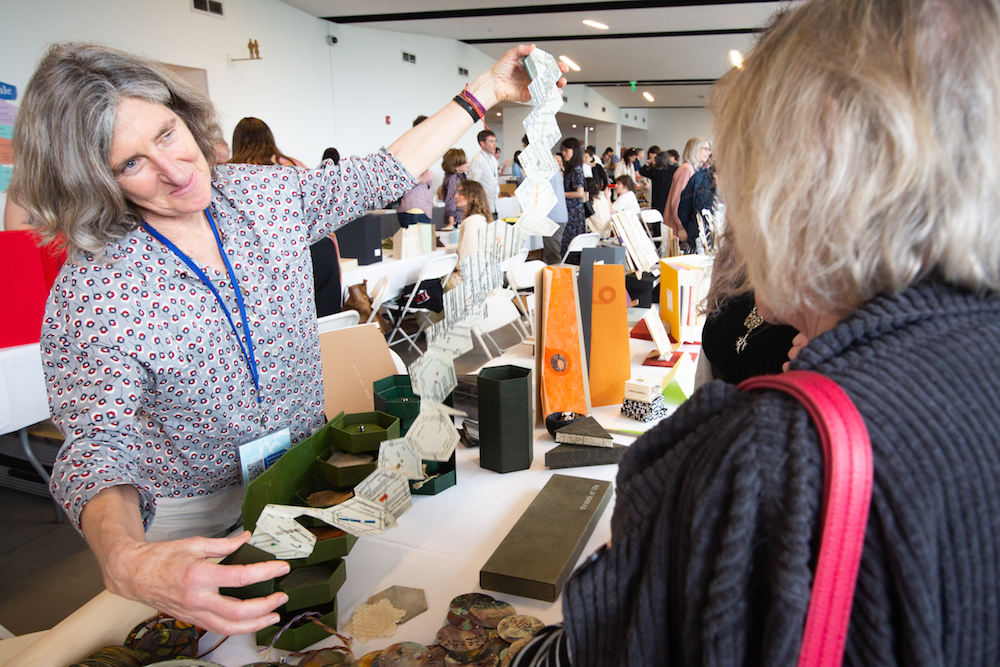
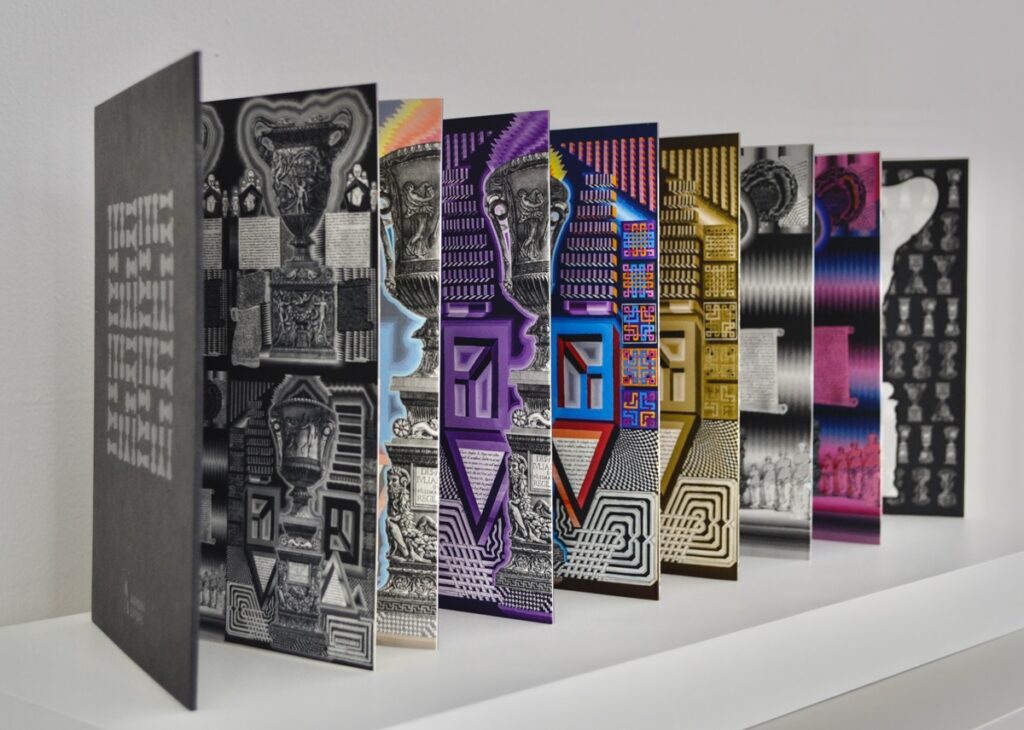
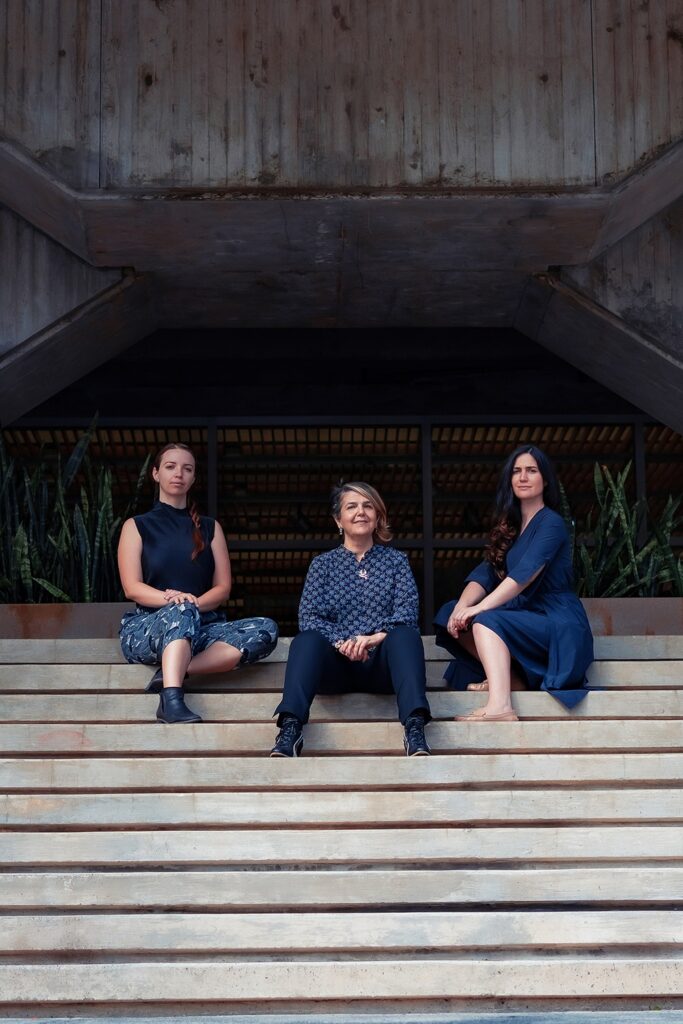
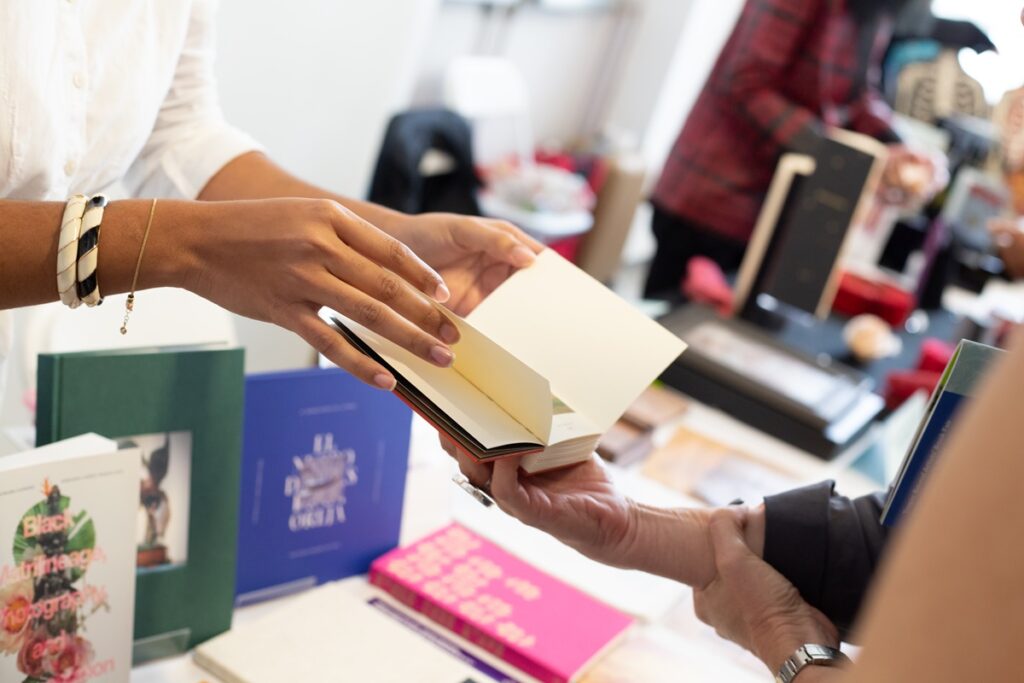
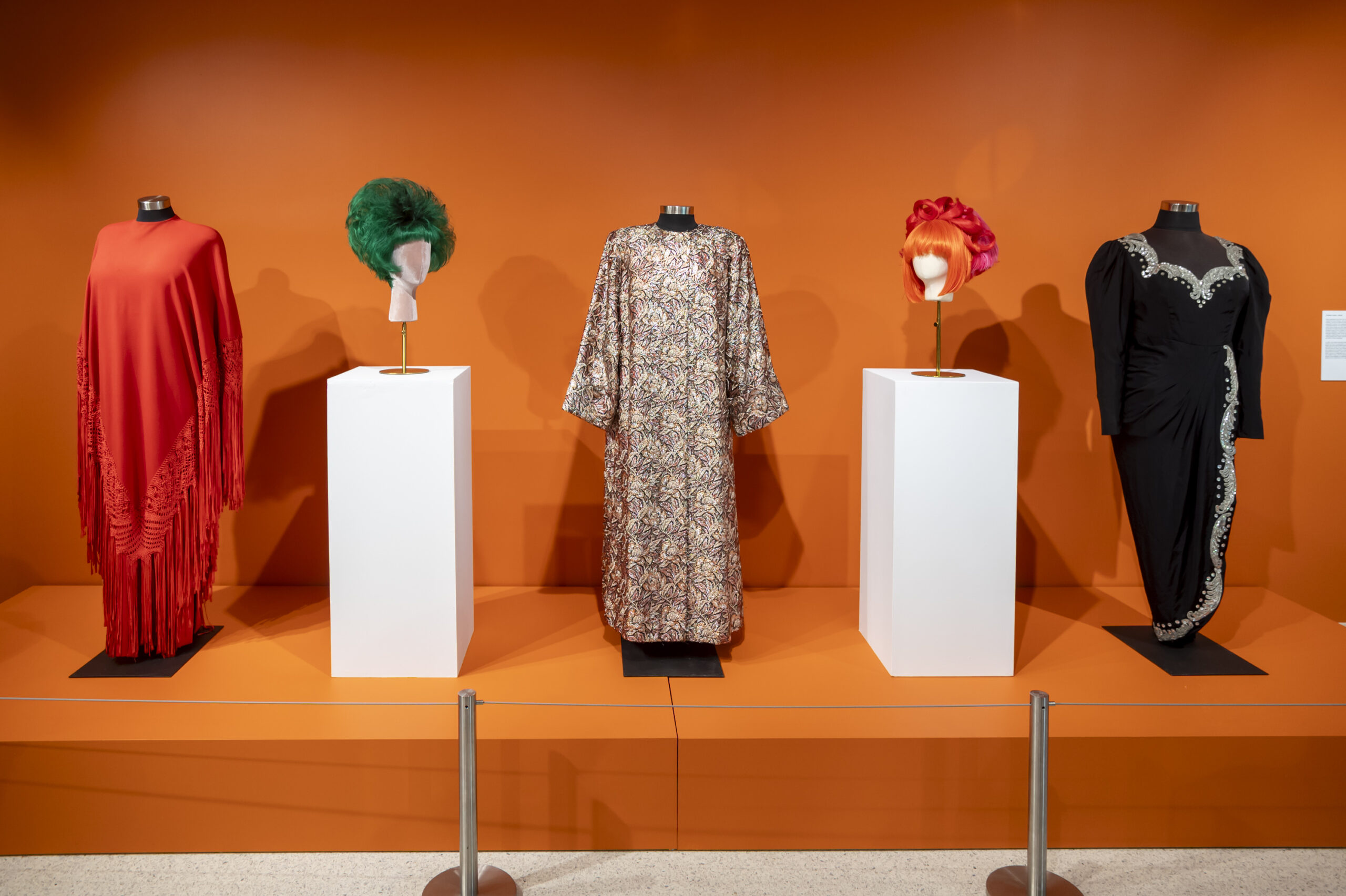


Recent Comments