‘The Gaze Africana’ Showcases Work By 21 International Black Artists
Written By Jonel Juste January 16, 2023 at 6:18 PM
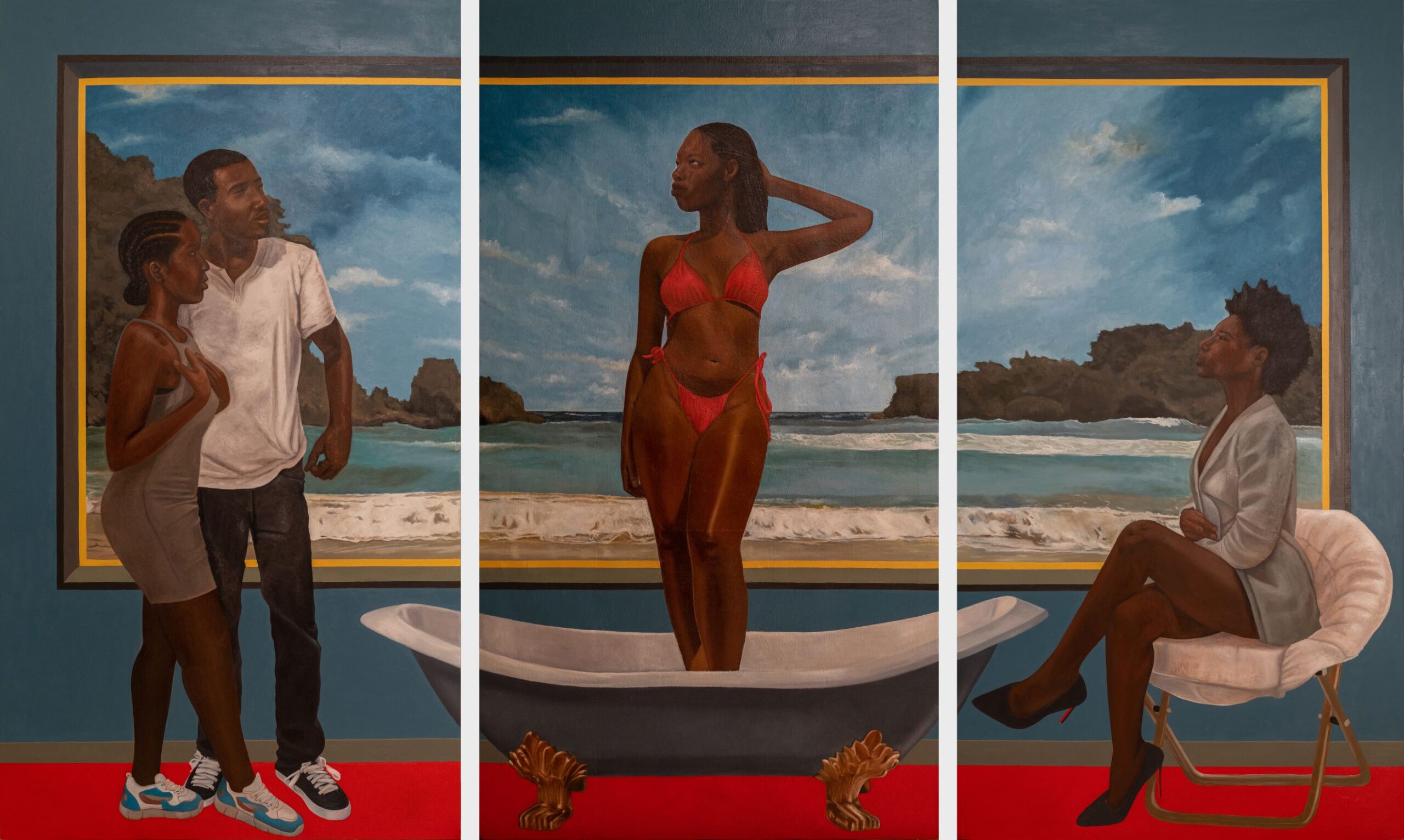
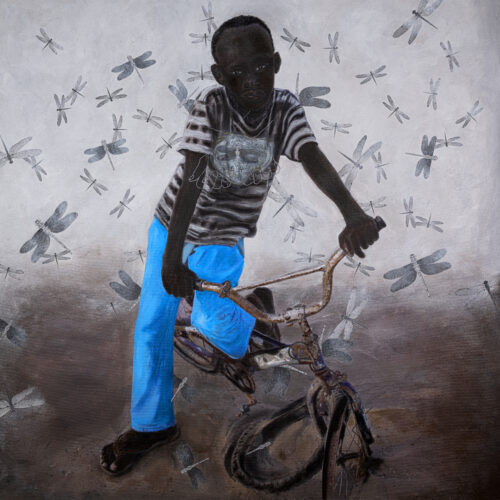
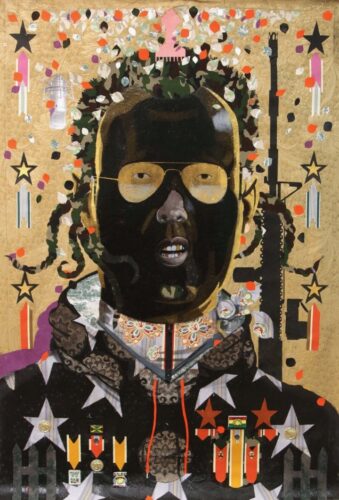
Jamaican artist Kimani Beckford’s “Study from the Birth of Venus” is one of the works on exhibit as part of AfriKin’s “The Gaze Africana” at the Scott Galvin Community Center. (Photo courtesy of AfriKin Art)
Its name is a fusion of two words, Africa and kinship. For Black History Month 2023, AfriKin is presenting “The Gaze Africana,” an art exhibit showcasing the work of artists inspired by the life and legacy of Martin Luther King, Jr., the African American icon and civil rights movement leader.
Presented in collaboration with the North Miami Community Redevelopment Agency (NMCRA), the exhibition is on display through Wednesday, Feb. 28, at the Scott Galvin Community Center.
For three years, AfriKin has been offering annual art exhibitions during Black History Month and Art Basel Miami Beach/Miami Art Week, as signature events of the AfriKin series, according to Alfonso D’Niscio Brooks, AfriKin’s founder and chief executive officer.
The non-profit foundation has been promoting Black Art for over 15 years in Miami, he says.
In the exhibit, “The Gaze Africana,” the term “gaze” is used to describe the way in which African artists are exploring their identity through a contemporary African fine art lens, explains Brooks. It also refers, he continues, to the way in which African artists are looking at their own culture, heritage, and history through their own unique perspective.
“The Gaze Africana” is a way for African artists to challenge the dominant narrative of the African experience. “Through their artwork, African artists are able to present a different perspective on African culture and history that is often overlooked or ignored,” says Brooks.
This concept has been explored in a variety of ways, from the use of traditional African symbols to the use of bright colors and vibrant patterns, along with the use of modern technology and materials.
“The exhibit also serves as a platform for discussing the issues of racial injustice and inequality that continue to plague our society today,” says Brooks.
The exhibit aims to celebrate the beauty of Black culture and the Black world. And what better occasion than Black History Month to do so?
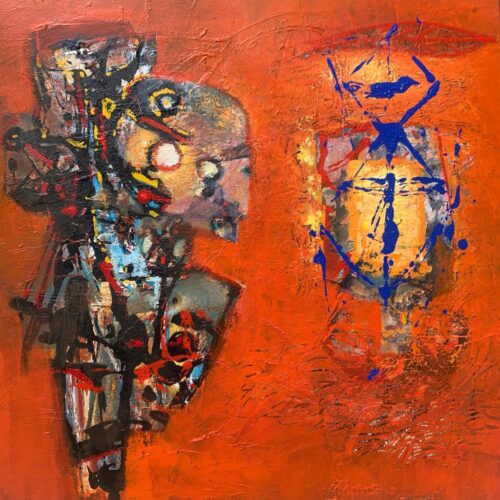
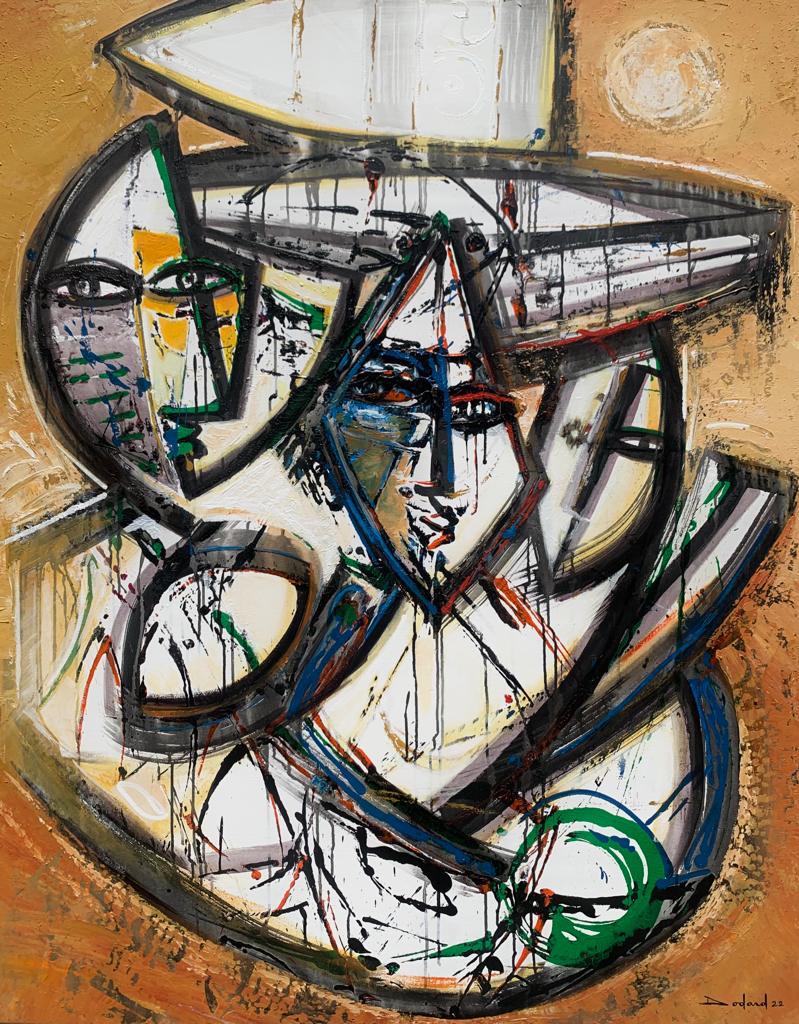
“Transmutation” by Haitian artist Philippe Dodard. (Photo courtesy of AfriKin Art)
“Celebrating Black art during Black History Month is important because it recognizes the contributions of African and African Diaspora artists and their unique perspectives. It is a way to honor their diversity, creativity, and resilience,” according to Brooks. “It is also an opportunity to learn more about the history and culture of people of African origin, as well as to gain insight into our struggles and triumphs.”
Guest artist George Camille from Seychelles still feels there are a lot of obstacles for Black artists to overcome.
“Black artists have gained tremendous recognition and visibility over the last few decades, but there are still a lot of challenges . . . Black History Month presents the world with a constant reminder of the role and importance that Black creators continue to play in the development of art on a global platform,” says Camille.
“Celebrating Black Art during Black History Month is important because it promotes Black history, but even more importantly, it is fundamental to its construction,” adds Ines-Noor Chaqroun from Morocco.
AfriKin’s exhibitions feature a range of internationally acclaimed, emerging or mid-career artists. They are from various parts of the world, including Africa, the United States, the Caribbean, Haiti, Latin America, Europe, and the Indian Ocean.
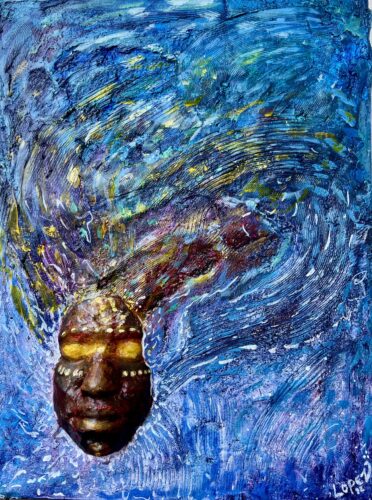
“Rest Easy Beloved” by Niki Lopez. (Photo courtesy of AfriKin Art)
Exhibiting artists in addition to Camilee and Chaqroun are Doba Afolabi (Nigeria), Philippe Dodard (Haiti), Angèle Essamba Etoundi (Cameroon, Netherlands), Joaquin Gonzalez (Spain), Bayunga Kalieuka (Congo), Ricardo Lion Molina (Cuba), Ras Mosera (Sint Maarten), Musa Swallah (Ghana), Carlos Salas (Colombia). Jamaican artists Camille Chedda, John Campbell, Katrina Coombs, Kimani Beckford, Greg Bailey, Yrneh Gabon, Oneika Russell; United States artists include Aisha Tandiwe Bell, Niki Lopez and Amore Kreative.
“One of our goals with AfriKin is to be a conduit that connects Continental Africa and the diaspora. So, at all our exhibitions we do our best to present a good balance of artistry that highlights this amalgamation,” explains Brooks.
Participating for the first time in an AfriKin Art exhibition, Camille recognizes that “being part of the Afrikin art exhibition will allow me as an artist living and working on an isolated island off the African coast to gain access to a wider audience as well as be part of a bigger art community that has a common agenda.”
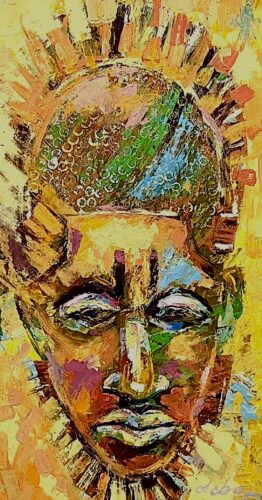
“Benin’s Watching” by Nigerian artist Doba Afolabi. (Photo courtesy of AfriKin Art)
Camille has three large acrylic paintings on canvas in the show including “The Company of Strangers,” which was selected for the recent Dakar Biennale in Senegal.
Returning to AfriKin is Yrneh Gabon, a Jamaican artist and activist. He believes that AfriKin, acting on its social and cultural responsibilities, is how to engage people from Africa and its diaspora. “It is necessary that we re-educate, and I am a firm believer in re-education when it comes to history and culture, “ he says.
The Caribbean artist says that one month is not enough to celebrate Black History Month. “But anytime and reason to celebrate is worth celebrating. Gabon will showcase his new body of work inspired from a conversation with curator and educator Dr. Babacar Mbow on Ghanaian writer Ayi Kwei Armah’s book “The Beautyful Ones are Not Yet Born.”
“Lone Survivor” by Jamacia’s Yrneh Gabon. (Photo courtesy of AfriKin Art)
In addition, several programs will accompany “The Gaze Africana,” including contemporary dance, jazz, and African spiritual music performances, panel discussions, spoken word, film screenings, and business networking. All events are free to public, but RSVP is requested.
“AfriKin utilizes cultural programming to highlight the importance of art and culture in the reshaping of communities. (The) activations and programming are focused on the development of cultural industry, advancement through strategic partnerships and kinship across ethnic lines,” Brooks adds.
WHAT: “The Gaze Africana” by AfriKin Art
WHERE: Scott Galvin Community Center, 1600 NE 126th St, North Miami, FL 33181
At Locust Projects, final Design District exhibitions push boundaries, emphasize community
Written By Douglas Markowitz December 19, 2022 at 11:36 AM
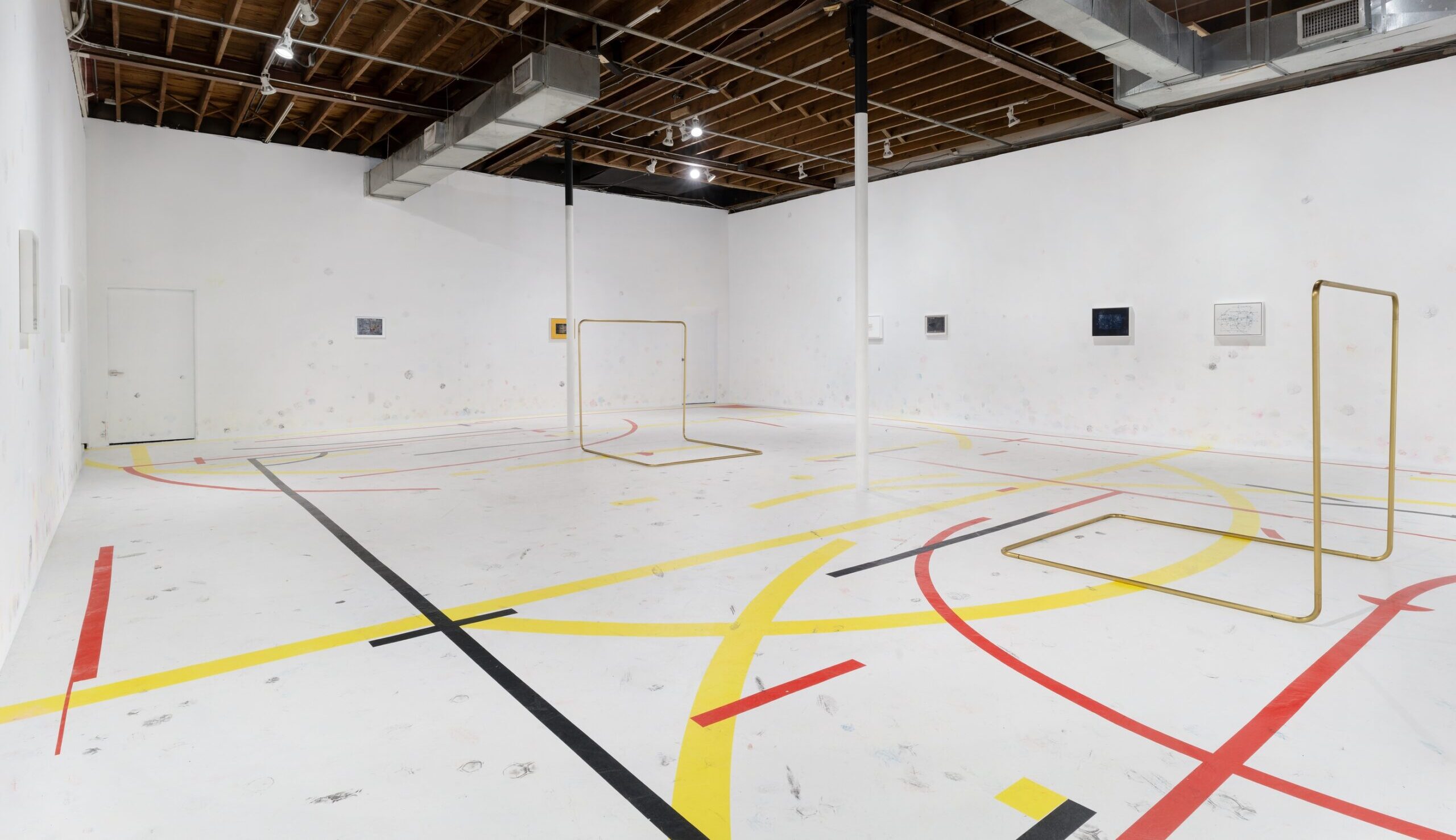
Ronny Quevedo, “ule ole allez,” in the main gallery of Locust Projects’ Design District space through Saturday, Feb. 4. (Photo courtesy of Zachary Balber)
Walking into Locust Projects’ final exhibit at their soon-to-be-vacated current location in the Design District, you might think you have the wrong address. The floors are covered in scuff marks and bright-colored tape. It looks like some kind of indoor soccer field – and that’s exactly the point. For his work “ule ole allez,” Ecuadorian-born artist Ronny Quevedo invited Miami’s local futsal (a hard-court, indoor version of soccer) leagues to come into the space and play with an ink-infused ball.
“So you’ll see on the walls the marks from their shoes, but also the marks from the ball hitting the walls, hitting the floors,” says Lorie Mertes, director of Locust Projects. “Ronny really saw that as a collaborative, community drawing.”
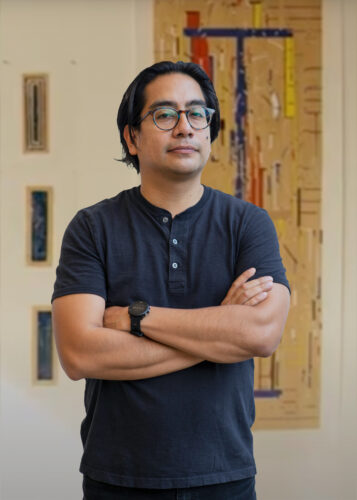
Ecuador-born/New York-city based Ronny Quevedo in his studio. (Photo courtesy of Ross Collab)
Accompanied by small drawings based on soccer strategy charts, “ule ole allez” is Quevedo’s way of showing the creative potential hidden in sport and play. It may be coincidence, according to Mertes, that this mock-futsal court is taking over Locust’s main space during the 2022 FIFA World Cup in Qatar.
But it also feels like a purposeful rebuke of that massive, globalized, controversy-filled spectacle, setting the Beautiful Game back to where it belongs, the pitches and courts and improvised playing fields across the world where possible future Kylian Mbappés and Lionel Messis play and dream.
Community could be seen as a theme, not just in this round of shows but in the whole thread of Locust Projects’ existence. Since 1999, the nonprofit art space has allowed Miami’s artists a very unique blank slate. They give the entirety of their space over to an artist and let them do whatever they want, free of the commercial restraints of a gallery, the pressures of a museum show, or any constraints, really.
They’re even willing to let their artists destroy their building, as Loriel Beltran did in 2009 when he scraped the paint off the walls to make his “Labor Paintings,” or as a pre-fame Daniel Arsham did in 2015 when he dug a hole in the floor to fill with his fossilized sculptures of consumerist debris.
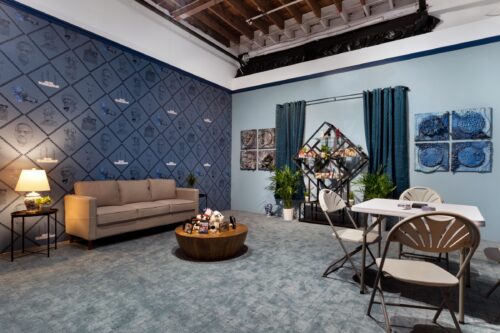
T. Eliott Mansa, “Room for the living/Room for the dead,” 2022, installation view at Locust Projects. (Photo courtesy of Zachary Balber)
It’s that “culture of yes” as Mertes calls it that encouraged T. Elliot Mansa to build his “Room for the living/Room for the dead,” the second of two site-specific installations currently on view at Locust. Mansa’s piece attempts to reconcile a division common in African American homes between formal living rooms full of artifacts and heirlooms and family rooms where people actually gather. Shelves are adorned with family photos and books on Black history and art, and the blue wallpaper is covered with images of Malcolm X and Frederick Douglass.
The space is interactive, and visitors are invited to play cards at the folding table, read the books, or play the copy of John Coltrane’s “Giant Steps” on the turntable.
Miami-born T Eliott Mansa whose current work, “Room for the living/Room for the dead,” is in the Project Room at Locust Projects. (Photo courtesy of World Red Eye)
“I love that spirit because that’s what I want the future space to be as well. We’ve never really had a cool hangout, sort of social space,” says Mertes.
Although the two site-specific works, as well as a guest-curated video exhibition called “Portals of Introspection” by Dimitry Saïd Chamy, Mikey Please, Duke Riley, and Paul Ward, and guest curated by Donnamarie Baptiste, will run through Feb. 4, the nonprofit has already christened its new location, an 8,000-square-foot space former industrial laundry facility in Little River.
Dimitry Saïd Chamy, “Portals of the Night Garden,” still from “Portals of Introspection.” (Photo courtesy of the artist)
In addition to larger exhibit space, Mertes says there will be storage space, fabrication facilities for artists on-site, and an outdoor courtyard, which can host live performances, as well as spaces meant for socializing. The culture of “yes,” however, isn’t going anywhere.
WHAT: Ronny Quevedo: “ule ole allez”; T. Elliot Mansa: “Room for the living/Room for the dead”; Dimitry Saïd Chamy, Mikey Please, Duke Riley, and Paul Ward, guest curated by Donnamarie Baptiste, “Portals of Introspection.”
WHEN: 11 a.m. to 5 p.m.Wednesday through Saturday until Feb. 4.
WHERE: Locust Projects, 3852 North Miami Ave., Miami.
Paradox Museum in Wynwood is mind-blowing experience
Written By Jonel Juste December 13, 2022 at 3:51 PM
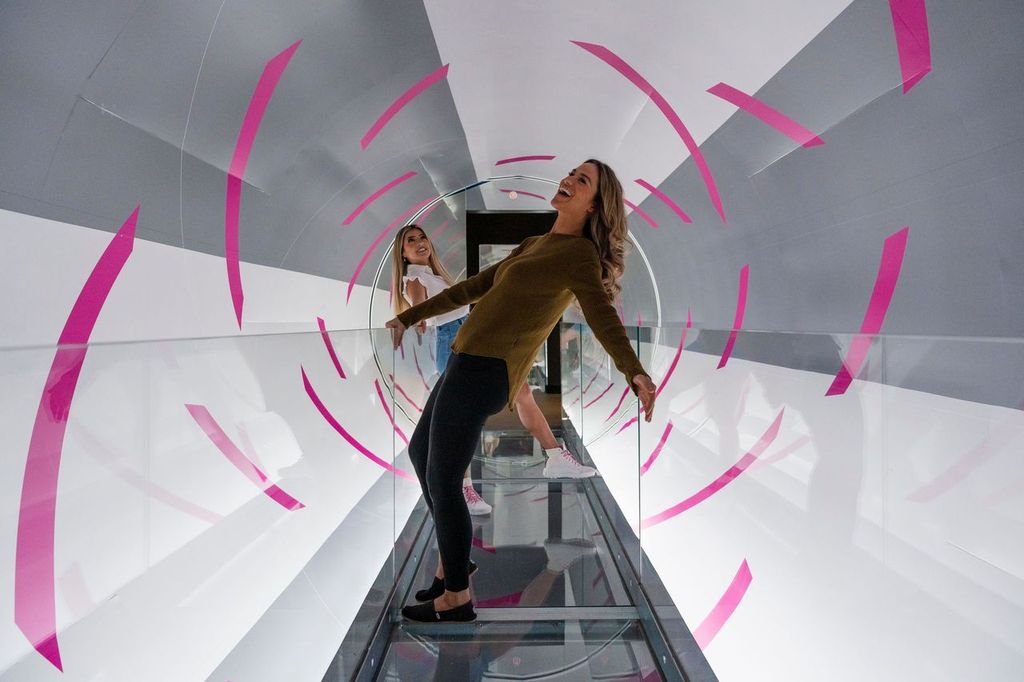
Guests exploring the Tunnel Paradox, which allows participants to balance their bodies and experience perceived movement as they let go. Photo Courtesy of The Paradox Museum.
Described as a “mind-bending indoor venue,” the Paradox Museum certainly messes, in a good way, with our minds. Some could even say it is a bit, well, tricky. The museum, which opened in the midst of Miami Art Week, has over 70 “paradox-based interactive exhibits designed to fool the eyes and challenge the senses.”
Visitors who pay admission for the mind-bend at the for-profit house of illusions ($24 is the average for families who want to buy a four-pack on the weekend, otherwise weekend rates are $27 for adults, and $24 for a children’s ticket, weekdays are $1 less) get 60 to 90 minutes to explore the multiple rooms of illusions.
“Miami is known for its art and exhibitions. We wanted to bring a permanent museum to Miami that was optical, interactive and photographic,” explains Marc Gregory Tipton, the museum’s sales and marketing director.
While mainstream museums and art fairs usually prohibit visitors from touching the exhibits, Tipton says guests at Paradox Museum are encouraged to touch, feel and experience the exhibition.
“We encourage where possible for guests to interact with our paradox-based exhibits. In the museum, most of our exhibits are touchable and can be seen from different perspectives,” says Tipton.
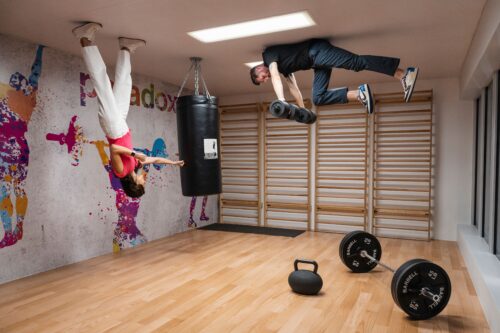
The Gym Paradox. Photo Courtesy of The Paradox Museum.
A visit to the new Miami museum can feel like a magical experience, but it’s actually a very technological one. There are plenty of mirrors, lights, and angles, which are used to trick the mind. Scientific principles are involved in what constitutes “edutainment,” a portmanteau word made up of education and entertainment.
“Our exhibits,” says Tipton, “are all created around STEAM (science, technology, engineering, arts, math). That’s creating the educational aspect along with the entertainment fun for all ages.”
The basis for the name and what’s at the core of the exhibits is a “paradox,” which is presenting something and its opposite at the same time.
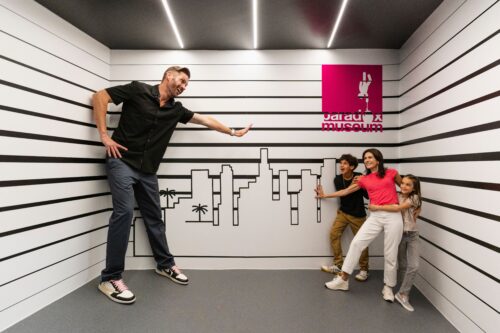
Just some of the paradoxes for visitors to explore are the Tunnel Paradox, which allows participants to balance their bodies and experience perceived movement as they let go, the Paradox Challenge, which combines balloons and levitation, and the AMes room showing guests in giant size next to others in small size. In the Paradox Piano, guests tune in directly to a piano to create a unique melody and a personal piano concerto.
The AMes Room show guests in giant size next to others in small size. Photo Courtesy of The Paradox Museum
Since Paradox is an experiential museum, visitors are expected to fully immerse themselves in the moment and publicly share their experience on social media.
“We have select exhibits where guests will become part of the paradox illusion. Taking photos and videos will create an even more immersive experience,” promises Tipton.
Miami is the first United States city to have a Paradox Museum, according to Tipton. The other two are in Stockholm and Oslo, Sweden.
Tipton says Miami is just the beginning for the U.S.
“We are planning on opening new museums throughout the United States in the next two years,” Tipton says, adding that all the museums will have local culture built into them.
The Paradox Museum’s mission? To educate and amaze at the same time and to blow our mind. And yes, the mind is a terrible thing to leave unblown.
WHAT: The Paradox Museum
WHERE: 2301 North Miami Ave.
WHEN: noon to 7 p.m., Monday through Friday, 11 a.m. to 8 p.m. Saturday and Sunday.
COST: $26, $23 (children 4 to 11 years old), weekday; $27, $24 (children 4 to 11 years old), weekend. Also, four-pack tickets available from $92.
ArtburstMiami.com is a nonprofit source of dance, visual arts, music and performing arts news. Sign up for our newsletter and never miss a story.
No posts found
Art of Black Miami showcases neighborhoods at this year’s art week
Written By Sergy Odiduro December 2, 2022 at 9:01 AM
Philippe Dodard, Dimensional Flow, Art of Transformation exhibit, Opa-locka. (Photo courtesy of Art of Transformation and the artist)
While Art of Black Miami is a year-round showcase of visual arts and artists, it’s become an integral part of Miami Art Week.
Launched in 2014 by the Greater Miami Convention & Visitors Bureau (GMCVB) as an ongoing platform for local artists, Art of Black Miami’s art week offerings are plentiful and varied.
“We’re excited because there are a lot of things happening in this cultural space,” says Connie Kinnard, the Greater Miami Convention & Visitors Bureau’s Senior Vice President, Multicultural Tourism & Development Department. “We powered this marketing program that highlights our art and . . . particularly those artists within the Black Diaspora.”
Kinnard pointed out that there are many sites to visit, including those that aren’t necessarily known for being an art destination.
“We want to encourage people that are coming in to visit to also get out and experience all of our neighborhoods,” said Kinnard. “Our destination is culturally diverse and we know that Black artists in the diaspora are a big part of Miami Dade. We want visitors to be aware of all of the talent that we have in our communities.”
Here’s a sample of some of the upcoming events and the neighborhoods spotlighted.
LIBERTY CITY
“Le Art Noir, Diversity in Color” will be hosting an evening of art, fashion and entertainment on Thursday, Dec. 1 at the African Heritage Cultural Arts Center.
“This is our second year and we are coming in bigger and better,” says spokesperson Randi B. Berger. “We have extended the amount of diverse artists that we have this year. We’ve also gone into a lot more of 3D and digital NFTs.”
The all-encompassing event will expand beyond traditional art mediums.
“We will be having cutting-edge fashion and a celebration of music. We’re doing a lot of pop culture and we’re doing issues that are very poignant. In today’s society, we’re giving a voice to those that typically could not be heard.”
WHAT: “Le Art Noir, Diversity in Color”
WHERE: African Heritage Cultural Arts Center, 6161 NW 22nd Ave.
Hampton Art Lovers is hosting The Point Comfort Art Fair + Show at the Historic Ward Rooming House and Gardens in Overtown. Their goal is to not only promote local art, but to also provide a meeting space for conversation and music.
“We have a multi-dimensional fair where we have something called our Indaba Lounge Series which is a series of our talks that we produce. We also have our nighttime events,” says Chris Norwood, co-founder of Hampton Art Lovers.
He hopes that visitors will stop by and see what’s in store.
“If you want to see black art, come to a historic black community,” said Norwood. “We are providing a place where African-Americans and anybody can come and experience black culture in a way that is digestible during the largest cultural event in North America.
Norwood said that their event is a great way to purchase authentic African-American art even if you’re on a tight budget.
“We sell art at every price point,” he says. “Everybody can leave there with something if they want. And that’s very important to us. ”
WHAT: The Point Comfort Art Fair + Show
WHEN: Various events through Sunday Dec. 4
WHERE: Historic Ward Rooming House, 249 N.W. 9th St.
The “Art of Transformation” is a two-block event in Opa-locka featuring a dance performance, film screening, panel discussion and three art exhibits.
Tumelo Mosaka said that the event stems from continuously engaging artists and the community.
Phillip Thomas, “High Sis in the Garden of Heathen,” 2017, 58 x 70, Mixed Media on Fabric. (Photo courtesy of Art of Transformation and the artist)
“I’ve been doing an exhibition in Opa-locka almost every other year, looking at artists from the continent and the diaspora and bringing them here to create first-class exhibitions. And now this is a larger manifestation of the interventions we’ve been doing.”
The individual shows highlight different aspects of the African diaspora.
Mosaka, who is overseeing all of the exhibits, is also the curator for “This Here Place: Africa and the Global Diaspora.” which features six international artists from the Opa-locka Development Corporation collection.
The remaining two exhibits will be held nearby.
“We invited an organization that has worked with Haitian artists to bring their conversation into the mix in terms of thinking about how the Caribbean diaspora engages in the emotions about identity and representation,” said Mosaka. “They will be presenting an exhibition that’s trying to trace the artistic language of Haitian artists who have lived both in Haiti and in the diaspora in terms of thinking about what has been the vocabulary and the language of thinking about representation by Haitian artists. That exhibition is called “A Beautiful Human Love.”
“The other one called “AfriKin Art 2022: The Beautyful Ones Are Not Yet Born.” is an exhibition that is looking primarily at emerging artists out of the diaspora and thinking about this moment of recognition, this moment of thinking about what the future holds: Have we really arrived or are we still struggling?
“It’s a very interesting conversation that each exhibition brings and so we hope to continue bringing exciting things and putting Opa-locka on the map in terms of really offering the best that there is to offer with what we’ve got.”
WHAT: The Art of Transformation
WHEN: Various Events Through Sunday Dec. 4
WHERE: Ali Baba Ave., between Opa-locka Blvd. and Aladdin St.
SHENEQUA, Bronze Wumman. (Photo courtesy of Art of Transformation and the artist)
LITTLE HAVANA
Bring the family out to a day of festivities at the 10th Annual Umbrellas of Little Havana Art Festival. Held in partnership with the Miami Lighthouse for the Blind, the event will feature a variety of art displays along with an impressive array of hand-painted patio umbrellas by local artists. This year visitors will have the opportunity to view 25 new designs.
WHAT: 10th Annual Umbrellas of Little Havana Art Festival
According to Kinnard, the events provide the perfect opportunity to purchase art while supporting the arts community.
“We want visitors to come in and be aware of all of the talent that we have.
She said that everyone can participate.
“I think there are times where people look at art in itself and think it’s an elite situation but it is for anybody. There are no barriers.”
No posts found
Artists in Residence in Everglades summit contemplates art, diversity and the environment
Written By Sean Erwin November 29, 2022 at 3:51 PM
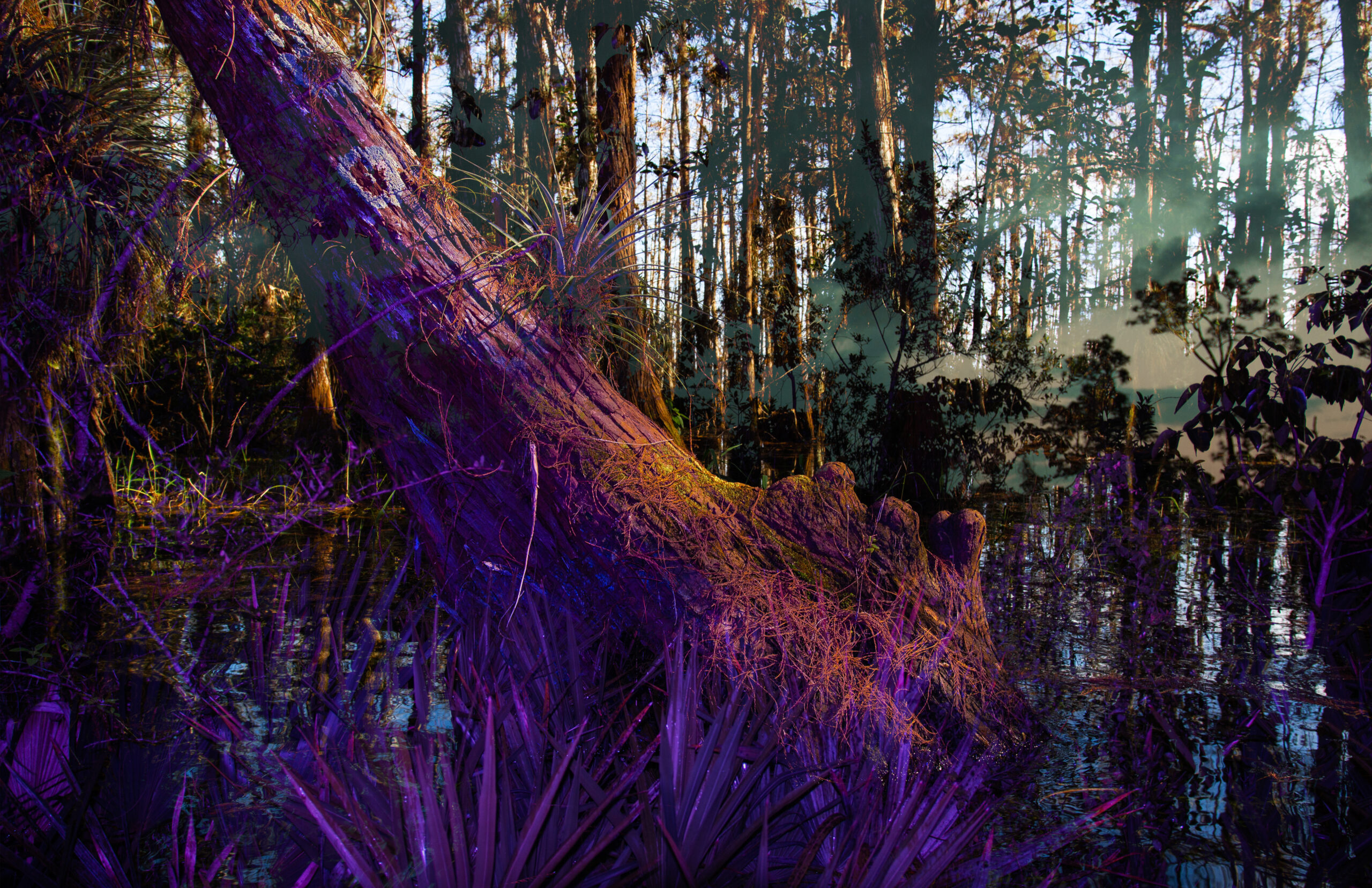
“Passages,” an immersive installation and soundscape, was created by Cornelius Tulloch and features the 2022 artists in residents in Everglades recipients. (Photo courtesy of AIRIE)
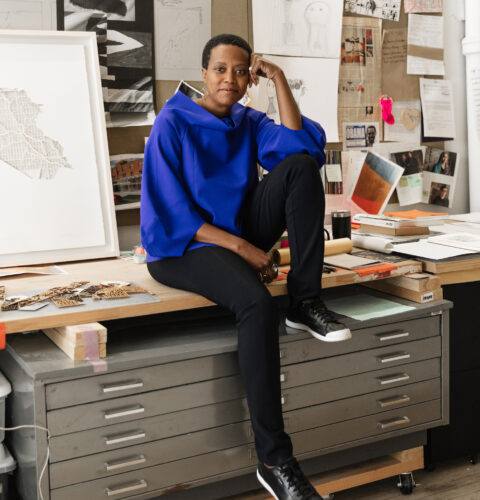
Amanda Williams uses color and her training in architecture to investigate issues related to race and the urban environment.
For her 2016 “Colo(red) Theory” series, the MacArthur Fellow and Chicago-based visual and installation artist painted eight buildings slated for demolition in the South Side of Chicago with colors named like Ultrasheen (hot blue tone), Newport 100s (soft blue tone), Crown Royal Bag (velvety purple) and Flamin’ Hot Cheetos (bright red-orange).
Amanda Williams, artist and architect, 2022 MacArthur Fellow, is one of the featured speakers at AIRIE’s Art and Environment Summit. (Photo courtesy of the MacArthur Foundation)
Williams crafted colors that resonated with the Black community and the palette of the neighborhoods she grew up in.
When asked in 2020 to participate on the National Advisory Council for AIRIE (Artists in Residence in Everglades) to reimagine the 21-year-old, non-profit Everglades residency program, Williams saw an opportunity in South Florida’s urban environments and the river of grass to increase diversity among the artists who are involved in AIRIE’S month-long immersions.
“AIRIE is finding new ways to reconceive the natural,” says Williams. “There is an ability to help people understand that you can’t stay stuck in the injustice, and this is especially hard for communities where that injustice is barely being acknowledged at all.”
She will be a key speaker during the Friday, Dec. 2 AIRIE Art and Environment Summit alongside Adam Ganuza, the chief of staff for the president’s office at the Knight Foundation, Alexander Cunningham Cameron, Cooper Hewitt curator and Hintz Secretarial Scholar, Tatiana Mouarbes of the Open Society Foundation, and Reverend Houston Cypress representing the Love the Everglades Movement.
Williams investigates the idea of land ownership and the question of who gets to own what and why. “Where’s the delineation of who owns this, and how is this based on those kinds of documents and policies which have had physical outcomes on the environment?” questions Williams.
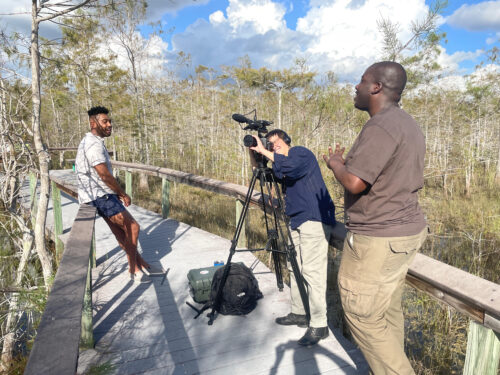
Cornelius Tulloch, right, directs filmmaker Alexa Caravia and AIRIE Fellow Kunya Rowley in the creation of a piece for “Passages.” In the immersive installation, Rowley performs a song he wrote that was inspired by his time as an AIRIE resident artist in the Everglades. (Photo courtesy of Meg Ojala)
When asked what role artists can play in defending environments such as the Everglades threatened by rising sea levels and global warming, Williams answers: “Yes, it (the Everglades) is probably going to go away, but how do we own the effort of making work that’s joyful right now and how does this empower us to act?”
She references Cornelius Tulloch, a Miami-based artist and 2022 AIRIE Fellow.
“For instance, Cornelius did this wonderful work of lighting at night that conveys the notion of the African Diaspora and people moving through this landscape (the Everglades). It’s beautiful to look at but what it speaks to is extremely powerful,” says Williams referring to Tulloch’s immersive installation “Passages,” which forms the artistic focal point of the summit.
Tulloch, who grew up in South Florida, had only visited the Everglades once during a high school trip. The AIRIE residency program allowed him to get to know the park and its rich history in a deeper way, he says.
The artist was especially inspired by the history of the Florida Highwaymen – a group of 26 mostly self-taught African-American painters who traveled the 95 corridor of Florida’s east coast during the Jim Crow period making a living from selling their paintings.
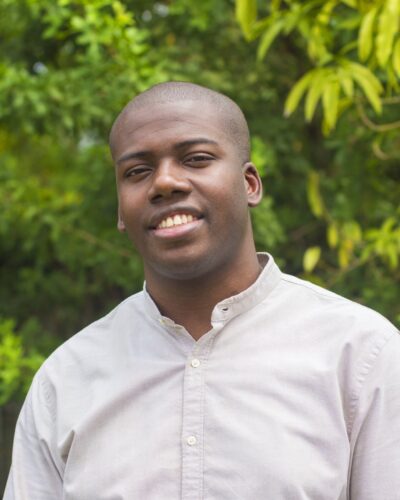
Artist Cornelius Tulloch. (Photo courtesy of Gwen Tulloch)
“These are hidden histories that we don’t think about all the time,” says Tulloch, “and these were artists who were not just thinking about ecology, but there is a lot of intersection of their narratives within the South Florida environment and a consciousness of the environment.”
Drawing inspiration from his Jamaican and African-American heritage, Tulloch’s work expresses how bodies exist between cultures, borders, and characteristics to create spatial impact.
His work has been exhibited widely including at The Kennedy Center for the Performing Arts, the Miami Pulse Art Fair, and the Museo Nazionale Delle Arti Del XXI Secolo in Rome. In 2016, Tulloch was named a Presidential Scholar in the Arts and, in 2020, the artist received the Ellies Creator Award from Oolite Arts. And recently was named an Emerging Visionary Grantee by Instagram and the Brooklyn Museum as part of its 2022 BlackVisionaries program.
Tulloch co-created “Passages” with the eight other 2022 AIRIE Fellows, who are artists working in a diverse array of mediums from sound to song and poetry, including Arsimmer McCoy, Francisco Masó, Kunya Rowley, M. Carmen Lane, Ania Freer, Lola Flash, Justin Matousek, and Alexa Caravia. According to ARIE, 225 applications were submitted for the nine Fellows spots for 2022. AIRIE’s selected fellows, as is the norm, received a $4,000 grant for a one-month residency in Everglades National Park and were provided housing and a stipend for the length of the residency.
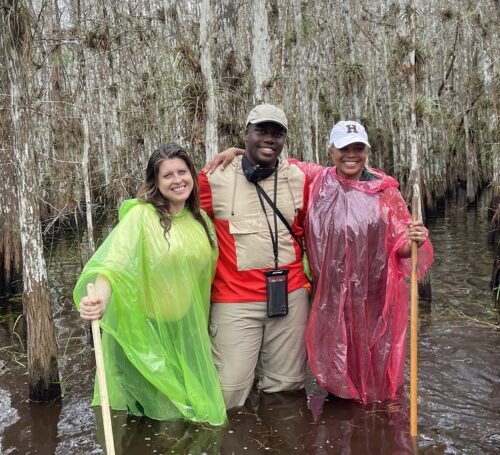
Evette Alexander, AIRIE executive director, Cornelius Tulloch, artist and AIRIE creative director, and Tracey Robertson Carter, co-chair of the board, in Everglades National Park. (Photo courtesy of AIRIE)
The summit represents AIRIE’s largest event to date and is its first Art and the Environment Summit. “This is an opportunity to build a more inclusive community around the issue of environmental justice to convene leaders and highlight the stories and interpretations that artists like Cornelius are making with the Everglades,” according to Evette Alexander, AIRIE’s executive director.
Since 2021, almost 200 creatives from artists to writers to curators have been selected for AIRIE residencies. “We curate our residency experience,” explains Alexander. “Artists go out with scientists, hydrologists and (experience) controlled burns, kayaking, slough slogs (wet hiking through the cypress domes). We really do immerse our artists in the landscape and their stores,” says Alexander.
WHAT: AIRIE (Artist in Residence in Everglades) Art Installation and Summit
WHERE: The Carter Project, 3333 NW 6th Ave., Miami
WHEN: 10 a.m. to 2 p.m., Friday, Dec. 2. The art installation,“Passages,” is on view to the public from noon to 4 p.m. at the Carter Project through Sunday, Dec. 4.
COST: The event and installation are free. A separate RSVP and $10 donation is required for the 12:30 p.m. lunch.
ArtburstMiami.com is a nonprofit source of dance, visual arts, music and performing arts news. Sign up for our newsletter and never miss a story.
No posts found
12 artists, 12 Miami Beach hotels for 3rd and largest edition of ‘No Vacancy, Miami Beach’
Written By Michelle F. Solomon November 18, 2022 at 9:58 AM
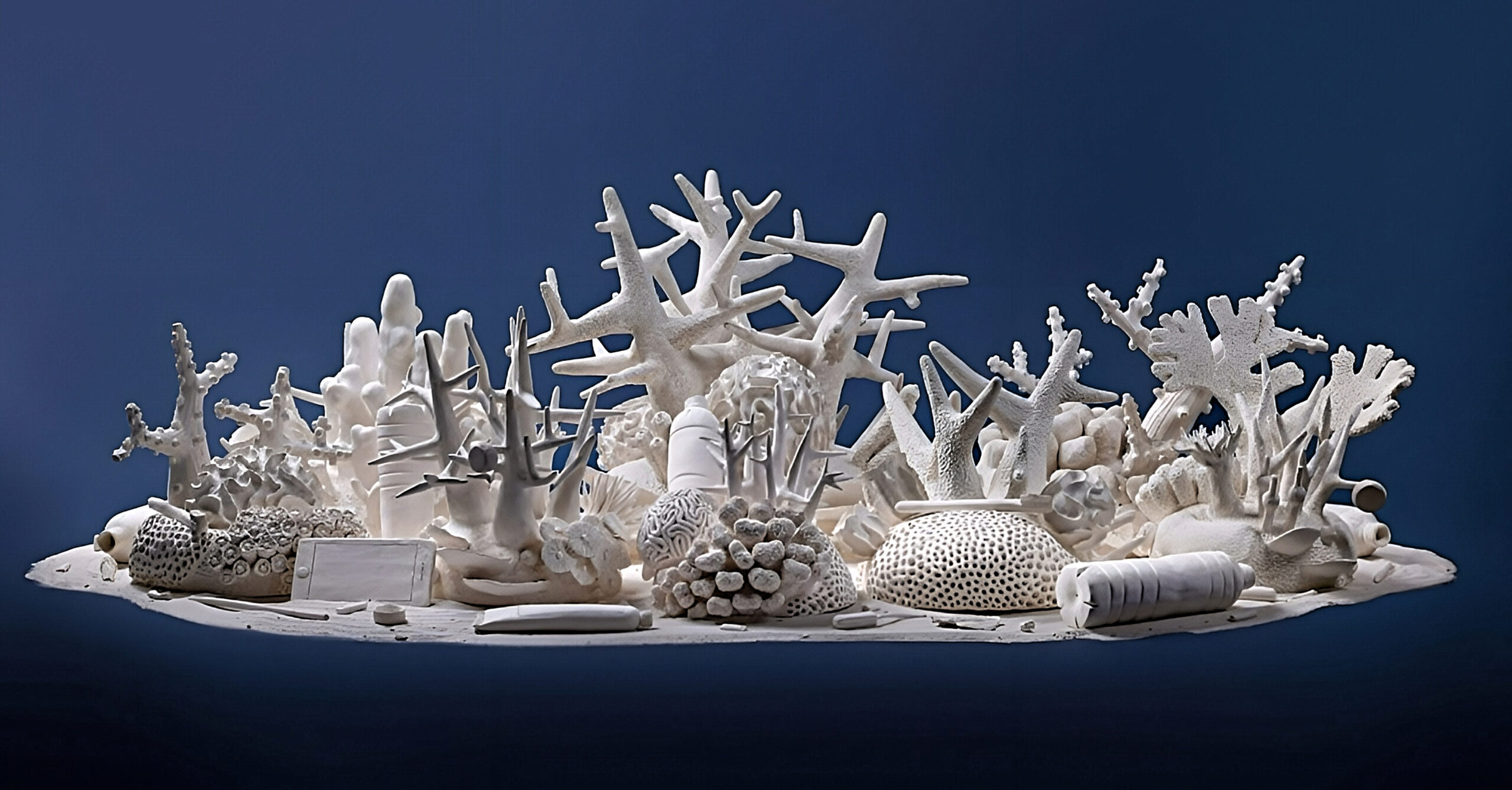
“Carcass,” Beatriz Chachamovits, hand-built ceramic installation, Esme Miami Beach, 1438 Washington Ave., is part of the third edition of “No Vacancy, Miami Beach,” on public display through Thursday, Dec. 8. (Photo courtesy of City of Miami Beach and the artist)
Known as some of the most art-centric hotels in the country and, in fact, the world, visitors and locals to Miami Beach will discover that, at any given time of the year, the hotels of Miami Beach excel in displays of original works of art.
Going another step further in their status as destinations for art, the City of Miami Beach and the Miami Beach Visitor and Convention Center (MBVCA) are, for the third year, partnering with hotels for “No Vacancy, Miami Beach,” a collection of site-specific works by 12 local artists paired with 12 of the most storied hotels on Miami Beach.
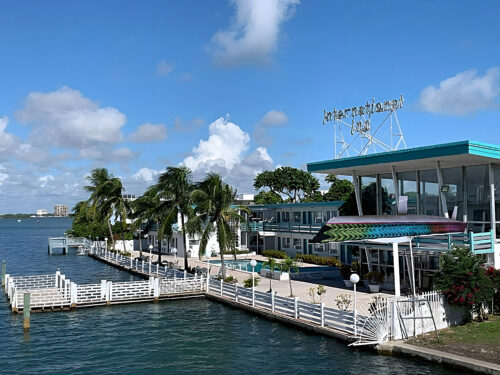
“Angle of Vanishing Stability (AVS), Justin Long, site-specific installation, The International Inn on the Bay, 2301 Normandy Drive. (Photo courtesy of City of Miami Beach and the artist)
The third edition of “No Vacancy, Miami Beach,” on view from Thursday, Nov. 17 through Thursday, Dec. 8, is the largest since the juried art competition’s first edition in 2020, according to the organizers from the City of Miami Beach Art in Public Places Committee, Cultural Arts Council (CAC) and MBVCA.
“It’s an opportunity for the hotels,” says Deborah Plutzik-Briggs, vice president, arts at The Betsy Hotel, South Beach, (1400 Ocean Drive). The hotel was paired with Hollywood, Fla., artist Sri Prabha for the installation “Cosmic Occupancy,” which will have a selection of three separate video projections on The Betsy’s Orb.
According to the artist, video projections on and around The Orb are meant to create a dynamic and contemplative space to reflect upon an individual’s place in the universe. The Orb, a spectacle in itself, is a work of public art, connecting the Betsy Hotel and the Carlton Hotel across an alleyway (14th Place and Ocean Court).
“The projections onto The Orb and into the alley illuminate the entire outdoor space. It enables The Betsy to bring the arts outside and invites the community to come inside to see what else is going on,” says Briggs.
“Cosmic Occupancy,” Sri Praba, video projects at the Betsy Hotel, 1400 Ocean Drive. (Photo courtesy of City of Miami Beach and the artist)
Artists were selected from a call for submission and selected by representatives from the City of Miami Beach Art in Public Places Committee, Cultural Arts Council (CAC) and the MBVCA. Artists received $10,000 to facilitate the creation of the artwork and are paired with the hotel location which would show the work.
The works on view also give the public a chance to voice their opinion and vote for their favorite. The Greater Miami Convention & Visitors Bureau is awarding $10,000 to one of the artists for its Public Prize and anyone can cast their vote beginning Nov. 17 at mbartsandculture.org.
An additional $25,000 Juried Prize will be awarded to a “No Vacancy, Miami Beach” artist and selected by a jury of local art professionals. Winners will be announced on Dec. 8, 2022.
“This is our third go around with “No Vacancy” and what’s been great is the (selection committee’s) ability to match us with artists that understand who we are — not every artist fits in every hotel space. Every hotel is different just like every artist is different. Hotels have a soul, and they have an aesthetic and sensibility that I believe can amplify an artist’s work,” says Briggs.
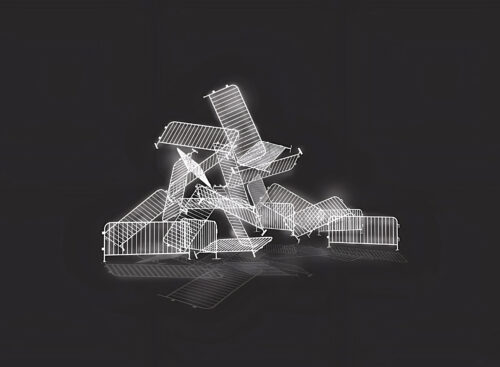
At the Faena Hotel Miami Beach (3201 Collins Ave.), the work is “Patria y Vida” by Antonia Wright and Ruben Millares, a large light sculpture using 18 metal barricades with LED lights bound together and arranged in a chaotic formation. The artists describe the site-specific installation as a celebration of people’s right to peacefully protest. The barricades are part of a series by the pair where they ponder the familiar barricade focusing on it as a symbol of resistance.
“Patria y Vida,” Antonia Wright and Ruben Millares, large-scale light sculpture, Faena Hotel Miami Beach, 3201 Collins Ave. (Photo courtesy of City of Miami Beach and the artist)
“For us within “No Vacancy,” it is important to collaborate with the City of Miami Beach. They are doing beautiful programs and supporting artists, which is very much in line with what the mission of Faena Art is,” says Nicole Comotti, executive director of Faena Art. Comotti comments on how vital it is that work by local artists be seen and funded in programs such as “No Vacancy, Miami Beach” especially during Miami Art Week.
Comotti says “No Vacancy, Miami Beach” brings a “tone of unexpectedness and access” to visitors.
“Rather than just renting a hotel room, you’re learning about and being exposed to artists in the local community, and you’re being given access to something that you wouldn’t necessarily have,” says Comotti. “The hotel is not only a place for you to come and stay, but is a place for you to enjoy, to educate yourself in art and culture and entertainment. It is also a place that supports the community.”
See the works of art created by local artists at these hotels, free and open to the public.
Costa Rican’s monumental sculptural works transform downtown Miami park into outdoor museum
Written By Ana Maria Carrano October 21, 2022 at 2:17 PM
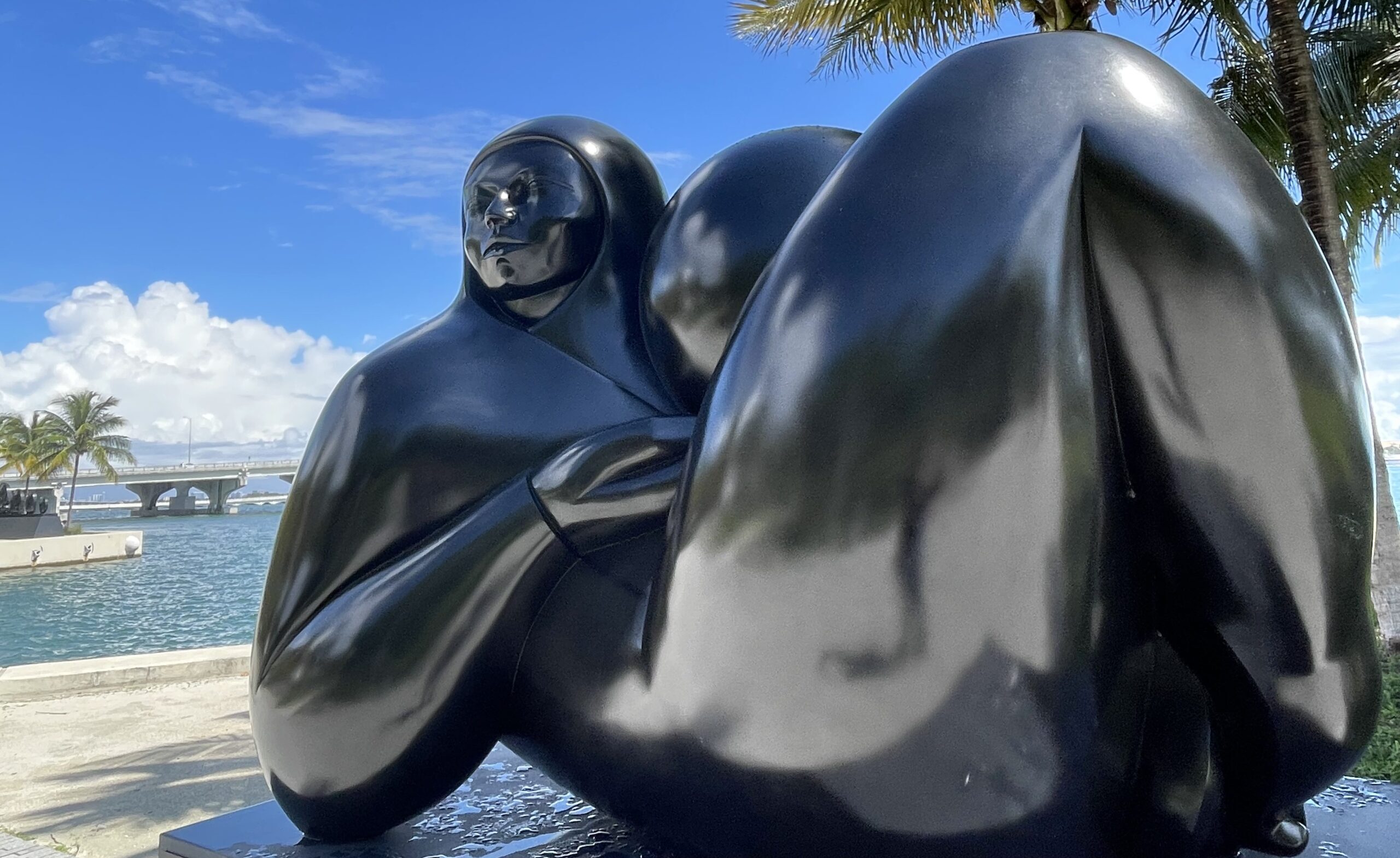
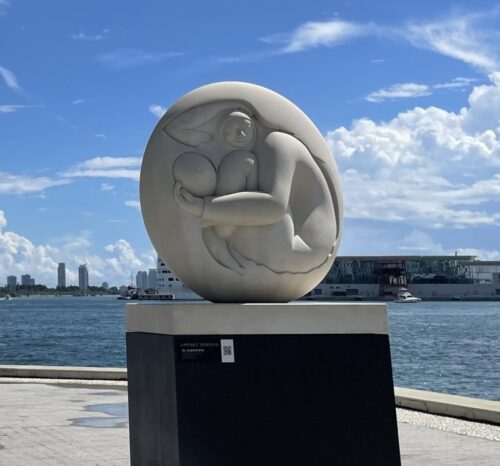
The 2,204-pound bronze sculpture “Recuerdo Profundo” by Costa Rican artist Jorge Jiménez Deredia is one of 14 works in “A Bridge of Light” in Miami’s Maurice A. Ferré Park through March 23, 2023. (Photo courtesy of Ana Maria Carrano)
When Hurricane Ian was approaching the state of Florida near the end of September 2022, the monumental works of Costa Rican sculptor Jorge Jiménez Deredia were already in Miami. They were in the midst of installation at the Maurice A. Ferré Park for the outdoor exhibition “A Bridge of Light.”
Not knowing if Miami would incur any wrath from Ian, the monumental-sized sculptures needed to be protected. Despite the size and weight, such as the “Egg-genesis” (4,188 pounds and 20 feet long), the pieces needed to be secured with large cargo straps to prevent any monumental fall.
Ian missed Miami and the 14 sculptures remained safe, making their debut on Oct. 12, where they will be on display at the waterfront until March 31, 2023.
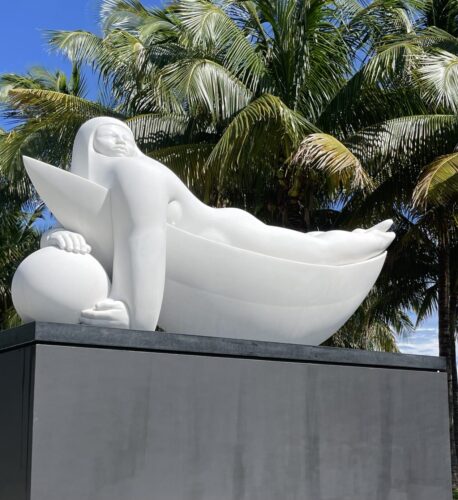
Jorge Jiménez Deredia, “Refugio,” white marble. 45.27 x 102.36 x 31.49 inches. 5,511 pounds. (Photo courtesy of Ana Maria Carrano)
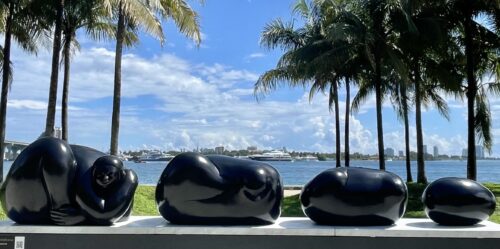
“A Bridge of Light” showcases a decade of work by Deredia, who references them as “sculptural groups” because some pieces are composed of four sculptures illustrating the transmutation of matter. The exhibition proposes an inner journey, a reflection of oneself, an intimate path, and an encounter with the cosmos, he says.
Using similar techniques as the ancient Greek and Roman sculptors – by hand and without machines – each piece takes eight months to a year to be produced. Sizes vary from 6.5- to 30- feet long and weigh between 880 and 13,000 pounds. All are made at the artist’s workshop in Italy, located near the Carrara quarries. There, 34 employees assist, and the materials are mined from four nearby foundries.
Some sculptures are made of dark, polished bronze. Their curved forms reflect the sky, the water of Biscayne Bay or the silhouette of the person who is looking at them. Their shape seems to defy gravity. Other works are white and solid, hand-carved from the marble of Carrara.
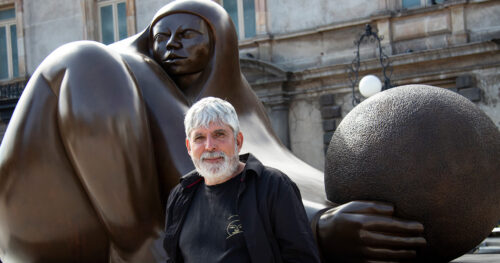
Costa Rican sculptor Jorge Jiménez Deredia (Photo courtesy of Ignacio Guevara)
The sculptures compose a symbolic “description of the transmutation of matter” to be a bridge between the artist and the viewer. “I am convinced that in life’s journey, we participate in the great cosmic process of life and the universe. We help the universe fulfill its destiny with our existence,” explains Deredia. “In my sculptures, I try to take a snapshot of that spiritual baggage, that deep, cosmic history that we all have.”
He reveals that this is the idea of “A Bridge of Light” —”to go inside people’s spirituality and offer the opportunity to have communication on a deep level,” he says.
The exhibition’s location in the Maurice A. Ferré Park, next to the Pérez Art Museum Miami, and facing Biscayne Bay, also offers different associations of the sculptures with the city.
Jorge Jiménez Deredia, “El Alquimista,” Vratsa marble. 92.51 x 78.74 x 46.85 inches. 13,007 pounds. (Photo courtesy of Ana Maria Carrano)
Miguel Ferro, artistic director of Bayfront Park Management Trust, discusses the connection between the landscape and sculptures. “Behind them is the arena (formerly known as American Airlines Arena) and the Freedom Tower . . . the first canal entrance to the U.S. mainland and the other side is the (MacArthur) Causeway.” These are symbols of entry, connection, and settlement to the city.
Ferro says it was fascinating to watch the artist as he curated the exhibition, defining where to place each sculpture in balance with the landscape’s background. “It was magical to observe how the sculptures would harmonize within the space.”
Born in Heredia, Costa Rica, on Oct. 4, 1954, Deredia moved to Italy in 1976 when he received a scholarship to study at the Academy of Fine Arts in Carrara. He opened his studio there, worked as a sculptor and attended architecture classes at the University of Florence.
His work became known for his spiritual quest. In 1999, he was contacted by the Vatican in Rome, and after talking to Pope John Paul II, he produced the first monumental work by a Latin American artist to be placed in St. Peter’s Basilica, a 17.5-foot-tall statue of St. Marcellino Champagnat, which is housed in one of the niches built by Michelangelo. However, when Deredia explains the roots of his spiritual journey, he doesn’t connect his art to Catholicism. He instead refers to his quest in a broader symbolism: “the transmutation of the matter.”
Jorge Jiménez Deredia, “Génesis del Huevo.” Photo Ana María Carrano Bronze. 47.24 x 237 x 43.30 inches. 4,188.78 pounds (Photo courtesy of Ana Maria Carrano)
The artist recalls how a text written by art critic Pierre Restany in 1985 was key to understanding his work more as a transformational process. The French critic described Deredia’s work as “spiritual itineraries” rather than finished sculptures. Grasping the meaning of his work through the critic’s voice marked a moment of “spiritual revelation and cosmic illumination,” Deredia says.
Only a month later, he changed his last name from Jiménez Martínez to Jiménez Deredia (as the combination of the words “de Heredia/from Heredia,” his hometown). The moment also marked the beginning of the creation of the “Génesis” series, a group of four sculptures representing the mutation of matter.
Deredia’s “spiritual itineraries” can go from abstract to figurative. The essence is the symbolism.
“I invented the theory of transmutative symbolism,” Deredia explains. “Symbols help us to understand that dark part that lives inside us. Symbols are effective in helping us understand existence because they not only show us obvious things, they also show us things that are hidden.”
WHAT: “A Bridge of Light” by Costa Rican artist Jorge Jiménez Deredia
WHERE: Maurice A. Ferré Park, 1075 Biscayne Blvd, Miami, FL 33132
Germane Barnes explores Black identity in ‘Unsettled’ at Nina Johnson gallery
Written By Jonel Juste October 15, 2022 at 12:22 PM
Germane Barnes, “That’s Not The Right Size,” 2022, is included in the exhibition “Unsettled” at Nina Johnson gallery, Little Haiti, through Nov. 19. (Photo courtesy Greg Carideo)
As a Black man, architect Germane Barnes values African migration because it is the essence of his ancestors, he says. In an exhibition of his work, “Germane Barnes: Unsettled” at Nina Johnson gallery, he explores both memory and identity related to these values.
“Their migration was forced through enslavement while mine is free and a direct result of their sacrifices,” says Barnes. He speaks of “processes and culture” and of working in a field that “often ignores the African continent in favor of Eurocentric design ideologies . . .”
The specific body of work is a result of the artist’s recent time in Italy as a fellow of the American Academy in Rome, where he researched and explored North African influences of Classical Architecture and Design.
The artwork is “Unsettled” due to the fact that Barnes is an ever-evolving designer that continues to explore and learn more about his own ancestry. “It’s also representative of how Black people across the globe are often not allowed to settle anywhere outside of the African continent. Anger, resentment, and xenophobia are especially audible towards Blackness everywhere,” he says.
Germane Barnes, architect and designer, whose exhibition at Nina Johnson gallery explores the connection between race and structures. (Photo courtesy of Greg Carideo)
He’s also exploring the influence of built environments on Black domesticity. His practice is heavily influenced by his own history and global history, and he believes architecture can be used to tell stories that are otherwise left behind.
In addition to exploring migration from an African perspective, Barnes’ exhibition also relates his personal journey from Chicago to Cape Town, then Los Angeles to Miami.
“I am a Chicago-born designer whose parents, grandparents, great grandparents, great-great grandparents, are descendants of enslavement. And through their bravery and triumphs, I have been given tremendous privilege. They found their way to Chicago through the Great Migration, and I use architecture to tell their brilliant stories of perseverance,” explains Barnes, who is an assistant professor and the Director of The Community Housing & Identity Lab (CHIL) at the University of Miami School of Architecture.
In 2021, he received the Rome Prize for Architecture in 2021 from the American Academy in Rome, which is given to support innovative and cross-disciplinary work. And he was recently awarded the 2022 Miami Design District Annual Neighborhood Commission for his multi-scale installation “Rock | Roll,” which will be installed in November. The series of seating capsules, which are meant to be activated by passersby in the public spaces of the Miami Design District, is rendered in vibrant colors. An architectural-style dome is suspended overhead as part of the installation.
Architecture is the artist’s way of expressing himself, of telling stories through tectonics or rituals of space. His mission is to make architecture a griot, an orator of stories. Barnes as an architect also investigates the relationship between identity and architecture in his research and design practice.
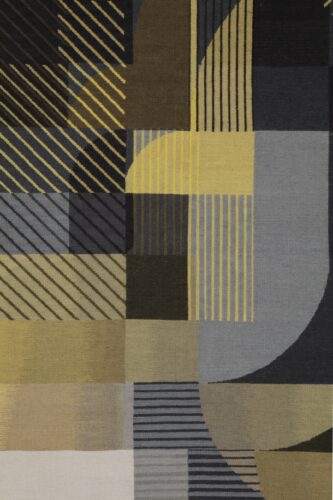
Germane Barnes, Miami, 2022, Aubusson tapestry in New Zealand wool, 48 x 48.5 in. (Photo courtesy of Greg Carideo)
“I loosely associate my work and process with anthropology in that I am more interested in the ways we use space and manipulate the intentions of the architect than the physical space of architecture. I find a greater connection between the user and their culture in that process. I attempt to design in such a way that blends culture and history,” he says.
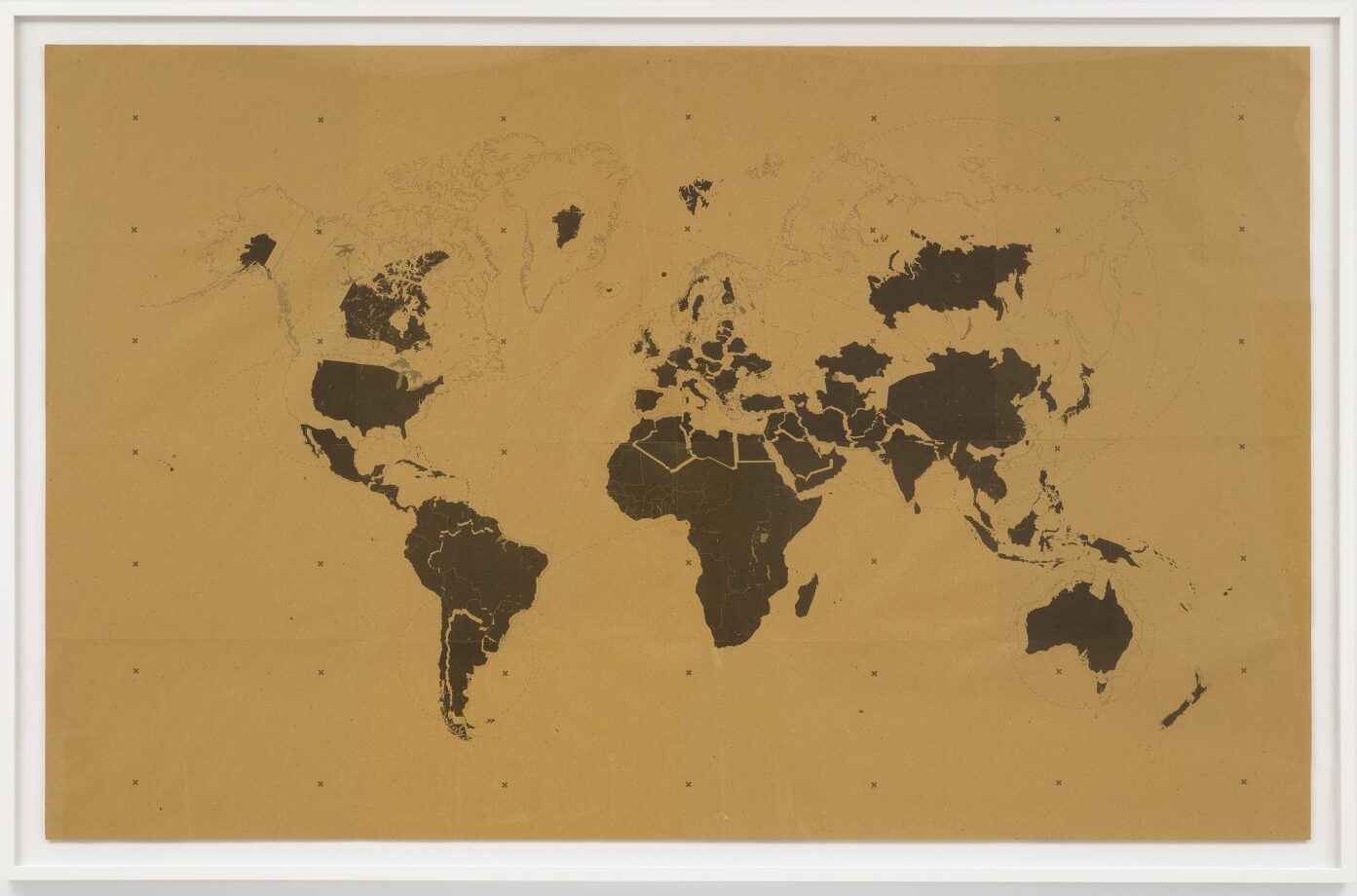
The work in “Unsettled” includes two tapestries, furniture that uses materials that reference migration, and five two-dimensional works. The purpose of the project was to reintroduce the art of hand-woven tapestries in contemporary design by using rigorous traditional techniques and premium materials with stellar workmanship. The featured tapestries are literal maps that highlight redlining and segregation.
Throughout “Unsettled,” Barnes examines Black migration within and outside of the continental United States while blurring the lines between design and architecture.
“We have long championed the overlap and intersection of art and design, finding Germane who is a pioneer in this space, particularly as it relates to histories of the African Diaspora within the United States,” says Johnson whose gallery in Little Haiti is presenting the exhibition.
“Knowing he was living in Miami, made me certain we would have much to work on together. Since then, the world has taken notice with so many accolades. I am thrilled we have the excuse to share his work with his hometown,” says Johnson.
WHAT: Germane Barnes: “Unsettled”
WHERE: Nina Johnson, 6315 NW 2nd Ave., Miami
WHEN: 11 a.m. to 5 p.m., Tuesday through Saturday, through Nov. 19, 2022
At Spinello Projects, Antonia Wright pushes back on abortion ban
Written By Elisa Turner October 9, 2022 at 11:10 AM
Antonia Wright, video still for “And So With Ends Comes Beginnings,” 2019-2020, single channel video. Filmed when Wright was 9 months pregnant, it is part of “I Came to See the Damage That Was Done and the Treasures That Prevail” at Spinello Projects, Miami. (Photo courtesy of the artist and Spinello Projects)
In shocking irony, the death in North London of revered feminist artist Paula Rego at age 87 on June 8 coincided with intense debate over whether abortion would remain legal in the United States. Nearly three weeks later, Supreme Court decision Dobbs vs. Jackson Women’s Health Organization overruled historic 1973 decision Roe v. Wade conferring on women the right to an abortion.
Rego is hailed for her “Abortion Series,” a large-scale series of pastels from the late 1990s. They were conceived to protest the defeat of a 1998 referendum to decriminalize abortion in her native Portugal. Her art was later credited with altering public opinion to allow legal abortions in Portugal in 2007.
In this influential series, a single-clothed woman in anguished pain is depicted alone, sometimes curled in a fetal position in bed or with knees drawn up next to a bowl. She’s a grim survivor of an illegal abortion. “I didn’t want to show blood, gore or anything to sicken, because people don’t want to look at it then,” Rego said at the time. “And what you want to do is make people look.”
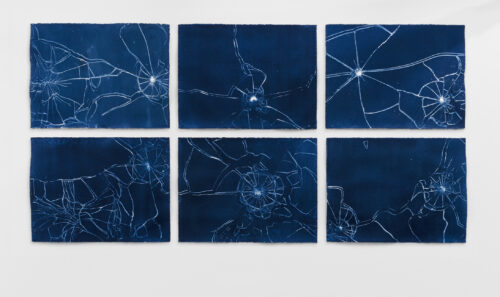
Antonia Wright, “Women in Labor (Graphic Score),” 2022, unique cyanotype photograms on watercolor paper. Photograms inspired by Wright’s sound art installation of the same title. (Photo courtesy of Spinello Projects)
Miami artist Antonia Wright is among a growing number of women artists who share Rego’s outrage over anti-abortion forces and who create art in protest. “With the reversing of Roe, I feel anxiety for younger women and the fear they must have around unexpected pregnancy,” Wright says.
She’s also a board member of Planned Parenthood and mother of two young children. Her arresting art is now on view at Spinello Projects. It addresses women’s challenged right to control their reproductive health. The work is both fierce and delicate, resonant with terrible beauty.
At Spinello, Wright’s “I Came to See the Damage That Was Done and the Treasures That Prevail” brings together photograms, glass sculptural objects, video, and a tough-to-forget sound art installation, “Women in Labor.”
While Rego said she wanted to make people look, Wright wants to make people listen. There’s absolutely nothing to see in Wright’s “Women in Labor.” What you do see unfolds only in your imagination. Wright gives us no visual cues, only absolute darkness, surely recalling life inside the womb.
To experience “Women in Labor,” you walk into the darkness of a single gallery. A cacophony of screams soon surrounds you. You’ll hear a shrill bleat. It sounds like an animal brought to slaughter. Then ragged, wordless shouts multiply. They rise into a horrific crescendo. They suggest the ear-splitting chaos of a mass shooting.
Abruptly, moans soften into frail sweetness. There’s low, rhythmic breathing, an almost ecstatic, even orgiastic sigh. It dissolves into seconds of silence, of peace. And then a strident wail tears into more tumult, a butchered world of pain where peace is a shredded memory.
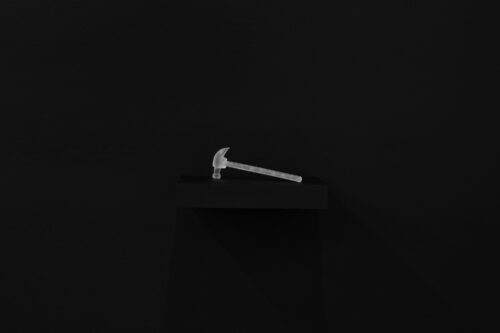
Antonia Wright, “My Daughter’s First Hammer,” 2022, lead crystal glass. A fierce and delicate sculptural object protests abortion bans. (Photo courtesy of Spinello Projects)
Wright calls “Women in Labor” a “data sonification artwork” for our post-Roe era. It’s produced by an algorithm she developed with data reflecting miles women must travel in 11 states with abortion bans in order to receive an abortion. That mileage data has been randomly combined with soft and more intense sounds of 11 women in labor.
Because this installation is operated by a self-generative program, the sequence of sounds constantly changes. “You’ll never hear the same sound combination twice,” she says.
Those more intense and tormented sounds signify how women’s reproductive rights are being violated by anti-abortion legislation, requiring the labor of traveling long distances to receive this procedure. Economic pain is also part of the labor, Wright explains, as such travel often means women must do extra work to pay for a hotel and, if they are mothers, childcare.
“All of that labor is time and money,” she says.
How did Wright get these indelible sounds of women giving birth? Partnering with a lawyer to create a contract, Wright explains that she asked her own midwife to sign a contract stating that Wright owned the sounds the midwife recorded from her patients. While the actual women whose sounds we hear signed a contract agreeing to participate anonymously in this artwork, Wright reveals that the audio includes sounds recorded from her own labor.
The artist says she offered to pay the midwife for her work recording these sounds, but the midwife declined. Wright adds that she hired a woman-owned business to distribute gift baskets with post-pregnancy presents to the women who participated.
“I know it seems contradictory to think about women having babies in the context of abortion rights,” says Wright. “But for me, it’s part of the same conversation about reproductive justice and letting women make decisions over their own health care.”
Prolific and innovative, Wright excels at mining visual and verbal metaphors. It’s no surprise that her website lists an MFA in Creative Writing and Poetry from New York’s New School, as well as exhibits in New York, Los Angeles, Vienna, Buenos Aires, as well as Miami.
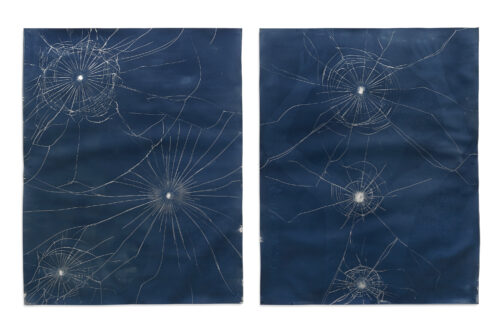
Antonia Wright, “But the Sky Was Never Quite the Same Shade of Blue Again” 1&2, 2022, unique cyanotype photograms on watercolor paper. Photograms address breaking the glass ceiling for working women. (Photo courtesy of Spinello Projects)
Performance has long been part of her practice. At Spinello, the video “And So With Ends Comes Beginnings” was shot when Wright was nine months pregnant. Filling the screen is her belly protruding from a bath of non-toxic silver paint. As she breathes, her voluptuously rounded belly rises and falls against a swirling waterscape soon overlaid with scenes of cranes and housing from Miami’s nonstop construction. Eventually, her belly recalls a deserted island engulfed by water. Unnerving and mesmerizing, this video depicts the resilient treasure of a new life entering a world awash in challenges wrought by rising seas.
While Miami’s famously blue waters are absent from that video, they are indirectly present in her intensely blue cyanotype photograms, created when paper is treated with photosensitive chemicals and exposed to sunlight. Wright’s photograms bear white clusters of circular lines, echoing the sheet of glass she placed over each paper, then slammed with a hammer before exposing it to sunlight.
Evoking assaults on glass ceilings for working women, these photograms deftly layer beauty with violence. Wright affirms a shocking post-Roe world of pain we can’t ignore.
WHAT: Antonia Wright: “I Came to See the Damage That Was Done and the Treasures That Prevail”
WHEN: noon to 5 p.m. Wednesday through Saturday, by appointment only, through Oct. 29
Jennifer Basile explores a disappearing everglades at LnS Gallery
Written By Douglas Markowitz October 6, 2022 at 3:01 PM
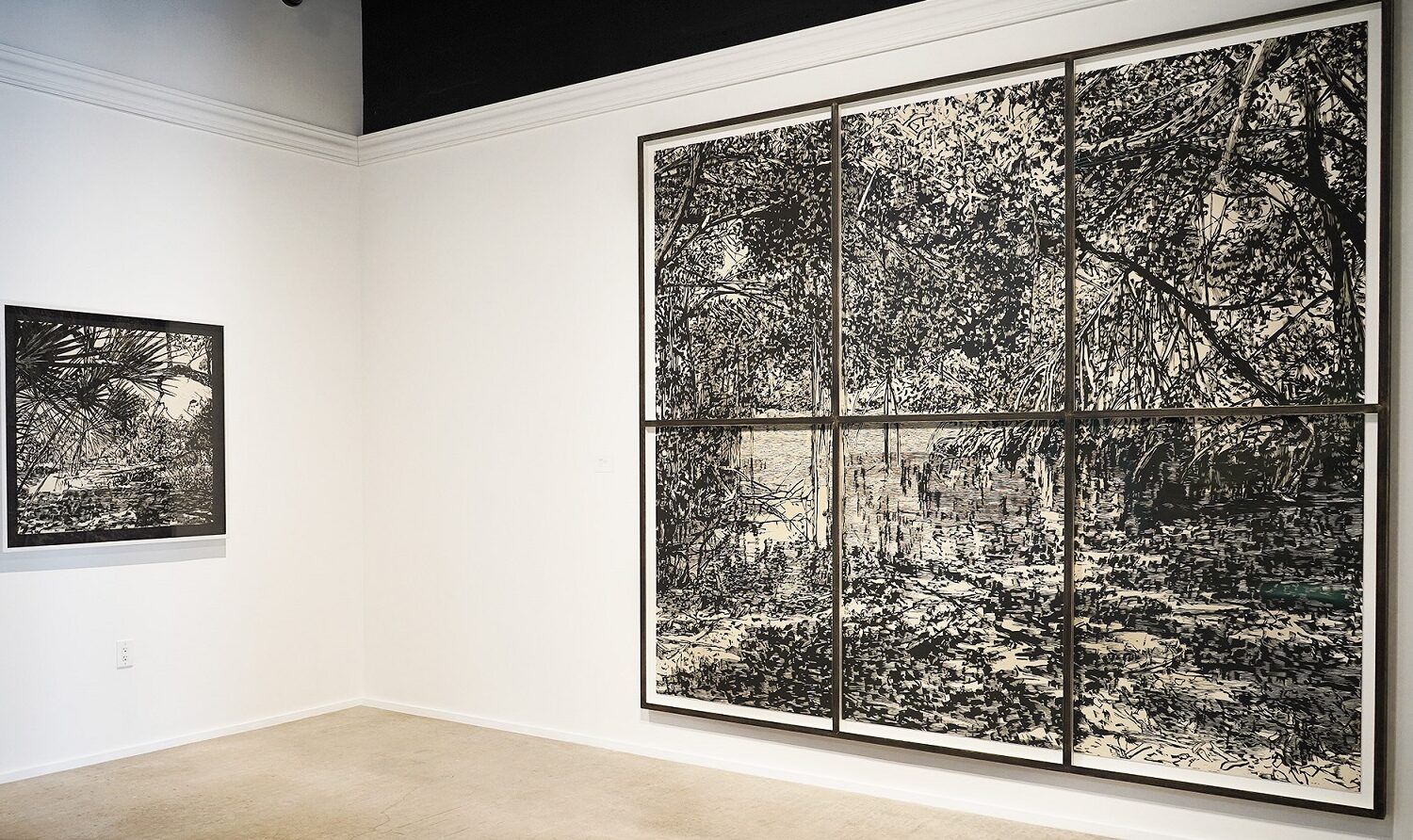
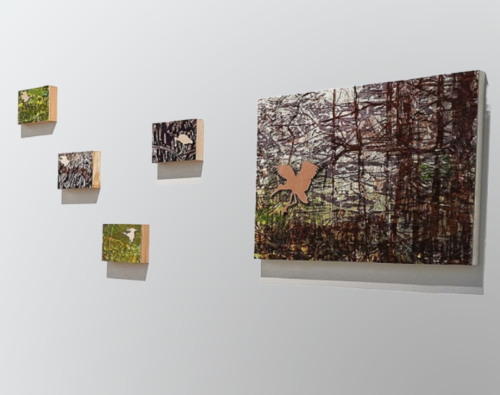
“Lasting Impressions: A Cessation of Existence” is Jennifer Basile’s second solo exhibition at LnS Gallery featuring works created in 2021 and 2022. (Photo courtesy of LnS Gallery)
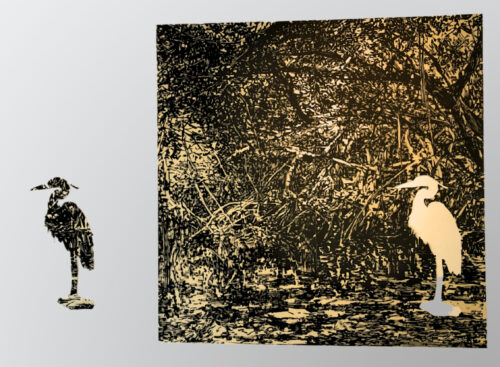
Surveying the exquisitely rendered Everglades landscapes in “Lasting Impressions: A Cessation of Existence” at LnS Gallery, viewers may notice a crucial, intentional omission in several works. The landscapes are empty of all animal life.
In some cases, the pastoral scenes in Jennifer Basile’s prints and mixed media works simply depict the beautifully desolate landscapes found amid South Florida’s famed “river of grass.” There could be fauna hiding in the reeds, or beneath the water. But Basile, an environmentalist, wants to make us consider that, because of human action, the landscape is being emptied.
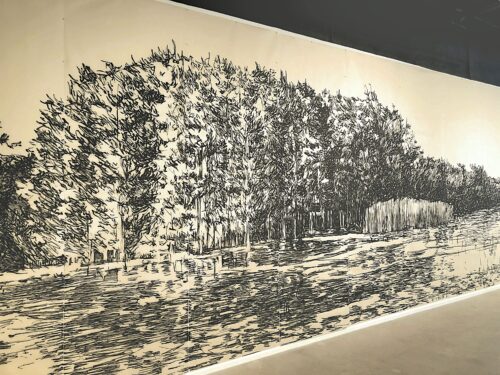
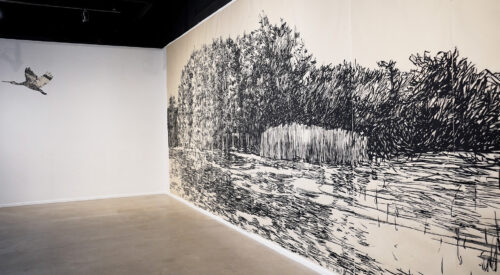
Jennifer Basile, “Cypress Dome,” 2022, is the largest work in the exhibition covering an entire wall of the gallery. (Photo courtesy of Douglas Markowitz)
“Cypress Dome,” the largest of her prints covering an entire wall of the gallery, exemplifies this idea. On the wall to the left of the black-and-white print showing the titular tree-covered island in the swamp, a silhouette of a bird can be seen, appearing as if it were cut out of the landscape. It flies above a pattern of stenciled houses, painted so lightly they’re barely visible, that represents the cookie-cutter single-family housing tracts that are slowly swallowing the ecosystem.
The artist expresses worry over the degree to which development is encroaching on the park’s borders. Her fears aren’t unfounded: On Sept. 22, Miami-Dade County Commission vote to extend the urban development boundary failed by just one vote.
“It’s sneaking up on us,” says Basile.
“Lasting Impressions: A Cessation of Existence,” at LnS Gallery through Nov. 19, is a solo exhibition of prints and mixed media works by Jennifer Basile. (Photo courtesy of LnS Gallery)
Her work reflects a profound anxiety over the effects of human action on the earth’s remaining natural landscapes. She keeps a “bucket list” of other national parks to visit in order to see them before they’re destroyed by climate change.
“‘We need to get to Glacier National Park, it’s the last glacier, it’s melting!’” she jokes, imitating a conversation she had with her partner. “These are the things that keep me up at night,” says Basile.
Having lived in South Florida since the early 1990s, Basile, who is also a professor at Miami-Dade College, frequently visits Everglades National Park to hike and bird watch. She wants her work to inspire a similar passion for the Everglades, letting the natural beauty depicted in her prints to speak for itself — viewing “quiet advocacy” as an alternative to the traditional tropes of environmental activism.
“I’m trying to advocate for the environment, but I’m not trying to show you all the obvious things, like the plastic bags and the thrown-out garbage,” she says. “I think we’re actually becoming, sadly, conditioned to seeing that.”
Basile’s work and its perspective is right at home at LnS Gallery. The art space in Coral Gables founded by married gallerists Luisa Lignarolo and Sergio Cernuda has championed South Florida artists since opening in 2017, holding shows for Miami-based artists such as Michael Loveland, William Osorio and the late Carlos Alfonzo.
“Our mission was to assist and represent Miami-based artists in a very professional realm, where we’re introducing a more international thought process,” says Cernuda. “We work a lot with museum curators, art historians, we love publishing, we’ve done 25 publications in five years.”
Jennifer Basile, “Echo,” 2022. (Photo courtesy of Douglas Markowitz)
Basile was one of the first artists to join the gallery upon its launch in 2017, and her first solo show for the gallery, which presented a similar series of prints, was titled “The Power of Print: Iconic Images of the American Landscape.” Her familiarity with natural landscapes can be seen in the details of her work, as can her expertise with her chosen medium of printing.
In a series of small-scale works, for instance, she recycles the glassine, a layer of paper used during the printing process to prevent ink bleeding, creating colorful, almost psychedelic landscapes for her birds to explore in a process that marries sustainable practice with creative adaptability.
“The endless possibilities of printmaking is what motivates me,” she admits. “I’ve layered my paint, I’ve used different processes of painting, but there’s something in my brain about hard work, this idea of manual labor,” alluding to the physically demanding process of carving the wooden blocks used to make prints.
Basile began printmaking while studying art at the University of Miami. Having also grown bored with the ceramics she was studying at the time, a professor who visited her studio told her she “painted like a printmaker” and encouraged her to take a class in the subject. After making her first print she took up the discipline and never looked back.
“Just pulling the paper off the block, it’s really thrilling for me,” she says.
The solo exhibition features prints and mixed media works by Jennifer Basile at LnS Gallery. (Photo courtesy of LnS Gallery)
Basile’s work also owes much to the woodblock printmaking tradition of Japan, which influenced western artists such as Van Gogh. Works like “Long Pine Key,” with its saturated color palettes and slight three-dimensional effect, recall the early-20th century Japanese artist Hasui Kawase. The black and white prints such as “Cypress Dome,” which was drafted initially with a ballpoint pen before being re-drafted with an acrylic marker for a unique hand-drawn effect, resembles the thick black ink marks of traditional shodō calligraphy.
The artist admits to being enamored with Japan. Many of the works in “Lasting Impressions” are printed on washi, or traditional Japanese paper, and the artist also constructs the larger wall-size prints in grids resembling shoji screens. Yet as technically and stylistically as they are indebted to the Asian nation, they are works only a Floridian could produce, concerned with a place and plight only a Floridian would appreciate so deeply.
WHAT: Jennifer Basile: “Lasting Impressions: A Cessation of Existence”
WHEN: 11 a.m. to 6 p.m., Tuesday through Friday; noon to 5 p.m. Saturday through Nov. 19
Bogota’s Ledania brings street art indoors for Museum of Graffiti show ‘Private Spaces’
Written By Vanessa Reyes September 29, 2022 at 9:31 PM
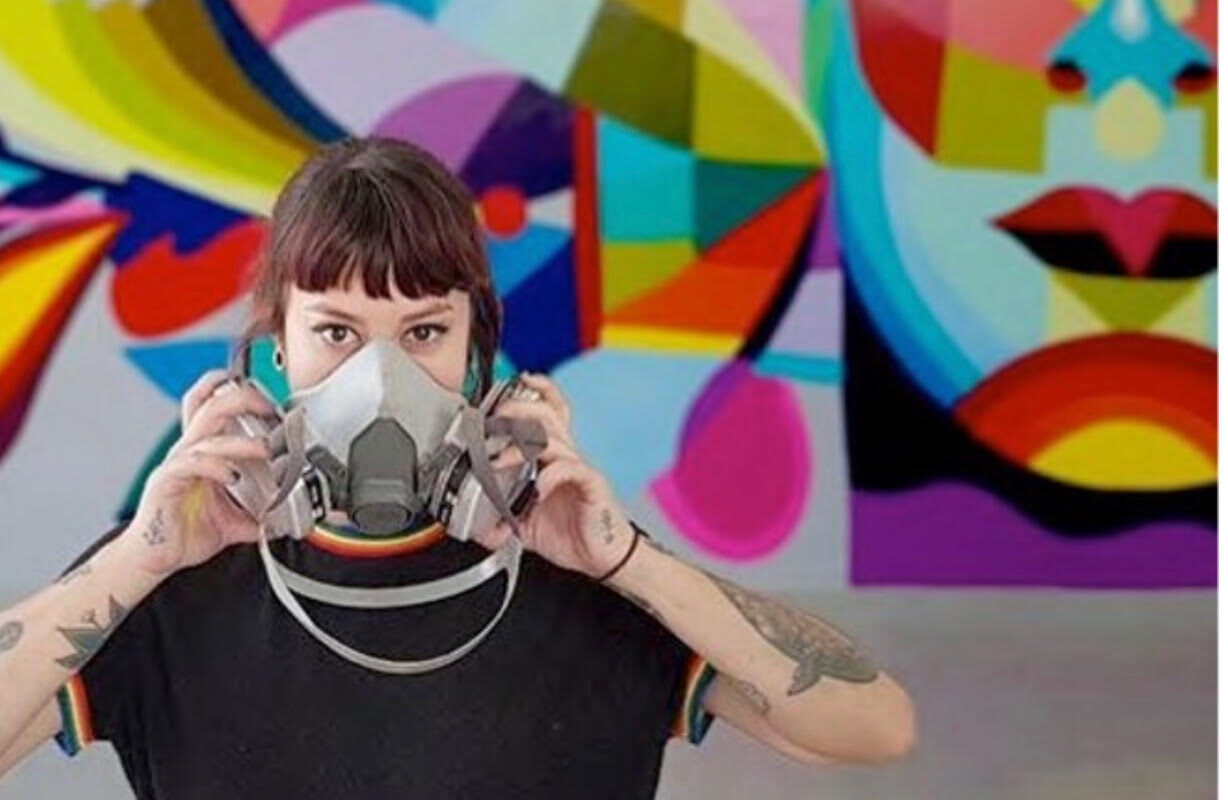
She’s one of the most prominent artists on the Bogota graffiti scene. Diana Ordoñez, known artistically as Ledania, brings her art to Miami’s Museum of Graffiti in a show through November in Wynwood. (Photo courtesy of the artist)
Graffiti. The word itself can cause a strong reaction. Many see it as the defacement of public walls and buildings. But graffiti has arrived to become something else — art.
“So many people are focused on whether (the art) is legal or illegal and they are not looking at the sheer talent. When you look at Ledania’s work, you see pure talent with aerosol,” says Allison Freidin, co-founder of the Museum of Graffiti in Wynwood.
Diana Ordoñez, known artistically as Ledania, began graffiti painting 15 years ago on the streets of Bogota, Colombia.
Diana Ordoñez, known artistically as Ledania, began graffiti painting 15 years ago on the streets of Bogota, Colombia. (Photo courtesy of the artist)
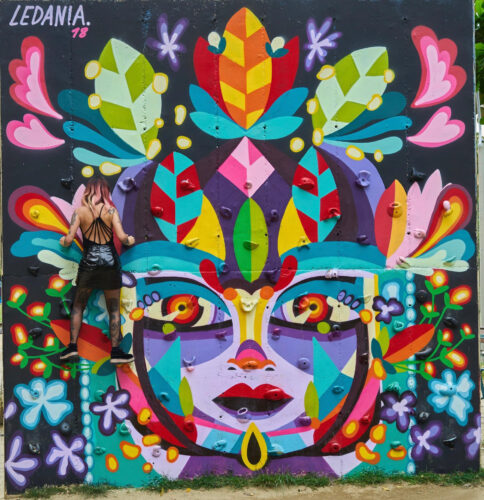
“The most significant part (for me) was that I didn’t want only people who knew about art to see my work, but everyone who takes up the same space I do,” says Ordoñez. “It’s a motto I took upon myself — to take over the walls that were built to divide people and spaces and use them as a unifying piece through art and color.”
The 34-year-old has taken the motto to heart throughout the world in the past decade, displaying her murals in places such as the Artscape Festival in Sweden and the Curitiba Biennial in Brazil. Now, she is bringing her solo exhibition, titled “Ledania: Private Spaces,” indoors to Miami’s Museum of Graffiti.
While “Ledania: Private Spaces” is only the second solo show of a female artist at the Museum of Graffiti, which opened in 2019, Freidin says the mostly male-dominated world of graffiti art is opening up to women.
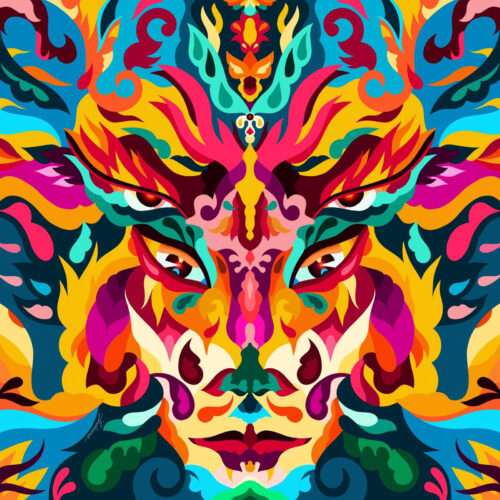
Ledania, “Untitled,” 2022.
“It used to be really rare (to have female graffiti artists), but now, as a new generation of writers is coming up, there have been certain artists like Lady Pink (first female artist to show at the Museum) who have paved the way for more women to come,” says Freidin.
Ordóñez says her experience as a writer (what graffiti artists are called since graffiti is a letter-based art) has changed over time, not just as a woman in the field but as an artist.
“You discover new tools, and you start growing even more because you have to start climbing higher places and turn in art at higher elevations, so you’re dealing with climate change and wall texture changes (that) make the art dependent on improvisation,” says Ordoñez, who uses primarily aerosol spray for her art.
“That is one of the reasons I love graffiti because I am not someone who plans most things out. I just wait to see how the improvisation moves the piece along.”
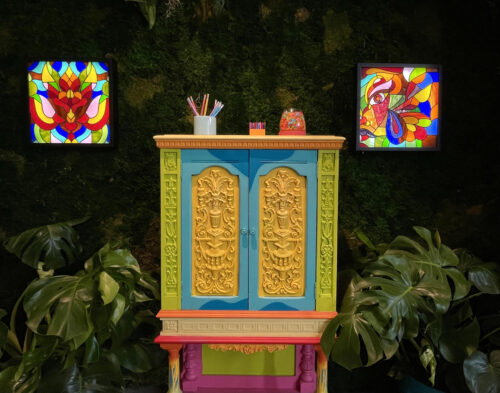
Unlike her previous work, she says the Miami exhibition brings “part of Latin America” with her into a much more private space. She says for the exhibit she chose to pair vibrant colors, florals, and forestry with the feeling of nature that would be a natural fit in a place of rest.
“It will be a fusion of what I started with, which is graffiti, but it is very important to me for people to be able to bring a piece of this outside artwork into the spaces that are the most private, which is the home, office or wherever it is that they rest,” she says.
Ledania, Mi Comedia, 2022, spray paint on found furniture; on wall, Tono Grises 1, 2022, stained glass on backlit mount, Tono Grises 2, 2022, stained glass on backlit mount. (Photo courtesy of the artist)
The conceptual aspect of “Ledania: Private Spaces” is important to note. It isn’t just a matter of coming to look at paintings on a wall, but rather becoming a part of the art, according to Ordoñez. That collaboration between spectator and artist includes aninteractive andimmersive site-specific installation that brings a more three-dimensional quality. It’s this excitement of depth that runs throughout all the work she creates.
“Art is really the only way a person has freedom,” she says. “A person who can express themselves freely through any kind of art, whether it’s music, theater, painting, or whatever helps you express yourself in the most sincere way, helps (us) not feel limited by the standards that society imposes. For me, art and culture and everything within are what gives people breath within this grid-like existence that we live day to day.”
She says her inspiration comes from the people she meets, either working in a public place or in the many countries she visits.
“I am used to painting with the noise on the streets, the onlookers walking by and talking to me and it’s almost like they are taking the art out of me, so (inspiration) can happen at any moment, at any time. But what takes the creativity to another level is learning about other cultures,” says Ordoñez, who says she spends about 10 months out of the year traveling.
She cites Asia, Japan and Singapore, specifically, as sources of great creativity.
Ledania, “Untitled,” 2022.
It’s no surprise that Ordoñez derived part of her artistic name from Leda, the famous female seduced by Zeus in Greek mythology, and whose Greek origin means happy.
Ordoñez says she is happy that she is able to create a life and has found success doing her art, something that her parents, both artists, dreamt about but never fully realized.
“My dad is a muralist, my mom is an artisan and they both studied art, but on their own time because they liked it, but they didn’t pursue it because they thought it was too complicated to actually make a living off it,” she explains. “At the beginning, there was talk about (me) pursuing graphic design or public relations, just somewhere where a paycheck was more of a sure thing, but as much as I tried, I couldn’t bring myself to think that way. I just had to be more free.”
WHAT: “Ledania: Private Spaces”
WHERE: Museum of Graffiti, 276 NW 26th St., Miami
WHEN: 11 a.m. to 6 p.m. weekdays, 11 a.m. to 7 p.m. weekends through Friday, Nov.18
COST: $16. Children ages 13 and under admitted free
Alternative Art Space Locust Projects Turning 25 With Big Move
Written By Michelle F. Solomon September 20, 2022 at 12:01 AM
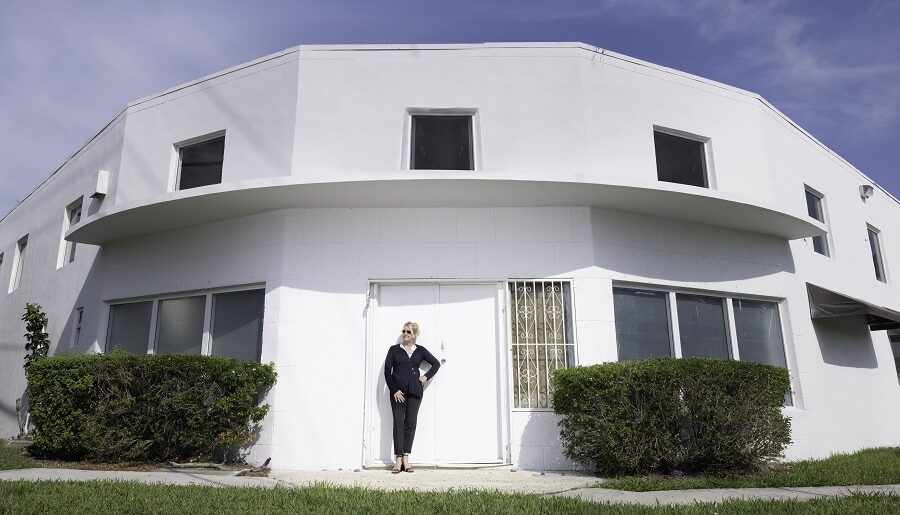
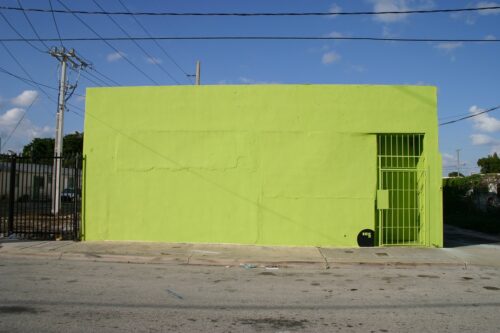
Executive Director Lorie Mertes stands in front of the new home of Locust Projects in Little River. The alternative art space will move from its Design District location in February 2023. (Photo courtesy of Pedro Wazzan)
The first exhibition for Miami’s Locust Projects, titled “Pigs and Lint,” was inspired by a discovery that Westen Charles, one of the alternative art spaces founders created after he was enlisted to fix his grandmother’s broken clothes dryer.
Miami’s longest-running nonprofit alternative art space is gearing up to celebrate its 25th anniversary in 2023. With a move to a larger space in the works for its silver jubilee which will begin a new chapter for the organization, something that will never disappear is why Charles, along with his cohorts, artists Brian Cooper, known as COOPER, and Elizabeth Withstandley began Locust Projects in the first place.
“Everywhere that we wanted to show in Miami would have never shown our art,” says Charles, a working artist who teaches fine art at Miami’s Design and Architecture Senior High School (DASH), and who still serves on Locust Projects board of directors.
Locust Projects founders Brian Cooper, Elizabeth Withstandley and Westen Charles circa 1998. (Photo courtesy of Locust Projects)
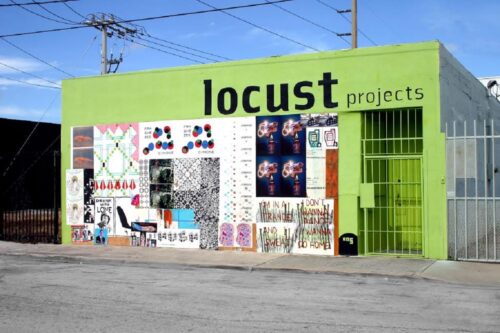
Since that 1999 inaugural show, which was inside a 3,500-square-foot dilapidated warehouse at 105 NW 23rd St., in Wynwood, which the trio rented for what Charles remembers to be about $600 a month, Locust Projects has remained an incubator of new art and ideas. The exhibition space is currently on North Miami Avenue in Miami’s Design District, a little over a mile from the original location.
In February of 2023, Locust Projects will move back to a warehouse, this time in Little River. The 8,000-square foot, open floor-plan space, at 297 NE 69th St., will double the size of its current location.
“It’s always been the idea of having a space to support artists in creating ambitious work in both scale and ideas and encouraging risk-taking and experimentation,” according to Lorie Mertes, who became the executive director of Locust Projects on, what she vividly remembers as “the eve of its 20th anniversary in 2018.”
Locust Projects’ first location, Wynwood, in its first year 1998. (Photo courtesy of Locust Projects)
It was 1998 when the idea for Locust Projects began. Charles was enrolled in the University of Miami Master of Fine Arts program and still kept in touch with two of his classmates he became close to while an undergraduate at New York’s Pratt Institute. “I convinced them to come to Miami and we got a studio space together. (Wynwood) was a really dangerous neighborhood then. At the time we started there, we couldn’t imagine what it would become – the growth of the art world that would happen in Miami.”
He remembers the shows they produced of other artists were bringing people into the Wynwood warehouse. “There was a desire for art then. These were hardcore art people that were coming in. They weren’t socialites that were trying to keep up with anything. They were just people that liked art,” Charles recalls.
Two of those people who “liked art” were collectors Dennis and Debra Scholl, change agents who saw a future for Locust Projects. “It wasn’t our interest to become professional, to get professional gallery managers. We were artists,” says Charles. “We wound up meeting Dennis and Debra.” Charles confides that he told Dennis that he wasn’t sure how much longer the trio could keep Locust Projects afloat. “We got to the point where we were going to have to shut down. We couldn’t afford it anymore,” Charles says, adding that it was also taking time away from the trio’s own artistic practices.
Like it was yesterday, he remembers Dennis telling him: ” ‘You can’t stop. You have to keep going. I’ll show you how to do it to where it can be sustainable, and where you don’t have to do everything yourself.’ ”
Charles says the pair helped them form a board of directors and apply to become a not-for-profit 501c3. They sought out and got grants and, in 2006, they hired a full-time director.
Dennis became the founding board chair. For the last 14 years, Debra has been the board chair.
Jedediah Ceaser’s mural poster project on the outside of Locust Projects, Wynwood, in 2003. (Photo courtesy of Locust Projects)
“We would go to Locust exhibitions when they were in Wynwood,” Debra recalls. “The three artists that founded Locust had days jobs and they were working artists, but they wanted to do something for the arts community where they allowed an artist to come in and make whatever that person wanted without worrying about having it financed or making something for someone to purchase,” she says.
Debra says she and her husband “loved” the idea of the freedom that Locust Projects gave to artists to experiment.
“Now, 25 years later, our intent is the same and even though we’re getting a larger space, it will just allow us to let artists do even more with their practice. I can’t speak for every artist, but I think it is a place that really excites and invigorates them to continue to try different things. That’s the core of Locust Projects,” says Debra.
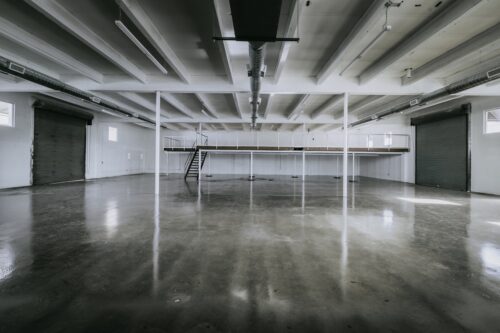
The new space with its 17-foot-high ceilings and access to an outdoor courtyard will allow more “room for artists to roam,” says Mertes.
One of the most confining hindrances in the current Design District location, she says, is that the size of the space has kept public gatherings small, and interactions limited. The executive director would like for people to see what is happening inside Locust Projects and to be part of the process.
“This move enables us to do that and to invite the public – to have them be involved in a more significant, hopefully, impactful way,” says Mertes.
Inside the new Locust Projects’ space at 297 NE 67th St. in Miami’s Little River neighborhood. (Photo courtesy of Pedro Wazzan)
While Locust Projects has plans to purchase an exhibition space of its own one day, the new location in Little River is a five-year lease with an option to renew for an additional five years. A John S. and James L. Knight Foundation grant in 2019 was “a transformative $1 million spread over five years,” says Mertes, strengthening the organization’s focus on “space, people, and programming.”
Locust Projects Board Member Diane “Dede” Moss made a matching leadership grant towards the move to the new space, according to Mertes, adding that it is meant to be a catalyst for launching a 25th Anniversary Campaign over the next year.
“We are here for the artists and the public’s good, which means that we remain free of charge. In terms of funding, that will always be part of the core value of the organization to make sure that we are accessible, equitable, and inclusive,” says Mertes.
Locust Projects will continue exhibitions in its Design District space with new exhibitions opening Nov. 19 and running through Feb. 4.: Ronny Quevedo: “ule ole allez” and T. Ellion Mansa, “Room for the living/Room for the dead.”
Currently, three exhibitions are on display through Nov. 5.
WHAT: Leo Castaneda: “Herramientas (Levels & Bosses)”, Zac Hacmon, “Mia,” and a group exhibition entitled “Sound, Stories.”
WHEN: 11 a.m. to 5 p.m., Wednesday through Saturday until Nov. 5.
WHERE: Locust Projects, 3852 North Miami Ave., Miami.



Recent Comments