Jesús ‘Aguaje’ Ramos Keeps Music Of Buena Vista Social Club Alive
Written By Helena Alonso Paisley October 8, 2024 at 12:06 PM
Musical director Jesús “Aguaje” Ramos and his Buena Vista Orchestra, left, seen here in a September performance at New York’s Town Hall, will be playing at the Miami Beach Bandshell on Saturday, Oct. 19. (Photo by Wil Gray, courtesy of Press Here Publicity)
It would be hard to imagine a better group of artists to bring to life the golden age of Cuban music that the one Ry Cooder cobbled together in Havana nearly three decades ago. Guitarist, vocalist and composer Compay Segundo, pianist Rubén González, singer Ibrahim Ferrer—these were just a few of the elder statesmen of the island’s musical heritage that Cooder brought together to become the musical miracle that would be known as the Buena Vista Social Club.
By all rights, it shouldn’t have happened. Ferrer was retired, sometimes shining shoes on the street to supplement his pension. González didn’t even own a piano anymore. And the American guitarist was in Cuba on a completely different project, a long-planned collaboration between Malian and Afro-Cuban artists. But when the African players couldn’t get their visas, and those sessions had to be cancelled at the last minute, Cooder and producer Nick Gold found themselves with a recording studio on their hands and no music to fill it.
At Buena Vista concerts, old hands like bass player Fabián Garcia, share the stage with younger performers like Héctor Randy Olmo Gómez and Antonio Remigio Rubio Borayo, with each age group working together to preserve the legacy of traditional Cuban music from the 1940s and ‘50s. (Photo by Wil Gray, courtesy of Press Here Publicity)
They turned lemons into—well, first limes, then not limeade, but rather a delicious daiquiri the likes of which Hemingway might have savored at the El Floridita bar when boleros, sones,danzones and cha cha cha filled Cuba’s airwaves and the aging, some nearly forgotten artists of the newly formed Buena Vista Social Club were young men in their prime.
Like El Floridita’s iconic daiquiris, the Buena Vista’s influence was vast, its followers legion. The eponymously titled album, entirely acoustic, brought back Cuban standards from the ‘40s and ‘50s as well as original compositions like “Chan Chan,” which would become Buena Vista’s calling card. It was a heady mix, smooth and sweet going down, but, wow, did it pack a punch. “Buena Vista Social Club” sold eight million copies and still holds the Guinness record for the best-selling world music album ever made.
In addition to tracks from the best-selling “Buena Vista Social Club,” lead vocalist Geidi Chapman also gives homage to Celia Cruz, interpreting hits from the late, great singer’s repertory. (Photo by Wil Gray, courtesy of Press Here Publicity)
With many players in their 70s and 80s when the recording was produced, though, the show couldn’t go on forever. By 2016, when Buena Vista finally did its “Adios” tour, five of the original stars of the 20-piece band had passed away.
It has been up to Buena Vista’s surviving members, themselves now in their 60s and 70s, to carry the torch. Some, like guitarist Eliádes Ochoa, have gone on to have solo careers (Ochoa played at the Afro Roots Fest in Miami last spring). Trombonist and conductor Jesús “Aguaje” Ramos opted for a different approach, bringing younger musicians into the fold and creating a 21st century version of the original ensemble.
Musical director Jesús “Aguaje” Ramos and his Buena Vista Orchestra, seen here in a September performance at New York’s Town Hall, will be playing at the Miami Beach Bandshell on Saturday, Oct. 19. (Photo by Wil Gray, courtesy of Press Here Publicity)
On Saturday, Oct. 19, Ramos brings his ten-piece Buena Vista Orchestra to the Miami Beach Bandshell, part of a whirlwind 44-city tour with dates everywhere from Red Butte, Utah to New York’s Town Hall.
In a telephone interview in Spanish, Ramos explains the need to keep the Buena Vista sound alive.
“Rubén González, Ibrahim Ferrer, Cachaíto López, Roberto el Millonario are no longer with us—all those legends of Cuban traditional music. And we had to continue with that story that we saw grow, that we saw be born, that we nursed and that we gave to the world. And this orchestra is the continuity of all that.”
Ramos is a fitting choice to keep Buena Vista’s fire burning. With his flashy suits and natural charisma, he cut a dashing figure onstage at the Carnegie Hall concert that was immortalized in Wim Wenders’ 1998 documentary “Buena Vista Social Club.” At 73, he still does, and he considers it an honor to be, as he calls it “the guardian of the art of making music”—traditional music like the generation of giants he accompanied for so many years had imagined it.
Fabián García, 78, is the senior member of the ensemble and a former member of the famed Buena Vista Social Club. He has also played with such luminaries as singer Omara Portuondo, pianist Chucho Valdés, and reeds player Paquito d’Rivera (Photo by Wil Gray, courtesy of Press Here Publicity)
According to Ramos, it was as if that quintessentially Cuban music had “stopped in time” with the Revolution in 1959, preserved in amber for the Buena Vista artists and others who followed them to bring back, just as it was, for new audiences around the world to enjoy.
“Our music did not leave Cuba’s borders,” he explains. “We had the vision to break that blockade and start with Buena Vista and bring that music to the rest of the world again, to take its rightful place, the place that traditional Cuban music has always had.”
Ramos’s Buena Vista Orchestra leans heavily on a new generation of players who strive to stay true to the vintage sound of their predecessors. The only veterans of the original Buena Vista Social Club are Ramos and upright bass player Fabián García. Ramos’s daughter, Lorena Lazara Ramos Díaz, a trombonist like her father, is in the group, along with Geidi Chapman (lead vocals and guitar), Andy Abad Acosta (keyboards), Antonio Remigio Rubio Borayo (timbales and percussion), Hector Randy Olmo Gómez (congas), Amaury Oviedo (trumpet) and Aldo Isidro Miranda Álvarez (vocals). Ángel Menéndez Otero emcées the shows and sings backup vocals.
Vocalist Aldo Isidro Miranda Álvarez’s style evokes the days when stars like Frank Sinatra frequented the Havana’s hot spots. (Photo by Wil Gray, courtesy of Press Here Publicity)
So, what are the qualities a young artist needs to have to be able to interpret the music of their grandparents?
“The first thing a musician must have to be able to interpret this music is to have been born and raised in Cuba,” says Menéndez. “Because it is in Cuba where that essence is, that you can breathe in, that is part of the environment. Without that essence, it is impossible for a Cuban musician to interpret music in this way. Musicians from other countries can play a very important role in the development of this type of music…but you have to be Cuban to be able to interpret it this way.”
Antonio Remigio Rubio Borayo accompanies the band on timbales and percussion, shown here at a performance at the Town Hall in New York City in September of 2024. (Photo by Wil Gray, courtesy of Press Here Publicity)
While not everyone will agree with Menéndez’s assertion, one thing is certain: you don’t need to be Cuban, you don’t need to speak Spanish and you don’t even need a daiquiri in your hand to enjoy this music and let it take you on a nostalgic journey to a wistfully remembered time in a not so far away place.
WHAT: Jesús “Aguaje” Ramos and his Buena Vista Orchestra
COST: $49.44, standing room, $59.74, $67.98, $78.28, $88.58; $1001.16 for a Club Level Cabaña Box; $129.78 to attend “Meet and Greet” with artists (concert ticket must be purchased separately). Tickets at dice.fm.
ArtburstMiami.com is a nonprofit media source for the arts featuring fresh and original stories by writers dedicated to theater, dance, visual arts, film, music and more. Don’t miss a story at www.artburstmiami.com.
No posts found
Luis Pescetti’s Gift For Family Fun Isn’t Stodgy
Written By Fernando Gonzalez October 3, 2024 at 9:26 PM
Argentine writer, actor, musician, and singer Luis Pescetti is a one-of-a-kind artist in the Spanish-speaking world. He brings his show to the Miami Beach Bandshell on Sunday, Oct. 13 as part of FUNDarte’s annual ZunZún Children’s Festival. (Photo taken at Teatro Metropolitan, Mexico City, courtesy of Sergio Alberto Bautista Pérez)
Finding a language, a tone, and a way of telling stories that intrigues and entertains an audience made up of children and adults is a challenge that demands creativity and a special sensibility. This has made Argentine writer, actor, musician, and singer Luis Pescetti a one-of-a-kind artist in the Spanish-speaking world.
Pescetti has published more than 30 books for adults and children, including his popular “Natacha” series, which tells the adventures of an eight-year-old girl. He is a founding member of the Latin American and Caribbean Children’s Song Movement, has released 15 albums, and in 2010 won a Latin Grammy for Best Children’s Music Album.
His repertoire, including songs such as “Merequetengue,” “El vampiro negro,” and “Queremos Comer, Comer,” use Latin American and Caribbean folk rhythms and styles but also include unexpected turns of jazz, especially old style, rap, and blues.
Peschetti comes to the Miami Beach Bandshell at 3 p.m. on Sunday, Oct. 13, accompanied by a band of musicians as part of FUNDarte’s annual ZunZún Children’s Festival.
Luis Pescetti’s repertoire uses Latin American and Caribbean folk rhythms and styles but also include unexpected turns of jazz, especially old style, rap, and blues. (Photo taken at Teatro Metropolitan, Mexico City, courtesy of Sergio Alberto Bautista Pérez)
“I was a music teacher, so of course, in the class, there was a lot of Latin American music repertoire, and something snuck in there,” Pescetti says in a phone interview from Buenos Aires. He also notes that some songs “are typical camp songs.”
Over the years, he confides, he’s been changing versions of well-known songs.
“There is one called ‘Los changos’, which is from Mexican children’s folklore, and first I did it as a children’s song, then I made it country, and now I’m doing it as a Colombian cumbia, like the rhythm of ‘Mi pollera colorá’. My core is more bluesy.”
His shows are a mix of songs, games, and storytelling wrapped in humor and not only involve the participation of little ones in the audience, but also of the adults. In these shows, whether mothers, fathers, or whoever is the adult with the children, they are not mere companions (“the kid’s drivers,” jokes Pescetti) but very much part of the event.
“It’s very powerful for the kids to see the parents playing,” says Pescetti. “Imagine if you remembered your dad playing on stage today when you were eight, nine, ten years old. You would remember that much more strongly than if your dad had seen you playing on stage.”
Luis Pescetti’s shows are a mix of songs, games, and storytelling wrapped in humor and not only involve the participation of little ones in the audience, but also of the adults. (Photo taken at Teatro Metropolitan, Mexico City, courtesy of Sergio Alberto Bautista Pérez)
He also notes that “almost always the messages I receive from moms are: ‘You don’t know how grateful I am to see my husband playing with my children, to see us laughing together.’ That was another surprise for me too.”
The father of two boys, Pescetti says, “It is very powerful as a dad when you see your son laugh.”
Pescetti began his career doing shows for adults, in café concerts, in 1979. “They were very small concerts, 80 people, something like that,” he recalls. It was later, already living in Mexico, where he resided from 1989 to 2001, when he considered returning to children’s audiences. (That said, throughout his career, Pescetti has since alternated the targeting of his work between an adult and a children´s audience.)
“Doing humor for adults on television was tiring, and I began to dislike it. And then one day, I decided to change the line of work. I resorted to everything I remembered about humor for children because I had been a music teacher in schools for so many years, and I made the change.” In addition to performing during his time in Mexico, Pescetti hosted long-running children’s programs on television and radio.
He says he didn’t notice much difference between performing for an adult audience or a children’s audience, “except in the care with which you do things . . . it’s ruled out being really scary, it’s ruled out any words, any form of humor that might offend a child or a family.”
Luis Pescetti’s Miami Beach appearance is part of FUNDarte’s annual ZunZún Children’s Festival. (Photo taken at Teatro Metropolitan, Mexico City, courtesy of Sergio Alberto Bautista Pérez)
He talks about his preparation and its simple method.
“When I think about whether a song can offend, I always put myself in the place of the dad of a little girl,” notes Pescetti. “If I, as the father of a girl, would be bothered by it, it has to be corrected.”
Having worked in radio and television and performed in theaters in Argentina, Mexico, Cuba, Spain, Colombia, Chile, Brazil, Peru, and Uruguay, Pescetti offers that children from different cultures may seem at first “that some are more obedient or more restless than others … but after ten minutes of the show, they are all very much alike.”
COST: Free but RSVP is required. (Note: Performance is in Spanish)
INFORMATION: (305) 672-5202 or (786) 348 0789. Also, fundarte.us
ArtburstMiami.com is a nonprofit media source for the arts featuring fresh and original stories by writers dedicated to theater, dance, visual arts, film, music and more. Don’t miss a story at www.artburstmiami.com.
No posts found
Bassel and The Supernaturals lay a smooth groove laced with a serious message
Written By Fernando Gonzalez July 10, 2024 at 7:14 PM
From left, Garrett Folger, Mike Gore, Bassel Almadani, Joe Rangel, Jeremey Poparad of Bassel and The Supernaturals. The band comes to the Dennis C. Moss Cultural Arts Center in Cutler Bay for one show on Friday, July 19. (Photo courtesy of @downtown_design)
The music of Bassel and The Supernaturals, the soul-jazz band appearing at the Dennis C. Moss Cultural Arts Center in Cutler Bay on Friday, July 19, sounds easy on the ear, at once familiar and fresh. The grooves, the horn arrangements, and the singing of frontman Bassel Almadani evoke the sound of classic soul like Otis Redding, Stevie Wonder, or Marvin Gaye, but also jazz-pop standouts such as Steely Dan and Jamiroquai. You can’t help tapping your feet to it.
But often, there’s a dark undercurrent to the music, unexpected turns that break the mood, a hint perhaps of the larger message Almadani, a first-generation Syrian American, and his band are bringing to the stage. The themes of the songs are for the most part standard pop fare, love and loss, but then there’s also war, and collateral damage.
Bassel Almadani, a first-generation Syrian-American, says he has a “Syrian heart and a Midwestern soul.” (Photo courtesy of James LaSalle @InfinityPhotos19)
“Syrian heart, Midwestern soul,” is how Almadani puts it. He was born in Kent, Ohio, to Syrian parents, born and raised in Aleppo, a historic city. “There’s a big Arab-American population in northeast Ohio, one of the biggest in the country,” he notes. His father, a doctor, immigrated to the States in the 1970s. Before the war exploded in 2012, “I had a ton of family in Syria. I still have several aunts and uncles there, some cousins. About 20 percent of my family is still there. But it’s definitely not the place that it once was.”
And then personal tragedies brought the war home. An aunt’s house in Syria was demolished by bombing. A cousin, she was 24, “an innocent girl who was going to go visit her sister in Turkey, somebody shot at the bus, and she was killed. That really changed things for me.”
Almadani earned two business degrees from Ohio State University and moved to Chicago in 2010. He lived there for 12 years and has now resettled near Cleveland. He made music all along, playing different instruments before embarking on songwriting, “indie folk type of music. I was really into Andrew Bird, Sufjan Stevens, Beck, and artists like that. I started taking on a much more groovy, funky, soulful approach after I moved to Chicago.”
Still, he notes, “In the years before the Arab crisis and the Arab Spring of 2011, I was just writing music. I had written a couple of records by that point by the time that the uprising started, but then I started talking about what was going on in Syria at the time because it was new . . .But then the music started to become heavier and darker and inspired by what was happening in Syria and beyond.”
The band Bassel and The Supernaturals are Jeremey Poparad, Bassel Almadani, Lt Headtrip, and Mike Gore. (Photo courtesy of Darnell McAdams)
By the time his album, “Elements,” was released in 2017, “it was saturated not just by what was happening in Syria but the difficulty of the human experience and why we shouldn’t see something like what was happening in Syria as something that is far away when it’s impacting people like me, a guy who grew up in Northeast Ohio. That’s really when the music kind of started to take on a different, tone and energy.”
He offers perspective and makes his case armed with a groove and soulful, smooth delivery.
“Aleppo,” a track on his album “Smoke & Mirrors,” released in 2020, is a good example. For nearly a decade, the city, which includes a UNESCO World Heritage Site and invaluable ancient buildings, was in the news as the place of brutal battles between rebels and the government army. But Almadani doesn’t dwell on the tragedy. He glides over a high-energy, fast-paced, and lush arrangement. Part of the lyrics are sung in Arabic.
“It’s fun, it’s funky. It feels good. It has a different energy than others on the subject because it celebrates the heritage of one of the oldest cities on earth,” he says. “People have been in Aleppo for 5,000 years. And I like to tell that story from the stage and change the narrative of what people think about when they think about Syria and Aleppo.”
Almadani and his band are spreading their message about the plight of refugees and immigrants well beyond the Syrian community and not only from the stage. In May, he was part of “The Express Way,” a PBS docuseries hosted by Dule Hill that focuses on the transformative power of the arts. Speaking about his need to share his stories, he says “I don’t have the choice to be helpless now. What I do have is a microphone.”
Bassel and The Supernaturals, from left, Lt Headtrip, Herbie Hunkele, Bassel Almadani, Dan Bruce, Mike Gore, and Andru Dennis, are spreading a message about the plight of refugees and immigrants. (Photo courtesy of Darnell McAdams)
He also works with the Karam Foundation whose mission he describes as “centered around building a better future for Syria by empowering Syrians to build a better future for themselves. We donate a chunk of our merchandise proceeds as well.”
Working the Karam Foundation Almadani and his wife went to Istanbul, in 2019 to work with displaced Syrians. They offered workshops on professional development and, his wife’s expertise, the workings of the brain. “I did a whole series on living through art and art and sustainability in the context of everything they were experiencing. It was a really profound experience for us.”
Still, the music is the message.
“It’s always been music,” he says. “Music brought me through some of the most difficult times and experiences in my life, and then everything happened on a grander scale. It just naturally took on an energy of activism and humanitarianism. But the music has always been the foundation.”
WHAT: Bassel and The Supernaturals with opening act The French Horn Collective
WHERE: Dennis C. Moss Cultural Arts Center, 10950 SW 211 St., Cutler Bay
ArtburstMiami.com is a nonprofit media source for the arts featuring fresh and original stories by writers dedicated to theater, dance, visual arts, film, music and more. Don’t miss a story at www.artburstmiami.com.
No posts found
Miami Beach Classical Music Festival Features Immersive Mozart and Modern Operas
Written By Jonel Juste June 26, 2024 at 3:13 PM
Classical music enthusiasts will have the chance to immerse themselves in Richard Wagner’s “Die Walküre (Act 3)”, one of the programs of the Miami Beach Classical Music Festival, which begins on Thursday, June 27 and continues through Sunday, July 28 with events across the city. (Photo courtesy of Miami Beach Classical Music Festival)
Up-and-coming musicians, part of a rigorous eight-week intensive program, return to perform in the Miami Beach Classical Music Festival (MMF) with a series of immersive performances, operas, and live concerts.
The intensive gives aspiring classical performers the chance to work with professional mentors and gain live performance experience. The community benefits from free and affordable public concerts featuring top talent, according to Michael Rossi, the festival founder and artistic director.
This year’s program, beginning Thursday, June 27 to Sunday, July 28, features Richard Wagner’s “Die Walküre,” “Space Symphony,” Jake Heggie’s “Dead Man Walking” opera,” Wolfgang Amadeus Mozart’s “The Magic Flute” opera, an Independence Day concert, along with chamber music and symphony concerts.
The Miami Beach Classical Music Festival adapts “The Magic Flute” to an immersive format, breathing new life into Mozart’s timeless opera. (Photo courtesy of Miami Beach Classical Music Festival)
Events include full opera productions, symphonic concerts, student and faculty recitals, chamber music, Zarzuela, musical theater concerts, and master classes.
“In ten short seasons, the festival has expanded to present over 70 public events each year,” says Rossi, adding that 200 classical musicians are involved in the program this year and performing “repertoire rarely heard in South Florida.”
Rossi says that MMF is also focused on exposing classical music to Miami’s underserved neighborhoods through outreach, community partnerships and by providing accessible events.
One of the festival’s highlights is immersive performances that integrate classical music with cutting-edge technologies.
“The idea of an immersive performance is to get the audience to be inside of the theatrical experience,” explains Rossi. “In our indoor theater settings, audiences sit in the center of a room with a continuous 360-degree graphic display wrapped around it, coming to life as the projections interact with performers and other production elements. We want our audience to feel, even in their peripheral vision, that they’re inside the set.”
Jake Heggie’s “Dead Man Walking” opera will be performed by MMF on Saturday, July 13 and Sunday, July 14 at Temple Emanuel-El. (Photo courtesy of Miami Beach Classical Music Festival)
Rossi says he was inspired to create the setting during a trip to Walt Disney World 12 years ago when he saw projection mapping on the theme park’s iconic Cinderella Castle.
It dawned on him that the idea could work at one of MMF’s performance spaces, Faena Forum.
“We started off using only a single screen and a more traditional method of projection. The dream to go immersive came after seeing the Faena Forum space and thinking how amazing it would be to put the audience inside of the shell. That is what led us to create immersive type works and find the technology to be able to do it.”
Three featured events embody this immersive experience: “Space Symphony,” “Die Walküre,” and “The Magic Flute.”
A traditional opera, “The Magic Flute” needed to be adapted to the immersive format, which posed a few challenges, says opera director Marc Callahan. “The core difference is the audience’s engagement and spatial relationship with the performers as they move throughout the performance space and interact with the environment.”
Joanna Parisi will bring the character of Brünnhilde to life, portraying one of the most complex and significant figures in Wagner’s “Die Walküre.” (Photo courtesy of Miami Beach Classical Music Festival)
Callahan says the immersive format creates a deeper experience for the audience and “breathes new life into Mozart’s timeless opera.”
The immersive “The Magic Flute Opera” is at Temple Emanu-El Ballroom at 8 p.m., Saturday, July 6 and 2 p.m., Sunday, July 7.
Opera stage director David Carl Toulson describes “Dead Man Walking” as a traditional opera that confronts personal values regarding the death penalty and forgiveness based on individual belief systems.
“It is easy to set these thoughts aside in everyday life unless challenged to consider them. This opera rightfully opens us up to uncomfortable conversations,” says Toulson.
The opera, adapted from Sister Helen Prejean’s 1993 book of the same name, explores moral dilemmas surrounding the admission of guilt and the state’s use of capital punishment. As a work based on real events and people, directing the opera required not only depth but precautions.
Michael Rossi, music festival founder and artistic director. (Photo courtesy of Miami Beach Classical Music Festival)
“Because these characters come across as very real, for me taking the proper time with the cast to understand their character’s dramatic and emotional arcs is the first crucial step in the process,” says Toulson. “Once the singers understand and become comfortable with their characters, the staging of the show reveals itself.”
By presenting this emotionally charged work, Toulson hopes the opera makes those who see it ponder the subject matter. “When tough issues lack a face, they are easy to disregard or push aside . . . My hope is that people who see this show will consider this issue of capital punishment with a little more humanity.”
“Dead Man Walking” will be performed at Temple Emanu-El Ballroom at 8 p.m. Saturday, July 13 and 2 p.m. Sunday, July 14.
For Wagner’s “Die Walküre (Act 3), ” which will be performed at 8 p.m., Saturday, July 20 at Faena Forum, Italian-American dramatic soprano Joanna Parisi will sing Brünnhilde. Brünnhilde is one of the most complex and significant figures in the opera, representing themes of love, loyalty, heroism, and redemption.
“Brünnhilde’s unique vocal demands require immense power and stamina. Musically, she is characterized by powerful high notes ascending from a lower vocal range, demanding a rich, resonant sound that can pierce through a massive Wagnerian orchestra,” explains Parisi. “Singing Brünnhilde is an honor and a reward, a culmination of hard work and passion for opera.”
Its third immersive work, “Space Symphony” returns after MMF’s premiere last year at 7 p.m., Thursday, July 18 and Friday, July 19, and 1:30 p.m. at Faena Forum.
After its successful premiere last year, MMF brings back “Space Symphony” at Faena Forum. (Photo courtesy of Miami Beach Classical Music Festival)
“During the symphony, audiences were treated to a thrilling visual show, a musical concert, and an educational experience all in one performance,” says Rossi. The festival artistic director designed the show to be both fun and educational for his son, who is fascinated with space, he says.
The show returns this year intending to bring both traditional and non-traditional classical music audiences together.
“The Space Symphony can appeal to anybody, whether they’re a classical music fan or it’s their first time going to a symphony. It’s both a visual and audio performance experience,” explains Rossi.
Its tradition of presenting summer promenade concerts at Lummus Park will be held every Sunday at 6 p.m. throughout the month of July. Featured concerts include: “Arias at Sunset” (July 7 and 14), “Bridges to Panama” featuring Sound Impact (July 21), and “Youth Program Spectacular” (July 28).
The Miami Beach Classical Music Festival is in the spotlight at the annual Independence Day Fireworks and Patriotic Concert, scheduled for 8:30 p.m. on Thursday, July 4, at Lummus Park.
The annual Independence Day Fireworks and Patriotic Concert at Lummus Park presented by the Ocean Drive Association and the city of Miami Beach features a performance by the MMF Symphony Orchestra and Alumni Division singers. (Photo courtesy of Miami Beach Classical Music Festival)
Launched in collaboration with the Ocean Drive Association, Rossi says that the event was one of the first concerts for MMF in Miami Beach. “We were invited to perform about six years ago, and it was a big undertaking as the mayor and thousands of people attended,” says the festival founder.
This year’s program includes a staple of Fourth of July, Tchaikovsky’s “1812 Overture” accompanied by fireworks, and a salute to the armed forces to honor those who served and are currently serving in the military.
“We also include a few different Broadway selections that are fun for our participants and well-known. We play a lot of (Leonard) Bernstein,” says Rossi. “We’re the summer orchestra, and it’s a great opportunity for us to showcase our talented musicians and perform under the fireworks.”
WHAT: Miami Beach Classical Music Festival (MMF) 2024
WHERE: The Betsy Hotel, 1440 Ocean Drive; Lummus Park, 1130 Ocean Drive; Temple Emanu-El, 1701 Washington Ave., and Faena Forum, 3300-3398 Collins Ave., all in Miami Beach.
WHEN: Thursday, June 27 through Saturday, July 28
COST: Admission is free for some of the performances. Additional ticket prices vary for the immersive performances and are priced at $35, $45, $50, $65, $75, $85 and $110 for the immersive opera and immersive symphony productions.
ArtburstMiami.com is a nonprofit media source for the arts featuring fresh and original stories by writers dedicated to theater, dance, visual arts, film, music and more. Don’t miss a story at www.artburstmiami.com.
No posts found
Mostly Female Musicians In The Spotlight For Summer Concert Series In Coral Gables
Written By Josie Gulliksen June 12, 2024 at 11:40 AM
New Orleans clarinetist Doreen Ketchens, known as the Clarinet Queen of New Orleans, performs on Thursday, Aug. 8 as part of the Community Arts Program (CAP) Summer Concert Series at Coral Gables Congregational Church. The series kicks off Thursday, June 14 with Hot Fiddle. (Photo courtesy of CAP)
For nearly 40 years, the Community Arts Program (CAP) has been providing a cultural musical outlet during the slower summer months at Coral Gables Congregational Church.
At the helm of the program and growing it since 2002 is Mark Hart, CAP executive and artistic director, who this year proudly boasts CAP’s Summer Concert Series is made up of predominantly women performers. And, he says, that was his goal in planning this year’s series, which runs every other Thursday from June 13 through Aug. 22.
Husband and wife duo, virtuoso violinist Ashley Liberty and pianist Daniel Strange known as Hot Fiddle, open the summer series on Thursday, June 13 during the Community Arts Program (CAP) Summer Concert Series at Coral Gables Congregational Church. (Photo courtesy of CAP)
“I wanted to include more women in performance and as the planning went along, everyone that I booked and that was interested in booking were women, so it happened organically as well,” says Hart.
(CAP) has a rich history that began in 1985 with the formation of a Summer Concert Series at the historic Coral Gables Congregational Church. It was created by the Reverend Dr. Gary Miller and University of Miami Administrator Dr. Paul Blaney. The series grew to feature some of the most renowned musicians, including jazz greats Milt Jackson, Shirley Horn, and Ernestine Anderson.
“It was quite the task to follow. I remember taking the reins as a consultant in 2001, and bringing the likes of jazz trumpeter Randy Brecker, jazz vocalist Kurt Elling, classical pianist Leon Fleisher, and the Los Angeles Guitar Quartet, among others. I recall thinking, this is a cool playground to work in,” says Hart.
The 2024 lineup is all female except for the opening concert on Thursday, June 13 by husband-and-wife performers violinist Ashley Liberty and pianist Daniel Strang best known as Hot Fiddle. And, on July 11 when the Anderson Brothers, twin jazz saxophonists Pete and Will Anderson perform with pianist Rossano Sortiello accompanying.
Twin brothers and jazz saxophonists Peter and Will Anderson, accompanied by pianist Rossano Sortiello, perform on July 11 during the Community Arts Program (CAP) Summer Concert Series at Coral Gables Congregational Church. (Photo courtesy of John Herr)
“Our entire series features some incredible performers that span a wider range of music . . Hot Fiddle plays everything from classical to jazz to fiddle to rock, a wide genre of music,” says Hart.
For the June 27 concert, Hart was looking for something unique in a performer so he reached out to New World Symphony percussion fellow Jennifer Marasti. Upon booking her “I came up with a marimba program, making it both a visual and audio approach to classical music. It is something you don’t get to hear very often.”
Marasti will be performing a solo marimba program and says, “this is the first time I’ve been offered to do something like this because percussion is so unique, so I jumped at the opportunity. I remember talking to Mark and he said they usually do piano and violin, but it was so nice he wanted to do something different and special in that way.”
It’s the first time, she says, she will be performing solo and will be performing eight pieces total, with most of the beginning pieces adapted to marimba. Marasti will also be treating the audience to a transcription of “Blackbird” a 1968 Beatles song, as well as performing ragtime music from the 1920s.
New World Symphony Percussion Fellow Jennifer Marasti performs a marimba concert on June 27 at the Community Arts Program (CAP) Summer Concert Series at Coral Gables Congregational Church. (Photo courtesy of CAP)
“Everything I am performing will be in chronological order so the audience can experience the beginnings of marimba music all the way to snippets of newer pieces,” says the percussionist.
Marasti admits having a tough skin and refusing to quit worked in her favor saying that “percussion can still be a bit of a boys’ club. In high school, I was big on drum sets in jazz but when I got to college I switched to orchestral because I was uncomfortable with the boys club attitude in the jazz world.”
And although a lot of women play percussion, as they progress and get better at it as a profession “it is kind of tough as a woman to fit in and want to continue. It’s kind of a shame that women percussion is not as prominent,” said Marasti.
On July 11, the Peter & Will Anderson Trio, which Hart says Producer Quincy Jones is a fan of “is a great concert for someone who loves jazz standards with some flute and clarinet incorporated. Although their instrument is saxophone and they are both virtuosos, they also incorporate clarinet. They are repeat performers in the series due to popular demand,” says Hart.
Korean-born and Texas-based guitarist Bokyung Byun performs on July 25 at the Community Arts Program (CAP) Summer Concert Series at Coral Gables Congregational Church. (Photo courtesy of CAP)
Korean guitarist Bokyung Byun, who hails from Texas, takes the stage on July 25. She is the first female winner of the JoAnn Falletta International Guitar Concerto Competition and tours the country as a soloist and masterclass instructor. Byun has performed with orchestras and at festivals throughout the United States and Canada. Her repertoire ranges from 18th-century classicism to 20th-century works.
Clarinetist Doreen Ketchens is the first featured artist the following month, performing on Thursday, Aug. 8. Recently featured on “CBS Sunday Morning,” Hart watched the segment, an interview with legendary journalist Ted Koppel and immediately knew he had to contact Ketchens.
“First I heard Doreen on “CBS Sunday Morning” then on (late-night talk show) “Jimmy Kimmel Live” so I dug a little bit deeper and realized that she’s everywhere, so I was really happy to get her for this series especially since it is her first time in Miami,” says Hart.
Ketchens will be performing a concert of original Dixieland music with her daughter accompanying her on drums “so it will be a fun energetic scene,” according to Hart.
She recalls how the CAP artistic director approached her directly via email last March and how he was inquiring about a New Orleans Jazz clarinet concert appearance by Ketchens. “He wanted to check my availability because he had seen my videos and felt I would be a good addition to the community concert series,” she says.
Even with four decades of experience as a musician and performer, Ketchens stays humble, considering her extensive and successful career a miracle and says that performing alongside her husband is a true blessing.
Keenly aware since her junior year of high school that her path would be playing clarinet in an orchestra, she forged ahead with her dream despite her high school guidance counselor’s objections.
She and her husband attended the same college in Connecticut and despite having to both depart early to care for their mothers in New Orleans, the two quickly became a fixture as a talented duo playing the streets. Ketchens says playing on the streets could prove even more difficult than playing to a captive audience in a venue.
“We started on the street and when you’re talented playing on the street, people will form opinions. People look down on you. . . The better you sound the worse they think,” she says.
Armenian-American Jazz Vocalist Lucy Yeghiazaryan closes out the CAP concert series on Aug. 22 at Coral Gables Congregational Church. (Photo courtesy of CAP)
Decades later they are still living the dream, performing in both venues and, she says, on the streets to maintain their endurance and continue practicing their playing chops. Ketchens says rehearsals and performances don’t measure up to one day of street performing, which keeps her in better shape as a player. “My husband, Lawrence, and I still come to the street because that’s our mother that bore us, it created us,” she says.
During their performance, attendees can expect a few surprises, according to Ketchens, because she says their philosophy is to get to know their audience as they play and then they improvise the program a bit.
“Our performance is a cultural experience, and we always start out spiritual and I may introduce some of the songs and before we perform, we always open it up to requests,” she says.
The duo will be sticking around and teaching a masterclass the day after their performance. It will delve into the history of the New Orleans sound, providing a historical reference to the music and showcasing the scope of the words.
Closing out the series on Aug. 22 is vocalist Lucy Yeghiazaryan, one of the finalists in the Sarah Vaughn International Jazz Vocal competition. “Lucy brings a unique voice and character to the genre of jazz,” says Hart. Yeghiazaryan, who is Armenian American, will perform from the Great American Songbook.
With the spotlight on so many female performers for this year’s series, Hart says “(It) is definitely the biggest difference from other years.”
WHAT: Community Arts Program (CAP) Summer Concert Series
WHEN: 7:30 p.m. every other Thursday in June, July and August. Concert dates: June 13 and 27, July 11 and 25 and Aug. 8 and 22.
COST: $35 or $40 at the door; Individual Patron Ticket: $50 advance; $55 at the door includes reserved, general seating in rows 1-9; Patron Series: $270 for a six concert package includes reserved, general seating in rows 1-9; Patron Mini-Series: $190 for a four concert package includes reserved, general seating in rows 1-9.
ArtburstMiami.com is a nonprofit media source for the arts featuring fresh and original stories by writers dedicated to theater, dance, visual arts, film, music, and more. Don’t miss a story at www.artburstmiami.com.
No posts found
Juneteenth 2024: A Celebration of Black Freedom, Culture, and Identity
Written By Jonel Juste June 3, 2024 at 5:46 PM
From June 14 to 19, the performance collective Hued Songs presents The Juneteenth Experience 2024. A show from last year at The Miami Beach Bandshell featuring Nayah Merisier, Maryann Benjamin, and Nyla Walker. (Photo by Osmany Torres, courtesy of Hued Songs Inc.)
Juneteenth returns this year with a multitude of events celebrating Black freedom, culture, and identity across the United States, including celebrations in Miami-Dade and Broward counties.
The Adrienne Arsht Center for the Performing Arts of Miami-Dade County, Florida International University (FIU), and Hued Songs are among the organizations hosting events for Juneteenth. It was June 19, 1865, the day the last enslaved people in the United States were informed of their emancipation, more than two years after the Emancipation Proclamation.
Denise Renee (Stout) is the featured artist this year at the Arsht Center’s Juneteenth Juke Joint, chosen for her versatility in Black music (Photo courtesy of artist management)
On Thursday, June 13, the Adrienne Arsht Center will host its third annual Juneteenth Juke Joint, featuring multi-genre artist Denise Renee, also known as Stout, and her band. Lakeisha Frith, Director of Education at the Center, describes the Juke Joint as a “celebration of freedom” and a “call to action for our community to come together and celebrate Black culture through music, food, and dance.”
Guests entering the Ziff Ballet Opera House will be greeted by an immersive experience of Black-focused art, says Frith.
In addition to musical performances, another cultural element that will be highlighted at Arsht Center’s Juke Joint is food.
“Juneteenth pays homage to the rich history of Black music, culture, and food. Food is such a big part of what makes this community special,” says Frith, announcing that this year the event will feature Chef Shanae Gibson, the lead chef at Verde at PAMM, who will prepare special dishes for the occasion.
The Juke Joint is part of the Heritage Project, which promotes social equality and amplifies Black voices. “The Arsht Center celebrates Black artists year-round on campus and throughout our community through The Heritage Project’s annual free Heritage Fest, Juneteenth Juke Joint, and other special events,” says Frith. The Ziff Ballet Opera House will have a layout that encourages guests to mix, mingle, and make new friends while also supporting the arts.
Last year’s Juneteenth Juke Joint at Adrienne Arsht Center (Photo by Justin Namon, courtesy of Adrienne Arsht Center)
This year, the Arsht Center partners with the New Canon Chamber Collective, a Florida-based not-for-profit chamber ensemble composed of Black musicians and other artists, to enhance the Juke Joint experience. Additionally, there will be a gallery featuring curated images from The Black Archives collection, providing a visual and inspiring element for participants. Frith mentions that The Black Archives will curate images from its Art & Entertainment Collection, showcasing photographs from Overtown and Miami during its heyday from the 1940s to the 1960s, capturing South Florida nightlife, party scenes, and performances all set in the heart of Miami.
Denise Renee (Stout) is the featured artist this year, chosen for her versatility in Black music. Frith praises Stout’s ability to transport listeners through various genres, from gospel to jazz and soul. “What makes Stout so special and unique is her stage presence,” says Frith. “In a matter of moments, she can take you from gospel to jazz, soul, and back. Her music transports the listener from 2024 back to a 1940s Juke Joint where guests met, danced, and celebrated all night long.”
Stout aims to inspire the audience with messages of hope and resilience. “Anytime I am called to do what I love is a blessing. I am absolutely honored,” she says, adding, “I have a responsibility to remain authentic in my expression so that the listeners can be healed.”
Stout announces that her performance will be packed with messages of hope and resilience. “I hope that after experiencing our show, they feel motivated to pursue whatever dream they have,” says the artist who admires The Supremes / Labelle era. “Their voices, aura, and styling are a homage to the beautiful singers of that time.”
FIU celebrates Juneteenth
For its fourth year, Florida International University will observe, from Wednesday, June 12 through Wednesday, June 19, the historic day of Juneteenth with a series of events under the theme “Educate. Celebrate. Heal.”
According to Garth D. Headley, director of Equal Opportunity – Department of Access, Compliance, and Equal Opportunity (ACE), Juneteenth was declared an official day of observance by FIU in 2020 and the university first observed it in 2021.
FIU’s 2022 Freedom Day Celebration at Modesto Maidique Campus, a community event featuring performances, local DJs and Live music, art exhibitions, food trucks (Photo courtesy of Florida International University)
“A series of events, including educational workshops and teach-ins, scholarship opportunities, and a full day of celebration free and open to the entire community, were launched,” he says, adding that each year over 1,200 people participate at the events and activities.
Events are planned for the Modesto A. Maidique Campus (MMC) and the Biscayne Bay Campus (BBC). Virtual events are also planned, says Headley. “All Juneteenth programming and events are open to faculty, staff, students and all in the FIU community”. Guests are encouraged to register online, particularly for Freedom Day Celebrations (Saturday, June 15).
For this new edition, key activities include the Juneteenth Spoken Word Scholarship Competition, Juneteenth Nova Star Scholarship Competition Show (Wednesday, June 12, 6:30-8:30 p.m., MMC), Juneteenth Freedom Day Celebration (Saturday, June 15, 1 to 5 p.m., MMC), and Official Juneteenth Ceremony (Wednesday, June 19, 9 to 11 a.m., BBC).
The Juneteenth Nova Star Scholarship Competition Show will showcase FIU’s Nova Court, which are students who demonstrate leadership, self-confidence, and commitment to the FIU community. The main event, Freedom Day on Saturday, June 15, features food trucks, live music, DJs, Junkanoo, drumming, stepping competitions, interactive art, and health screenings. It coincides with the FIU Frost Art Museum’s summer exhibit launch, open to all visitors at the MMC campus.
“Juneteenth at FIU honors the rich legacy and continuing contributions of African Americans to the tapestry of American History,” says Headley. “Opening all planned events and activities to our community serves to not only educate our public on this historic celebration, but to embrace all in our community into the FIU experience where all are indeed welcomed, honored and celebrated.”
The Juneteenth Experience by Hued Songs
From Friday, June 14 to Wednesday, June 19, the performance collective Hued Songs presents The Juneteenth Experience 2024, their 4th annual celebration of Black liberation through art.
In this new edition of the Hued Songs’ Juneteenth Experience, audiences can expect a show that features a wide range of music, poetry, dance, and visual media. The photo is from last year’s show with J’von Brown, Jasmine Williams, Nyla Walker, and Darius Manuel (Photo by Osmany Torres, courtesy of Hued Songs Inc.)
In 2021, Hued Songs launched the first iteration of The Juneteenth Experience, according to Hued Songs’ Executive Artistic Director, Kunya Rowley.
“We launched The Juneteenth Experience,” he continues, “because we recognized the ways in which these important cultural holidays are often relegated to one day. For us, though, this was an opportunity to create a month-long celebration of Juneteenth to imbue further all the lessons it teaches us across our community.Lessons about hope and about perseverance.”
The inaugural performance at the Miami Beach Bandshell catalyzed what has now become an annual community celebration.
In this new edition, says Rowley, audiences can expect a show that features a wide range of music, poetry, dance, and visual media. The performance, co-written by Rowley and Miriam King, blends gospel, contemporary, and classical music, all reimagined by musical director King Friday. Poetry by Arsimmer McCoy and choreography by Gentry Isaiah George add depth to the narrative.
“This show is truly an ensemble show, with every cast member playing a critical role in shaping the experience,” says Rowley. “Each artist was selected because, of course, they are incredibly talented, but more importantly because they are collaborative, generative, and not afraid to take bold leaps.”
The festivities also feature a pop-up market highlighting the works of local Black artisans and vendors. Additionally, there will be screenings of four short films by local filmmakers, exploring themes of Black joy, Black liberation, and Black belonging.
Hued Songs’ Executive Artistic Director Kunya Rowley (Photo by Joshua New, courtesy of Hued Songs Inc)
The Juneteenth Experience 2024 is a series of three events that will take place in two different venues: the Colony Theatre in Miami Beach and the historic Parker Playhouse in Fort Lauderdale.
“Celebrating Juneteenth isn’t just a way to commemorate this important piece of history; it is an annual honoring of our ancestors and the freedoms they afforded us,” says Rowley.
The celebration encourages the principles of Black freedom, hope, liberation, and joy year-round.
WHERE: Ziff Ballet Opera House at the Adrienne Arsht Center,1300 Biscayne Blvd., Miami; Florida International University, 11200 SW 8th St., Miami (Modesto campus), and 3000 NE 151st St., North Miami (Biscayne Bay); Hued Songs, The Colony Theatre in Miami Beach at 1040 Lincoln Road, Miami Beach, and The Parker Playhouse, 707 NE 8th St., Fort Lauderdale.
WHEN: Arsht Center’s Juneteenth Juke Joint, 7:30 p.m., Thursday, June 13; FIU Juneteenth events, June 12-19; The Juneteenth Experience 2024, June 14-19
COST: Arsht Center’s Juneteenth Juke Joint, $45; FIU Juneteenth events, free; The Juneteenth Experience 2024, Wells Hall at The Parker, June 14, $25-$90; Colony Theatre, June 18-19, $31.50-$51.50
ArtburstMiami.com is a nonprofit media source for the arts featuring fresh and original stories by writers dedicated to theater, dance, visual arts, film, music, and more. Don’t miss a story at www.artburstmiami.com.
No posts found
Review: New World Symphony Season Closers Memorable, Thrilling
Written By Sebastián Spreng May 15, 2024 at 11:48 PM
Conductor Michael Tilson Thomas and Pianist Jean Yves Thibaudet play together in New World Symphony’s May 4 concert. (Photo by Alex Markow/courtesy of the New World Symphony)
Each return of Michael Tilson Thomas to the stage of the New World Symphony (NWS) makes it impossible not to think about the phoenix. MTT is that phoenix, bringing inevitable ovations before the music begins.
As his farewell to the 2023-24 season, he brought together the French repertoire with the Russian, one with which he has a remarkable, even ancestral affinity, thanks to three composers who were also extraordinary orchestrators: Ravel, Tchaikovsky, and Shostakovich.
Predictably, Jean Yves Thibaudet was an exceptional soloist, and Ravel’s” Piano Concerto in G Major” played as a rigorous “divertimento” was also a welcome breeze of fresh air between the two tragedies that began and concluded the evening.
Michael Tilson Thomas conducting the New World Symphony in his farewell to the 2023-2024 season. (Photo by Alex Markow/courtesy of the New World Symphony)
Thibaudet shined with impeccable technique, giving a masterly lesson in style and honoring his countryman. Since the initial dizzying whip and its boisterous urban and jazzist allusions (fruit of the composer’s American stay in 1928), the Lyonese pianist — who has been playing it since the age of 11 — endowed each phrase with the exact color. Elegant and detailed, balanced and expressive, agile but never hurried, with precision and lyricism simultaneously.
In his hands, the famous Adagio was a delicious nocturnal walk without haste and pause. The orchestra, with immaculate solo contributions, adjusted splendidly in each of the contrasting movements thanks to an MTT in perfect collaboration with the pianist.
As in his latest appearances, MTT accompanied the soloist in the encore in front of a delirious audience; this time, Poulenc’s “Sonata for Four Hands” put both artists to play, enjoying themselves as carefree, happy children.
For Tchaikovsky and then Shostakovich, MTT took his time. He seemed to revisit each work, slowly unfolding them like a child who returns to his favorite stories, reuniting, delighting, perhaps saying goodbye. Hence, “Romeo and Juliet” arrived as a narrative growing in intensity, overwhelmed by the power of strings and the lacerating sound of the brasses. Indeed, a special reading that showed a deeper Tchaikovsky, without a dent of the spectacular touch it requires, with slightly more poetic edges than traditional versions, bestowing universality to the tragedy of the Bard.
Shostakovich’s last (15th) symphony was presented in the second half of the concert. It is an autobiographical, ambiguous, and cryptic composition that is significant as it is arduous to capture, Shostakovich himself wrote “I don’t even know why the quotations appeared, but they appeared, and I could not avoid them”. Convalescent in a hospital near his sunset, he could be described as a dying man who sees his life as a film parade, hence the allusions to other music and his own.
In that kaleidoscope, it fascinates to discover how the repeated references to Rossini’s “William Tell” overture are linked with echoes of Strauss’ “Heldenleben,” Mahler’s Fifth, Rachmaninoff, Beethoven’s “Egmont,” Tchaikovsky’s “Nutcracker,” and its fourth, fifth and even seventh symphonies.
More imposing is the constant appearance of the fate motif of Wagner’s “Ring des Nibelungen” masterfully melted with “Tristan” until diluted in a Russian melody that is none other than a song by Glinka saying farewell to life. Less macabre, less mocking, less triumphalist than before, but also more pessimistic, each movement mercurially changes in a boast of volatility that requires a conductor to make sudden changes at the helm. A requirement that MTT fulfilled, keeping the tension seamless. The orchestra responded accordingly, and each section had the opportunity to shine, given by Shostakovich’s obsessive egalitarian desire, from the cello to the flute and from the trombone to the celesta.
The strange end of the symphony shows a composer drained of energy as an orchestra slowly extinguished while a solitary flute could recall Fellini’s “8½” boy waving goodbye to the circus of life, and the celesta opening the doors to infinity. Transfigured, MTT seemed to embody the protagonist of the symphony. After the sustained applause, while slowly walking away, his last look was not for the audience but for the orchestra, his greatest work. A moving, unforgettable instant.
A week later, Stéphane Denève closed his first season as a successful successor to MTT with a challenging program aligned with his vision of the institution’s future, including three contemporary works and a scandalous 20th-century classic.
On the night of May 11, from left to right, composer Guillaume Conneson, left, and Stéphane Denève, artistic director of the New World Symphony. (Photo courtesy of the New World Symphony)
Those attending the concert waiting for John Williams’ usual succession of cinematographic melodies were surprised. The legendary composer is a born melodist, a rarity today who seems to turn his back on that gift to demonstrate unusual academic seriousness as a challenge to himself and the audience. The pattern that applies to an amusement like “Just Down West Street… on the left,” a jovial tribute to Tanglewood that conducting fellow Molly Turner directed with her usual fervor, or the grieving “First Violin Concerto” from 1974 inspired by the sudden death of his wife, Barbara.
Arduous and fiendish, he demands everything from a virtuoso soloist like the marvelous James Ehnes, capable of hypnotizing the audience with his endless battery of resources, to a composition of which both he and Denève are enthusiastic advocates. A piece already half a century that connects with another mourning, that of Alban Berg (“to the memory of an angel,” Marion Gropius), as well as those of Bartok, Barber, and his Hollywood predecessor Erich Korngold, illustrious links of the violinistic tradition of the 20th century.
Williams describes his grief in every violin solo, from the poetic initial bars to the Adagio. The emotional core of the piece, preceded by a fierce cadence, leads to an equally diabolical presto. Kudos to the conductor, orchestra, and distinguished soloist who generously gave two memorable encores: Eugene Ysaÿe’s “Sonata 3,” a work he made his own, and the andante of Bach’s “Second Sonata,” a transcendent finishing touch for a violin tour-de-force night.
Violinist James Ehnes joined Stéphane Denève and the New World Symphony for the May 11 concert. (Photo courtesy of the New World Symphony)
With composer Guillaume Connesson in attendance, the world premiere of “Les trois saisons” commissioned by NWS took place. A colorful 13-minute prelude to “The Rite of Spring” that would follow immediately, based on the myth of Demeter and her daughter Persephone (Stravinsky composed his version in a 1934 oratorio). Of exquisite and undeniable French accents (meaning Debussy and Ravel), it anticipates the Stravinsky spring with its gentle evocation of summer, autumn, and winter with a wink of Schubert’s Winterreise.
Thus, the once shocking “Rite” emerged unscathed, luminous, and powerfully atavistic; this musical equivalent of Picasso’s “Guernica” has not lost an iota of fierceness. Nonetheless, the results are somewhat familiar, even cozy, compared to the previous works.
If its first conductor was the venerable Frenchman Pierre Monteux 110 years ago, another Frenchman revived it in the NWS, providing the necessary touch of sensuality and magic. Denève seemed to play with each instrument like an inspired painter with different colors and brushes, giving the right brushstroke and capturing each dance with contagious rhythm and passionate elegance.
That vital transparency led to a spectacular climax with a splendidly polished orchestra at the end of a season that makes wishing for the end of the upcoming summer a soon and needed comeback.
The New World Symphony opens its 2024-25 season on Oct. 5 and 6 featuring Shostakovich’s Symphony No. 5 and Michael Tilson Thomas’ Grammy Award-winning “From the Diary of Anne Frank” at New World Center, 500 17th St., Miami Beach. For information and more about the upcoming season, go to www.nws.edu/news/
ArtburstMiami.com is a nonprofit media source for the arts featuring fresh and original stories by writers dedicated to theater, dance, visual arts, film, music, and more. Don’t miss a story at www.artburstmiami.com.
No posts found
Cuban Powerhouse Daymé Arocena Comes To Little River’s The Citadel
Written By Helena Alonso Paisley May 13, 2024 at 6:20 PM
Cuban singer-songwriter Daymé Arocena presents her newest album, “Alkemi,” at The Citadel on Saturday, May 18. (Photo courtesy of Manuel Molina Martagon)
Cuban singer-songwriter Daymé Arocena, who performs at Little River’s trendy The Citadel on Saturday, May 18, has always been an artist. Arocena remembers herself singing before she spoke. Composing, too, came naturally, Arocena says in a phone interview from Mexico City, where she has been recording. When she was four or five, she recalls, her mother would often hear her daughter humming to herself, and would ask, “Where did you hear that?” Nowhere, she would reply, “I created it.”
“I feel like a bridge to bring music to the earth,” says Daymé Arocena, a devout Santera who after being initiated as an acolyte of the sea goddess Yemaya began dreaming songs. “I feel like I am just the messenger.” (Photo courtesy of Alana Serbiá)
Recently, that creative itch has taken Arocena on a new old path. New, because she has begun recording in Puerto Rico with Latin hitmaker Eduardo Cabra, of Calle 13 fame, and old, because, after living for five years in Canada, she is making her home again in the Caribbean, albeit on a smaller—and freer—island than her native Cuba.
Some listeners may know Arocena best through her Tiny Desk concert of 2016, a no-holds-barred performance where, dressed all in white, she began with “Madres,” an a capella invocation to Yemaya, the Yoruba goddess of the sea for whom Arocena was crowned as a Santería initiate. With rattles, a rain stick, a bass guitar and a minimalist jazz piano providing the rhythm, Arocena filled the small studio space with her voice, her devotion and her unbridled positive energy. Other songs from that set placed her firmly in the Latin jazz tradition, a genre she is as much associated with as Cuban folkloric music.
Although classically trained, with conservatory bona fides to prove it, Daymé Arocena considers her parents, aunts, uncles, and cousins to be her greatest teachers. (Photo courtesy of Alex Ayala)
“Alkemi,” the recently released album that brings her on tour to Miami, is something of a departure from both of those styles. This new record is unapologetically pop, but, as John Schaefer of the Soundcheck podcast observes, it’s a pan-Caribbean pop undergirded with the Yoruba rhythms and jazz harmonies that are an inescapable part of Arocena’s musical DNA. “Alkemi” marks a new journey for the singer, one she is excited to embark on.
“I don’t overthink it,” she says, when asked her about the apparent move away from the styles that until now have defined her. “I got my roots, I got my blood, I got my ethnicity, I got my ancestors. I’m not going to put anything away from myself that’s already integrated. I just add new things, I don’t take things out.”
And how could she take those things out, even if she wanted to? Although classically trained, with conservatory bona fides to prove it, she considers her parents, aunts, uncles, and cousins to be her greatest teachers. The two-bedroom apartment she shared in Havana with thirteen members of her extended family may not have had a single musical instrument in it, but it was always filled with music.
“My household made a big impact in my life,” says Arocena. “My family, they are music lovers…I grew up listening to them playing rumba without any instruments. Like, they would play rumba on top of, you know, the tables and anything else, like anything was an instrument for them.”
Arocena’s great aunt, whom she calls “grandmother” (her real grandmother died giving birth to Arocena’s mother), was responsible for her earliest training as a singer. “She’s more artist than I am,” affirms Arocena. A cassette tape of Cuban boleros was her grandmother’s favorite soundtrack. As a girl, Arocena would learn their romantic, overblown lyrics, mirroring the dramatic styles she heard on her grandmother’s bootleg tape.
“My deepest, earliest memories were singing boleros for her,” she says. When she was a child, she says, her voice was so powerful that it scared her.
“I had such a huge voice, I had like a lion voice,” she says.
The education Arocena received at music conservatory helped her to hone that prodigious instrument and provided the classical training that she depends on as a composer. But while students there were permitted to sing American Big Band songs from the jazz era, their own musical heritage was off limits. Only when Arocena graduated and formed her own band could she begin performing the music of her ancestors.
Daymé Arocena was aware of her voice’s power even as a child. She thought she had a “lion voice” and it scared her, she says. (Photo courtesy of Manuel Molina Martagon)
Pop, too, was a genre that she had always been interested in, but she felt as a young person that it was off-limits, never having seen a Black woman who looked like her make it as a Latin American pop star. Part of Arocena’s struggle, one she shares with many women, was the thorny matter of discovering her own beauty. For outsiders, the matter was settled: “She just glows and glows and glows,” says arts maven Beth Boone, who first brought Arocena to South Florida for a performance at The Light Box at Goldman Warehouse in Miami. “I think that is the beautiful result of getting to know yourself and love yourself and accepting yourself and knowing your strength in the world.”
In Puerto Rico, with Cabra to guide her, Arocena summoned the courage to see her possibilities as a trailblazer in the pop world. “Alkemi” in one sense refers to her own interior transformation, leading her to claim her rightful place at the Latin pop table. In another, it’s the way Cabra, in his inimitable manner, infused her songs with novel sounds. When I ask who, then, is the alchemist spinning gold on “Alkemi,” she or Cabra, she doesn’t hesitate:
“We both are,” she says.
The love song “Suave y Pegao” is a case in point of how an industry great like Cabra, who last year won the Latin Grammy for producer of the year, can put a shine on already strong material. Puerto Rican rapper Rafa Pabön joins Arocena on the track, his low key reggaeton inflections contrasting with and somehow enlivening her soaring, lyrical vocals. Like dark chocolate and sea salt, the kick is all the more delicious because it’s not what you’d necessarily expect. The song, like much of the album, is fresh and fun and has a chill, easy-to-listen-to vibe. “All I want is for people to feel it,” the singer/songwriter says. “I don’t want to satisfy my ego anymore. I want people to connect.”
Daymé Arocena is best known for her work in jazz and Afro-Cuban folklore; her new album, with its Latin pop slant, may change that. (Photo courtesy of Manuel Molina Martagon)
Boone confidently predicts that Arocena is on her way to global prominence, and that, like Cabra, she will soon have multiple Grammys to her name. What’s so captivating about her artistry, says Boone, “is that you can watch her growing and evolving…constantly pursuing new genres of music. I can see soul and funk and rhythm and blues making its way into her vocabulary, her literal and figurative vocabulary.”
Boone adds that she believes Arocena is one of the most important singers on the music scene today. “And I don’t specifically say the Cuban music scene or Cuban musicians, but just musicians, full stop, right? Singers, full stop. Worldwide. Full stop.”
(WATCH: Daymé Arocena, “A Fuego Lento” from “Alkemi”)
She says that Miami is a mecca, too.
For herself, Arocena says that her art form is not about genres at all, but about vibrating on the same frequency with her listeners. Music, for her, can be as natural as breathing or as mysterious as a dream.
“I used to dream songs,” she confesses. “I feel like a bridge to bring music to the earth. I feel like just the messenger. So that’s it.”
WHAT: Mishu Music at The Citadel presents Daymé Arocena
ArtburstMiami.com is a nonprofit media source for the arts featuring fresh and original stories by writers dedicated to theater, dance, visual arts, film, music, and more. Don’t miss a story at www.artburstmiami.com.
No posts found
Gather ‘Round immersive concert blends ethereal jazz with ambient soundscapes in Miami Beach
Written By Florencia Franceschetti May 9, 2024 at 2:54 PM
Bandleader Michael Cantalupo with pianist Julian Bermudez in North Miami’s Criteria Studios of Gather ‘Round, an immersive musical experience on Saturday, May 11 at The Sanctuary at MBCC in Miami Beach. (Photo courtesy of Michael Cantalupo)
Miami’s multicultural dynamic manifests not only in our local cuisine, visual arts, and architecture but also in music. Gather ‘Round, an immersive experience curated by musician and filmmaker Michael Cantalupo, feeds from that dynamic. The evening of ethereal jazz blended with ambient soundscapes is set to premiere on Saturday, May 11 at The Sanctuary at MBCC, a 100-year-old church on Lincoln Road in Miami Beach.
Cantalupo is a multifaceted artist whose passion for music and film production has fueled his creative journey. Recently, he also made headlines for advocating to support street performers in Miami Beach.
Bassist Sami Head at North Miami’s Criteria Studios (Photo courtesy of Michael Cantalupo)
He describes the essence of Gather ‘Round as a manifestation of Miami’s evolving musical landscape: “This is a moment of shift of sound. The landscape here is ripe for a real sort of renaissance, artistically, and I think we all kind of feel it.”
Inspired by the intersection of Miami’s diverse musical heritage and the burgeoning avant-garde scene, Cantalupo conceived Gather ‘Round as a platform to showcase the city’s emerging talent. The ensemble comprises Miami musicians, including pianist Julian Bermudez, bass player Sami Head and singer Pierangela.
“Gather ‘Round was born out of an improvisational jam session,” says Bermudez. “Michael and I met at a jam session, and he had a profound sensitivity to what was happening musically in real time. We talked about some of these concepts afterward and we knew we wanted to do something more formal.”
The hope is for Gather ‘Round to transcend conventional boundaries, fueling interaction.
“My vision for Gather ‘Round is for it to embody the exploratory nature of collective improvisation, where you don’t necessarily know where the music is gonna go, but you trust in the other musicians and everybody’s ability to feel each other out,” says Bermudez.
Singer Pierangela; Saxophonist Marcelo Romero; Bassist Sami Head; Pianist Julian Bermudez; Drummer and Bandleader Michael Cantalupo preparing for the Saturday, May 11 concert. (Photo courtesy of Michael Cantalupo)
Central to the ethos of Gather ‘Round is the immersive experience it offers. Set in the candlelit ambiance of The Sanctuary at MBCC, guests will be enveloped in an intimate setting that is meant to be conducive to musical exploration.
Building a show that is inside of sacred spaces sounded really, really nice to me,” says Cantalupo. “To be able to play a show that’s immersive and intimate, but still from the second that you walk in, you feel, ‘Oh, this is different.'”
Cantalupo envisions Gather ‘Round as a transformative experience, inviting guests to embrace vulnerability and intimacy through the power of music: “My hope is that people who have never witnessed or experienced the raw spark of musical creativity and spontaneity will not only have their chance to experience it but also really get it.”
With plans to record a studio album and expand the project’s reach including a possible recurring residency, Gather ‘Round will also capture a moment in time since the event will be carefully recorded both in audio and video showcasing audience participation.
Gather ‘Round pianist Julian Bermudez (Photo courtesy of Michael Cantalupo)
“The idea is to almost have sacred music in sacred spaces. But sacred in the way that we just really care about the musicality,” says Cantalupo. “We really care about the experience, we really care about the ambiance, and our devotion is to the music.”
WHAT: World Premiere of Gather ‘Round, A Live Music Experience
WHERE: The Sanctuary at MBCC, 1620 Drexel Ave., entrance on Lincoln Road, Miami Beach
ArtburstMiami.com is a nonprofit media source for the arts featuring fresh and original stories by writers dedicated to theater, dance, visual arts, film, music, and more. Don’t miss a story at www.artburstmiami.com.
No posts found
Catch the Closing of the Classical Music Season with Unmissable Attractions
Written By Sebastián Spreng April 29, 2024 at 3:20 PM
Distinguished Canadian violinist James Ehnes will perform John Williams’ “First Violin Concerto” on Saturday, May 11 and Sunday, May 12, with the New World Symphony under the direction of Stéphane Denève at the New World Center, Miami Beach. (Photo courtesy of Benjamin Ealovega)
It is the last month of the “official” musical season, and those fearing the boredom that summer will impose will rush to attend the May attractions, which are many and most varied. Here is a list to make the most of it possible and catch everything.
ORCHESTRAS AND STARS
Two spectacular concerts will end the New World Symphony (NWS) season. The first marks the return of the indefatigable Michael Tilson Thomas (MTT for classical music fans), creator and laureate director of America’s Orchestral Academy, with star pianist Jean-Yves Thibaudet in one of his most celebrated works, the “Piano Concerto” by the French composer Maurice Ravel (1875-1937).
To complete the night, MTT conducts the “Fantasy Romeo and Juliet” by Pyotr Ilyich Tchaikovsky (1840-1893) and the “Symphony 15” by Dimitri Shostakovich (1906-1975). The performances are Saturday, May 4, and Sunday, May 5, at the New World Center (500 17th St., Miami Beach).
Pianist Marina Radiushina, one of the biggest attractions at Miami Chamber Fest 2024, will offer a program featuring music by Ravel, Schumann, and Dvorak on Thursday, May 9, at The Hub at Temple Beth Am. (Photo courtesy of Miami Chamber Music)
Prepare to be spellbound as Stéphane Denève, MTT’s worthy successor as NWS artistic director, concludes the 2023-24 cycle on Saturday, May 11 and Sunday, May 12, also at the New World Center, with the remarkable Canadian violinist James Ehnes in the “First Violin Concerto” by John Williams. As an opener, Molly Turner, fellow director, will conduct “Just Down Street on the Left,” a short piece from 2015 by Williams.
Then brace yourself for the premiere of a work commissioned by the NWS to Guillaume Connesson and the monumental “The Rite of Spring” by Stravinsky as a powerful grand finale. The two Saturday concerts can also be enjoyed via WALLCAST at SoundsScape Park at 8 p.m.
On Saturday, May 4, at the Sanctuary of the Arts (410 Andalusia Ave, Coral Gables), a delicious “Viennese Night” will be presented by the Miami Orchestra under the baton of its creator Elaine Rinaldi and baritone Benjamin Howard as soloist in Gustav Mahler’s “Songs of a Wayfarer” in Arnold Schönberg’s exquisite chamber arrangement (1974-1951). The program is completed with the symphonic poem “Til Eulenspiegel” by Richard Strauss (1864-1949) and a selection of waltzes by Johann Strauss (1825-1899).
CHAMBER MUSIC
The Miami Chamber Fest 2024 will take place throughout the month and in different venues.
The festival begins on Thursday, May 9, with the Ariel Quartet and Marina Radiushina at the piano with an appealing program of Ravel, Schumann, and Dvorak in a brand-new auditorium, The Hub at Temple Beth Am (5950 N. Kendall Drive, Pinecrest).
On Saturday, May 18 and Sunday May 19, at the Sanctuary of the Arts and the Miami Beach Community Church (1620 Drexel Ave., Miami Beach), pianist Zhu Wang will perform works by Wolfgang Amadeus Mozart (1756-1791), Franz Schubert (1797-1828), Claude Debussy (1862-1918) and Johannes Brahms (1833-1897).
Violinist Arnaud Sussmann will participate in a few programs presented by Miami Chamber Fest 2024. (Photo courtesy of Miami Chamber Music)
On Thursday, May 23, and Friday, May 24, violinist Arnaud Sussmann, clarinetist Moran Katz, and pianist Marina Radiushina will perform in the abovementioned venues. Radiushina also performs on Saturday, May 25, at the Coral Gables Art Cinema (260 Aragon Ave., Coral Gables) with cellist Alexander Hersh in “Absinthe,” a fascinating multimedia program with works by Debussy, Nadia Boulanger (1887-1979), the Czech Leos Janacek (1854-1928), and Scriabin created by the cellist and.
On Sunday, May 26, with violinist Sussmann and cellist Hersh, it will be an afternoon with Mozart, Beethoven, Clara Schumann and Mendelssohn at the new Knight Innovation Center, Newman Recital Hall of the Frost School of Music (1314 Miller Dr, Coral Gables). A juicy offering, plus the opportunity to get to know the brand-new auditorium of the University of Miami (UM).
The Amernet Quartet & Friends (namely, violinists Maria Ioudenitch and Hyunjee Chung; Nathan Schram, viola; Gabriel Martins, cello and Marina Radiushina, piano) in “Serenade in Eighth” come together to play works by Mozart, Dvorak and Mendelssohn’s splendid Octet, in the Newman Recital Hall UM.
The festival concludes on Saturday, June 1, and Sunday, June 2, at the Sanctuary of the Arts and the Trust Pavilion of the New World Center, respectively, with Maria Loudenitch (violin), Nathan Schram (viola), Gabriel Martins (cello) and Radiushina (piano) for a grand finale with Strauss, Mozart and Brahms’s String Quartet and Piano Opus 25.
Baritone Jesse Blumberg will perform in “Love’s Magic,” on Thursday, May 16 at the Sanctuary of the Arts, Coral Gables. (Photo courtesy of IlluminArts)
The last installment of the season of the innovative IlluminArts is “Love’s Magic” on Thursday, May 16 at the Sanctuary of the Arts and on Friday, May 17, at St. Nicholas Episcopal Church (1111 E. Sample Road, Pompano Beach) with a performance of baritone Jesse Blumberg in the song cycle “Green Sneakers” specifically composed for him by Ricky Ian Gordon plus songs by Gabriel Fauré, Astor Piazzolla, Fanny Mendelssohn, Clara Schumann and Florence Price. It promises to be an evening of fascinating edges.
Last but not least, on Tuesday, May 21, the venerable Friends of Chamber Music of Miami closes its season with the return of the notable Benjamin Grosvenor. The acclaimed British pianist will perform works by Frédéric Chopin (1810-1849) and Franz Liszt (1811-1886) at the FIU Wertheim Auditorium (11200 SW 8th St., Miami), It is worth noting that his recent recital on CD dedicated to the Hungarian composer won several international awards. Unmissable.
ArtburstMiami.comis a nonprofit media source for the arts featuring fresh and original stories by writers dedicated to theater, dance, visual arts, film, music, and more. Don’t miss a story atwww.artburstmiami.com
No posts found
Choir Singers from 19 Area Churches Come Together for GospelFest 2024
Written By Jonel Juste April 17, 2024 at 11:26 AM
The second edition of GospelFest gathers singers from throughout South Florida’s churches to create a single community choir with a performance at the Little Haiti Cultural Complex at 5 p.m. on Sunday, April 21. (Photo by Alex Markow, courtesy of Adrienne Arsht Center)
Singers from nineteen South Florida churches under the direction of four Miami choirmasters will raise their voices as a single community choir for GospelFest 2024. On Sunday, April 21, GospelFest at the Little Haiti Cultural Complex is the final production in this year’s Gospel Sundays series produced by the Adrienne Arsht Center.
The choir was prepared and rehearsed under the direction of Meachum Clarke, previously the pastor of worship and creative arts at The Bethel Church and now CEO of Meachum L. Clarke Inc.; Deborah Brown, Ph.D., founder and executive director of the Florida-based Zamar School of Performing Arts; Stephen English, founder and CEO of the Music and Arts Fellowship of Miami, and Danielle Davis, a minister of music and choir director and the founder and director of community-based gospel choir Revolution.
The community choir reflects the diverse fabric of South Florida, involving singers from 19 different churches spanning the region, from “top to bottom and east to west,” according to Jairo Ontiveros, president of education and community engagement at the Arsht Center.
Attendees at the first edition of GospelFest last year at the Little Haiti Cultural Center. (Photo by Alex Markow, courtesy of Adrienne Arsht Center)
The participating churches are Antioch Miami Gardens (The Dwelling Place), Mt. Bethel Baptist Church, Greater New Macedonia Missionary Baptist Church, Central Missionary Baptist Church, First Deliverance Church of God in Christ, Bethel Apostolic Temple, St. Ruth Missionary Baptist Church Dania, 93rd Street Missionary Baptist Church, Cathedral of Praise, M.E.C. Ministries Miami, New Birth Baptist Church, Friendship Missionary Baptist Church, Ebenezer United Methodist Church, Second Baptist Church Richmond Heights, Oakland Park Church of God of Prophecy, Breakthrough Deliverance and Healing Ministries, Community Christian Church of Tamarac, St. Paul A.M.E. Church, and Mt. Calvary Missionary Baptist Church.
The mass choir tradition holds a significant place in Miami’s gospel music heritage, says Brown. “(It) stems from great artists and musicians such as Dr. Walter T. Richardson and Lehman Beneby, who were part of the original Miami Mass Choir connected to the Grammy Award-winning Florida Mass Choir,” she explains.
Emphasizing this point, Clarke notes Miami’s rich history and impact on the nation’s gospel music scene, highlighting the Miami Mass Choir as a pivotal contributor. He elaborates further, stating that, “while the mass choir concept hasn’t been as popular, the Gospel and community choir tradition has abundantly flourished in South Florida for decades.”
Creating a choir from throughout South Florida brings together people with a shared interest and skill to share in the process of making music together, says Ontiveros. “Because they come from all over and from different congregations, it is likely that they didn’t know each other before and now this has introduced them in an active and creative way.”
The Arsht Center collaborated with the Miami Dade Alliance of Gospel Music Professionals and community choir leaders to identify and engage singers from various churches.
Presented by Adrienne Arsht Center, GospelFest started in 2023 at Little Haiti Cultural Complex as one of the performing arts center’s off site community engagement efforts. (Photo by Alex Markow, courtesy of Adrienne Arsht Center)
Clarke emphasizes the importance of the community aspect, stating, “Centered around songs of hope and healing, this event promotes unity. Our community needs that.”
Similar to last year, the event organized by the Adrienne Arsht Center will be held outdoors at the Little Haiti Cultural Complex. “We stretch the walls of the Arsht Center beyond its campus in an effort to fully engage the community in the arts. Between Free Gospel Sundays, Family Fest, and Arsht on the Road, we bring the arts into communities throughout the county at least monthly,” says Ontiveros.
GospelFest was originally dreamed up in partnership with Arsht Center’s Free Gospel Sundays Gospel Council, which is made up of community leaders from the Gospel, congregational, and Black communities. Ontiveros recalls, “Everyone loved the idea of bringing different churches together through representation in a choir.”
Attendees of GospelFest 2024 can expect a wide array of gospel music genres and styles, including classic gospel hits, choir anthems and hymns, traditional gospel, contemporary gospel, Caribbean gospel, and country gospel music. The event will showcase the cultural tapestry of South Florida’s gospel scene.
But GospelFest is not just about the main event on Sunday. The festival kicks off with a free masterclass at 3 p.m. on Saturday, April 20, at the Little Haiti Cultural Complex. The masterclass, led by the choir masters, aims share the tools and techniques of successful gospel choir practice.
Meachum Clarke, author, producer, musician and vocal coach, left, along with Danielle Davis, were two of four choir masters who rehearsed the community choir for this year’s GospelFest. (Photos courtesy of artist management)
“This is an opportunity for anyone in the community to learn more about the practices and techniques of gospel choral singing,” says Ontiveros. “The sessions will cover voice techniques, choral singing, ear training, breathing, ministry development, and stage presence.”
Brown, who brings over 40 years of experience in teaching and directing choirs, says she’s excited for many reasons about the masterclass. “During the masterclass, our expert instructors will offer hands-on learning in the areas of Gospel Art Form Appreciation,” she says. “They will learn how to keep gospel choirs alive, develop, train, build, and grow a choir with success.”
Deborah Brown, Ph.D., left, brings over 40 years of experience in teaching and directing choirs, and Stephen English, founder and CEO of the Music and Arts Fellowship of Miami, will also host a masterclass to provide a deeper understanding of gospel music. (Photos courtesy of artist management)
English highlights the importance of the masterclass in preserving gospel traditions and educating the community. “The GospelFest Masterclass will help those who may not understand or would like a better understanding of gospel music,” he explained. “Topics will cover the history of gospel, sound and techniques, breathing techniques, and performance.”
The event is open for free to anyone who would like to participate, according to Clarke. “It’s about empowering and impacting beyond just a mere performance.”
WHAT: GospelFest 2024
WHEN: 5 p.m., Sunday, April 21
WHERE: Little Haiti Cultural Complex, 212 NE 59th Terrace, Miami
ArtburstMiami.comis a nonprofit media source for the arts featuring fresh and original stories by writers dedicated to theater, dance, visual arts, film, music, and more. Don’t miss a story atwww.artburstmiami.com
No posts found
Woman on the Drums Yissy García Leads A New Generation of Cuban musicians
Written By Fernando Gonzalez April 2, 2024 at 12:47 AM
Yissy García, shown in the photo above in a 2018 concert with Bandancha at the Fabrica de Arte Cubano, a multidisciplinary space in Havana, Cuba, headlines Women on the Drums at Miami Beach Bandshell on Saturday, April 6. (Photo courtesy of Larisa López)
Yissy García was a child — but she knew she was not on board with the family plan.
The daughter of Bernardo García, a much-respected drummer who was a charter member of the fabled group Irakere and part of trumpeter Arturo Sandoval’s group, Yissy was being nudged into, perhaps, becoming a dancer. Her older brother, Omar, would be a drummer.
Yissy García with Bandancha at Jazz al Parque, in Bogotá, Colombia in 2023. (Photo courtesy of Valentina Castro)
“So, my mom would take me to dance and gymnastics classes — and I didn’t like any of that,” she says, chuckling at the memory in a recent conversation in Spanish. “I was born and grew up in Cayo Hueso, a very musical neighborhood in Havana where there’s always rumba going on somewhere. I lived near the Callejón de Hamel (a legendary rumba place and cultural landmark). In the park across the street from my house, there was a rumba gathering every Sunday, and I would go.
García says she would take two sticks with her and play along.
“My brother was the opposite. He liked to go to dance classes. He was always involved in that world,” she recalls. “So, I told my parents that I wanted to study drums. I wanted to be a drummer. I was about eight years old. And my parents said, ‘Well, if you are serious about it, let’s enroll you in the conservatory, and let’s see.’ ” (Her brother became a dancer and is now a choreographer in Mexico.)
Nineteen years of formal music education, mainly focusing on classical percussion, followed by five years with the all-women group Anacaona, which became García’s on-the-job postgrad Cuban music academy, was the foundation for one of the most intriguing drummers, composers, and bandleaders to emerge in Cuba in the past decade.
Yissy García, a composer and drummer, is one of the most powerful artists of a new generation of Cuban musicians. (Photo by Daniela de la Portilla, courtesy of FUNDArte)
Now based in Miami, García, 36, will lead Bandancha in concert for “Women on the Drums” at the Miami Beach Bandshell on Saturday, April 6.
She is a musical player with an exact time and a composer’s ear for structure, colors, and dynamics. So, after accumulating awards and making her mark with international and leading Cuban artists, it was time to organize her own band. García founded Bandancha in 2012, and it has been an ever-evolving group (it once included a trumpet and a turntablist and rapper), playing an ever-evolving blend of jazz, African styles and rhythms, funk, electronics, and Cuban music.
“I like to keep the roots, the essence, but I need to change,” she says, explaining her approach to her music. “I’m super restless. I like to constantly listen — to pop music, electronic music, and Caribbean music. I want to know what is sounding out there in the street. When it comes to composing, that nourishes me a lot.”
For García, music continues to evolve.
In Bogota at Jazz al Parque in 2023, Yissy García gets her groove on. (Photo courtesy of Valentina Castro)
“I’m working now with a percussionist who spent many years living in Angola and knows a lot about African culture,” she says. “So we are already mixing rhythms and instruments, using different sonorities, and that’s the kind of thing that keeps the spark alive for me; it keeps me active, wanting to compose and create music.”
For “Women on the Drums,” García and Bandancha will revisit the group’s repertoire and present the new lineup — Alberto Torres, on guitar; Jorge Pérez, on piano and synthesizers; and Yasmane Santos, percussion — augmented for the occasion by several guests, including pianist Glenda del Monte, vocalists Kelvis Ochoa, Miriam Martínez and Sheena (Yoana Álvarez), Brazilian multi-instrumentalist Munir Hossn, percussionist and vocalist Brenda Navarrete, percussionists Yuya Rodriguez, Yarelis Gandul, Daymi Jaime, and Gilma Ospina and dancer Katia Aislen.
Rather than a personal celebration, the little girl who just wanted to be a drummer (and has been driving the music and the band from her drum seat for some time now) has turned “Women on the Drums” into a celebration of women in music and dance.
Yissy García performing with Bandancha at the Teatro Nacional in Havana at the 2016 Jazz Plaza Festival. (Photo courtesy of Alejandro Azcuy)
“Things have been changing, but at one time, in Cuba, percussion was played only by men,” she says matter-of-factly. “A woman playing a tumbadora (conga) or a drum kit was not well regarded — and the same thing happened with other instruments, such as the trumpet or the double bass. But now, in the conservatories in Cuba, many girls are studying percussion. You find female folkloric groups with women playing batá drums (two-headed hourglass-shaped drums) and tumbadoras. Things are changing — not only in Cuba but around the world. For five years, I’ve been on the jury for Hit Like a Girl (an international contest for female and gender non-conforming drummers). I’ve seen girl drummers from India, Russia, and countries you can’t imagine.”
(WATCH: Yissy García & Bandancha: 2018 NPR Music Tiny Desk Concert)
She says that Miami is a mecca, too.
“I had a clear idea of the format I wanted for this concert,” says Garcia. “But when FUNDarte (the show’s presenting organization) suggested the name, a spark went off: This is a good opportunity to invite women percussionists, singers, instrumentalists, and dancers. There are a lot of talented women in Miami. It’s going to be a magical night.”
WHAT: Women on the Drums featuring Yissy & Bandancha with opening act Marypaz & Electro-Percussion
ArtburstMiami.com is a nonprofit media source for the arts featuring fresh and original stories by writers dedicated to theater, dance, visual arts, film, music and more. Don’t miss a story at www.artburstmiami.com.



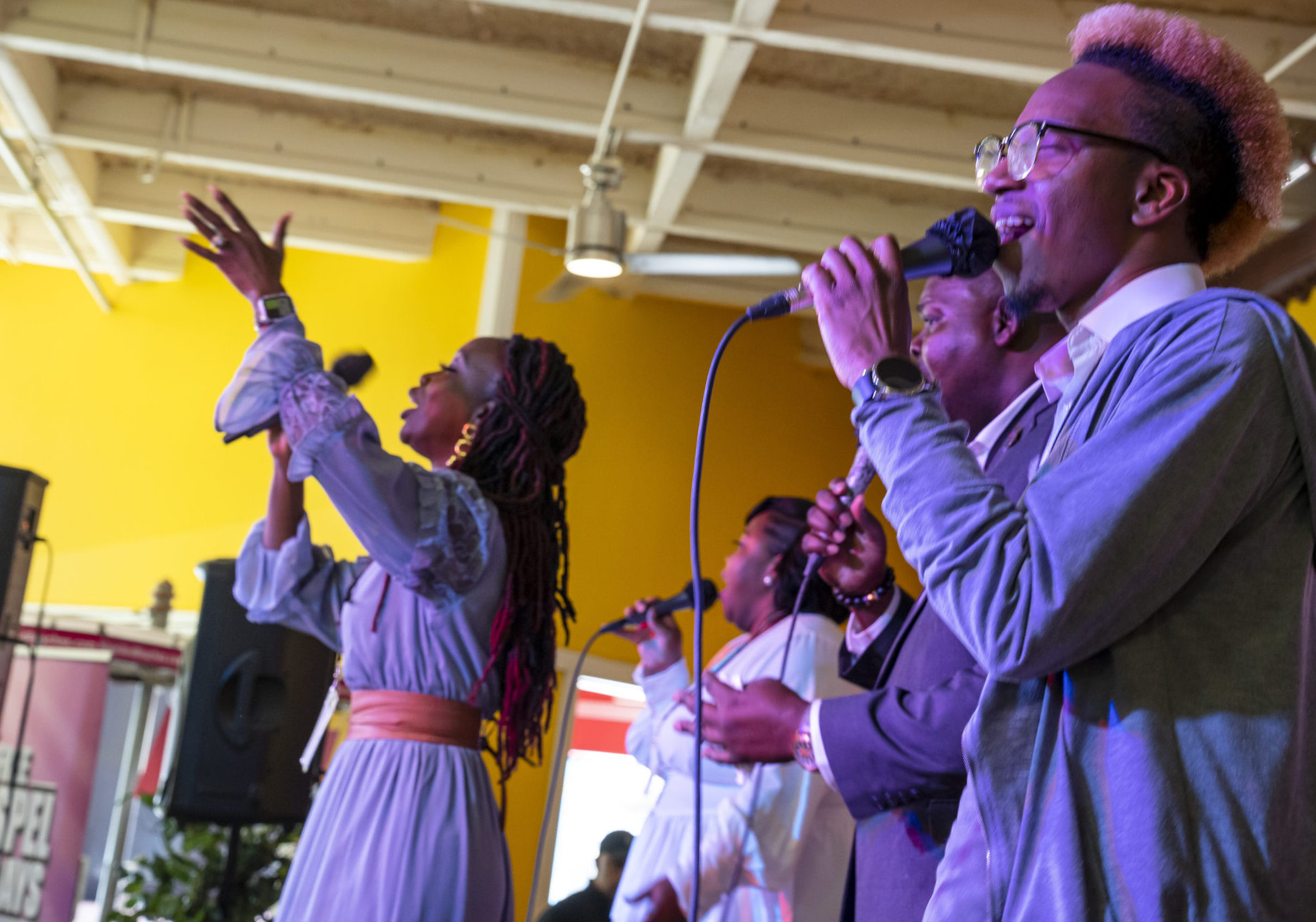
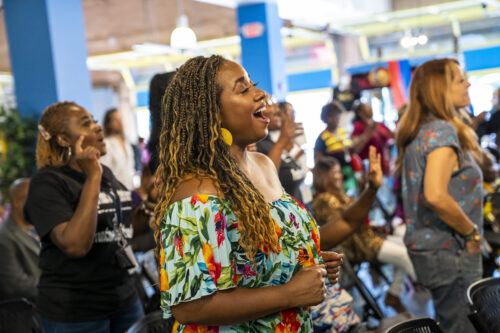




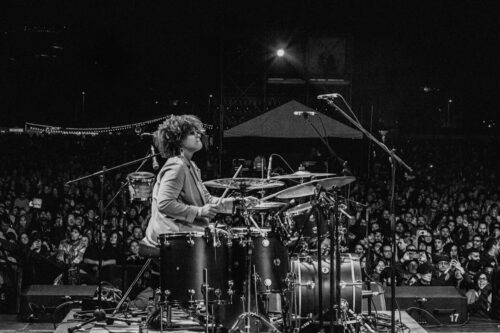

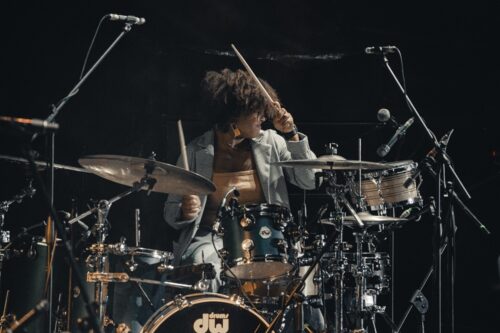
Recent Comments