
Music
Jorge Drexler Brings ‘Taracá’ and Candombe Rhythms to Miami Beach
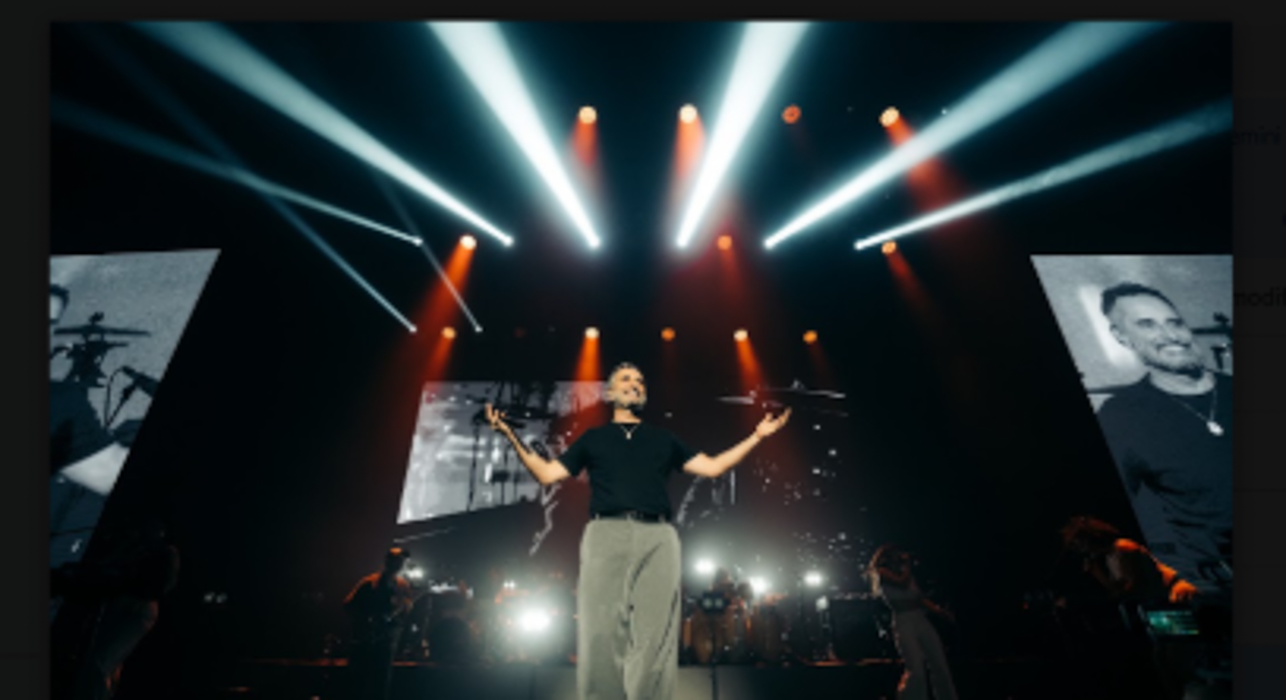
Uruguayan singer Jorge Drexler introduces Miami audiences to his latest work at the Fillmore Miami Beach on Wednesday, Sept. 2. (Photo by Manuel Vélez, courtesy of artist management)
An animating force behind Jorge Drexler’s storied career has been the singer-songwriter’s expansive curiosity. At 61, with armloads of Latin Grammys and an Oscar to his name, Drexler has never tired of taking new paths with his music, often following those trod by the industry’s youngest artists.
With his newest album, “Taracá,” Drexler reconnects with his Uruguayan roots and the infectious drumming style that first took hold of his imagination as a teenager. He’ll perform at the Fillmore Miami Beach on Wednesday, Sept. 2.
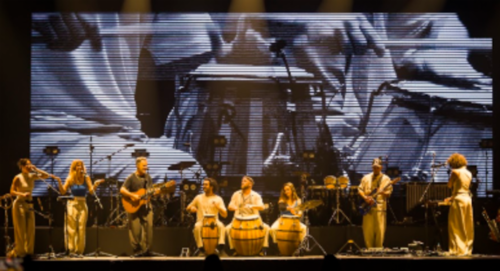
Jorge Drexler will be accompanied by a band of eight musicians, including three candombe drummers trained by an Uruguayan master percussionist. “I’m really proud of the team we’ve put together,” says Drexler. (Photo by Simón Canedo, courtesy of artist management)
“Candombe is a specific rhythm that was developed by the enslaved people that came from Africa to Uruguay. It’s a gift that we got from Africa,” Drexler explains in a recent telephone interview from his home in Madrid. “Ninety percent of the Uruguayan music scene is developed around candombe,” he says, connecting it even to the origins of tango and milonga.
Candombe’s whole celebratory culture has seen a resurgence in Uruguay, with Sunday drum processions winding through Montevideo neighborhoods like Barrio Sur and people of all ethnicities coming out to learn its traditional rhythms and dances.
During Drexler’s childhood, however, it was a different story. In Uruguay, as in Chile and in neighboring Argentina, the 1970s and early ‘80s were somber, fearful times, marked by state-sponsored violence against any form of dissent. Repressive governments saw artists and intellectuals as threats to be dealt with by the heaviest of hands.
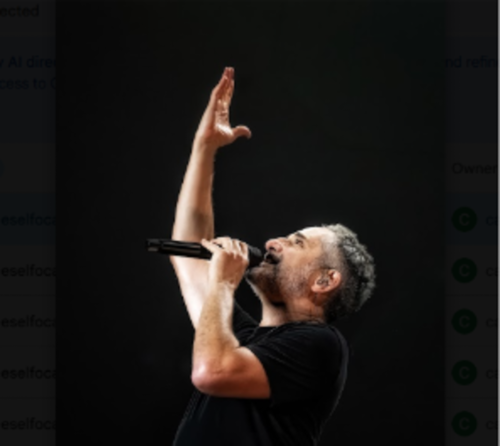
Jorge Drexler says that the Uruguay he grew up in during the dictatorship of the ‘70s and ‘80s was a society without music. It was only after the fall of the country’s repressive government that he first heard candombe, a musical form that has influenced him ever since and that he has made the basis of “Taracá,” his newest album. (Photo by Fabián Urquiza, courtesy of artist management)
“I grew up in a music-less country,” Drexler explains. “Most of the musicians had to flee, had to escape the dictatorship and move to Europe or to the States or to other South American countries,” he says.
Music wasn’t part of his daily environment, he says. He wasn’t surrounded by professional musicians in his family or neighborhood, and communal traditions such as candombe had been suppressed.
“Candombe is part of an expression of a community,” says Drexler. “You play it on the street. Lots of people gather together around the drums and they walk. It’s a parade. You walk with the drums and the whole neighborhood goes behind the drums. And that was forbidden in the dictatorship.”
It was precisely the music’s power to bring people together that the government could not abide.
But dictatorships fall. When Drexler was 18, a percussionist friend began taking him and his brother to “llamadas,” where Afro-Uruguayan candombe musicians could now get together and play their drums in the streets.
“It was a huge influence since the first moment I started writing music,” he says. “I didn’t realize it was such a big influence until I started writing instrumental pieces on guitar, and I understood that they were really marked by that rhythm pattern.”
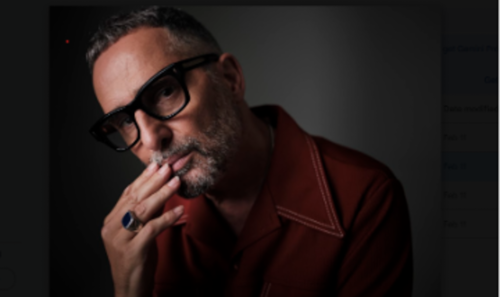
With 17 Latin Grammys to his name, Jorge Drexler still manages to stay curious; he credits his children with introducing him to some of the music that inspires him today. (Photo by Foca, courtesy of artist management)
The 3-2 beat of the candombe will be recognizable to Cubans as the rhythm of the claves in son cubano. Indeed, it is an integral piece of the musical DNA that enslaved Africans brought to America’s shores and spread far and wide. Its rhythm gets under your skin, practically begging you to get on your feet and move.
As Drexler points out in a clever track on the new album, we are lucky to be able to obey that call. “Ante la dudas, baila” (“When in Doubt, Dance”) lists six historical decrees against music and dance from Spain’s Baroque era prohibition of the sarabanda to a 1995 Puerto Rican law prohibiting the sale of reggaeton recordings. If this seems like an odd premise for a song, it’s catchier than its description would suggest, with an infectious chorus and a beat that could well have landed you in jail in 17th century Madrid.
Drexler says that the repression of these rhythms, all of them of African origin, was at its root a fear of sexual freedom; it is “the fear of the body and of the eros,” he says, “the part that’s related to life, to the life energy, life force, that music brings.” Even Elvis Presley, he notes, couldn’t be filmed from the waist down in 1950s America. But if you really want to make something popular, says Drexler, just try outlawing it: “It never works,” he laughs.
Drexler’s two teenage daughters and a 29-year-old son have helped him appreciate many forms of contemporary music, some of which he counts as influences today.
“I listen very carefully to their advice, and I learn a lot from their musical taste,” he says. On “Taracá,” he sings with 31-year-old Angeles Toledano, flamenco’s latest revelation, and with 28-year-old Puerto Rican rapper Young Miko. One of his producers, Tabu Vásquez, was only 21 when he started working on the record.

Jorge Drexler’s songs are filled with poetry and clever wordplay. They speak of everything from love and forgetting how to love to the hollowness at the heart of AI and the mysteries of the universe.
(Photo by Foca, courtesy of artist management)
When older people say, “‘Oh, this music that the young people have today, I mean, they don’t know what music is,’” Drexler says that it’s “a way of discriminating against the way they think, the way they view the world.”
Whether you are young or old, Black or white, some songs hold a message and a melody that feel essential to our common humanity. When Drexler sings Brazilian legend Gonzaguinha’s song, “O que e? O que e?”, it feels like a hymn to all that is good in the world—and in us. He performs it in Spanish, backed by a candombe rhythm.
“I wanted it to be understood in Buenos Aires, in Santiago de Chile, Mexico and Palermo,” Drexler explains. “‘What is life?’ It’s the hardest question that you can imagine,” he says. “It’s really difficult to write a song about that.”
“It’s a really important moment in the show, I must say,” says Drexler, and one that—if in doubt—a Miami audience just may want to get up and move their hips to.
WHAT: Jorge Drexler in Concert
WHEN: 8 p.m., Wednesday, Sept. 2
WHERE: The Fillmore Miami Beach at Jackie Gleason Theater
COST: $139.50 Pit Center; $75.50 Orchestra; $64 Mezzanine (plus charges)
INFORMATION: (800) 653-8000 or www.livenation.com and www.ticketmaster.com
ArtburstMiami.com is a nonprofit media source for the arts featuring fresh and original stories by writers dedicated to theater, dance, visual arts, film, music, and more. Don’t miss a story at www.artburstmiami.com